 فارسی
 English
 日本語
 Deutsch
 한국어
 العربية
 Русский
 Türkçe
 Português
 Français
 Español
 Italiano
 Nederlands
 Polski
 Bahasa Indonesia
 Tiếng Việt
 ไทย
 Bahasa Melayu
 हिन्दी
 Română
 Svenska
 Čeština
 Ελληνικά
 Українська
 עברית
 Dansk
 Norsk bokmål
 Suomi
 Magyar
 বাংলা

مقررات PPWR اتحادیه اروپا 2026: آیا بستهبندی شیشهای آرایشی شما مطابق با مقررات است؟
EU PPWR Regulation 2026: Is Your Cosmetic Glass Packaging Compliant?
Updated October 2026 | Reading time: approximately 6 minutes
Selling skincare or perfume products in Europe? Your packaging compliance checklist may need an update.
The EU Packaging and Packaging Waste Regulation (PPWR, Regulation (EU) 2025/40) has generally applied since August 12, 2026.
But here's something many beauty brands misunderstand: not every PPWR requirement became fully applicable on that date.
Some requirements already apply, while others will be introduced in stages over the coming years.
For skincare brands, fragrance companies, and private-label manufacturers, this means reviewing not only the glass bottle itself, but also its closures, coatings, labels, and other packaging components.
So what should you check before ordering your next batch of cosmetic glass packaging?
Let's break it down.
What Is the EU PPWR?
The PPWR is the European Union's regulatory framework for reducing packaging waste, improving recyclability, and supporting a more circular packaging economy.
It replaces the previous Packaging and Packaging Waste Directive (94/62/EC), subject to transitional provisions.
Unlike a directive, the PPWR is directly applicable across EU member states, although national enforcement and certain producer obligations still require attention.
It covers packaging made from different materials, including:
Glass bottles and jars
Plastic containers and components
Metal closures and accessories
Paperboard boxes
Multi-material packaging
For beauty brands, this includes perfume bottles, serum bottles, cream jars, lotion packaging, and their associated packaging components.
Importantly, a recyclable glass bottle does not automatically make the entire packaging configuration compliant.
PPWR Timeline: What Applies in 2026 and What Comes Later?
Understanding the implementation schedule is essential before making packaging decisions.
Timeline | Key requirement |
August 12, 2026 | PPWR generally begins to apply, including applicable packaging substance restrictions and related obligations |
2028 or later, depending on implementing rules | Harmonised packaging material labelling requirements begin to apply |
2030 or later, depending on delegated acts | Design-for-recycling performance criteria and packaging minimisation requirements become applicable |
2035 or later, depending on implementing acts | Recyclability-at-scale requirements become applicable |
January 1, 2038 | Stricter recyclability performance requirements, generally allowing grades A and B, subject to applicable exceptions |
These dates are not interchangeable. Some provisions depend on future EU delegated or implementing acts.
What this means for buyers: Don't assume a packaging design is fully PPWR-compliant simply because its supplier says the glass is recyclable.
Ask which specific requirements have been assessed and which future requirements still need review.
Substance Restrictions: Check More Than the Glass
Article 5 of the PPWR addresses substances of concern in packaging.
One important requirement concerns the combined concentration of four heavy metals:
Lead (Pb)
Cadmium (Cd)
Mercury (Hg)
Hexavalent chromium (Cr⁶⁺)
The general combined concentration limit is 100 mg/kg, subject to relevant legal provisions and derogations.
For decorated cosmetic glass packaging, brands should pay attention to the materials used in:
Spray coatings
Screen-printing inks
Hot-stamping decorations
Surface finishes
Closures and other components
These materials may require separate supplier information or supporting evidence.
What about PFAS?
The PPWR introduces specific PFAS restrictions for food-contact packaging. These should not be presented as a universal PFAS threshold applying automatically to every cosmetic glass bottle.
Other applicable EU chemical and product-safety rules may still need consideration.
Buyer tip: Request material information and relevant test evidence for the exact bottle and decoration combination you plan to purchase.
Recyclability: Why Glass Is a Strong Starting Point
Glass has a well-established recycling infrastructure in many European markets and can be recycled repeatedly when properly collected and processed.
That makes glass an attractive material for many beauty brands.
However, packaging recyclability depends on more than the base material.
A perfume bottle may include:
A glass body
A metal or plastic collar
A decorative cap
A spray pump
Adhesive labels
Surface coatings
These components can affect collection, separation, sorting, and recycling.
Under the PPWR, recyclability performance will be assessed using EU criteria and methodologies, including grades A, B, and C.
The applicable criteria will be introduced according to the regulation's implementation schedule.
For packaging buyers, the practical question is:
Can the complete packaging design be collected, sorted, and recycled under the relevant requirements?
Avoid relying only on general claims such as "100% recyclable" without evidence that supports the specific packaging configuration.
Packaging Minimisation: Premium Design Without Unnecessary Material
Luxury packaging often uses thick glass, oversized caps, decorative bases, and elaborate secondary packaging.
These features can create a distinctive brand experience, but packaging weight and volume also deserve attention.
Article 10 introduces packaging minimisation requirements that generally apply from January 1, 2030.
The goal is to limit packaging to the minimum weight and volume necessary for its functions, taking into account product protection, safety, hygiene, and other applicable criteria.
For cosmetic glass packaging, possible design considerations include:
Optimising glass wall thickness
Avoiding unnecessary empty space
Reviewing oversized decorative structures
Selecting appropriately sized secondary packaging
Using surface decoration to create visual differentiation
This does not mean every heavy perfume bottle or premium glass jar will automatically become non-compliant.
Each design should be evaluated against the applicable criteria and any relevant exceptions.
For brands developing new packaging today, considering material efficiency early may reduce the need for future redesigns.
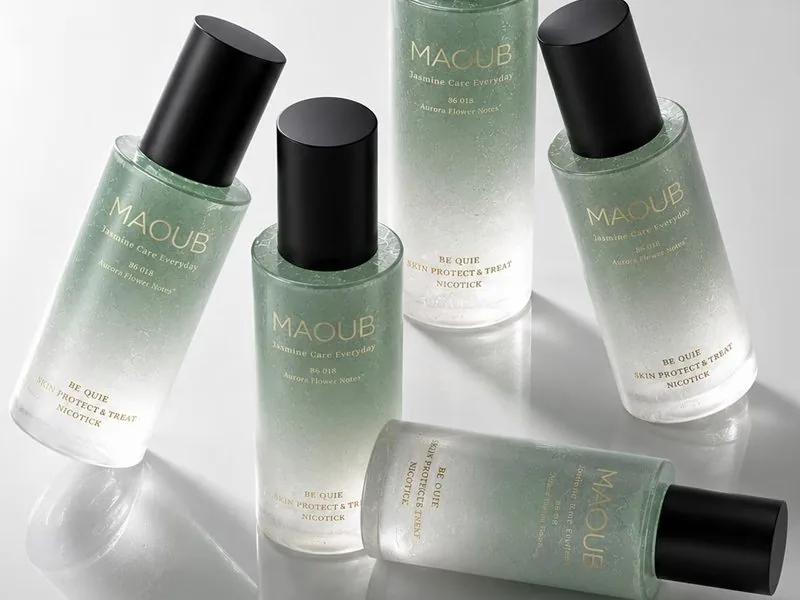
What Compliance Documents Should Beauty Brands Request?
Documentation is an important part of packaging procurement.
The PPWR establishes technical documentation and EU declaration of conformity requirements for manufacturers, with responsibilities depending on the economic operator's role.
For buyers sourcing cosmetic glass packaging, useful information may include:
Document or information | Why it matters |
Packaging specifications | Confirms dimensions, weight, capacity, materials, and component structure |
Material composition information | Helps identify materials used in the packaging |
Relevant test reports | Supports assessment of applicable substance restrictions |
Decoration specifications | Identifies coatings, inks, and surface treatments |
Supplier declarations | Records supplier-provided material and compliance information |
Technical documentation and EU Declaration of Conformity, where applicable | Supports the legal conformity assessment process |
Not every supplier document is automatically a mandatory standalone certificate under the PPWR.
Similarly, a general MSDS or SDS is not a substitute for a packaging conformity assessment.
Brands should also check their own obligations regarding producer registration, extended producer responsibility (EPR), and national market requirements.
Important: A glass bottle supplier can provide valuable technical information, but responsibility for compliance must be determined according to each company's legal role in the supply chain.
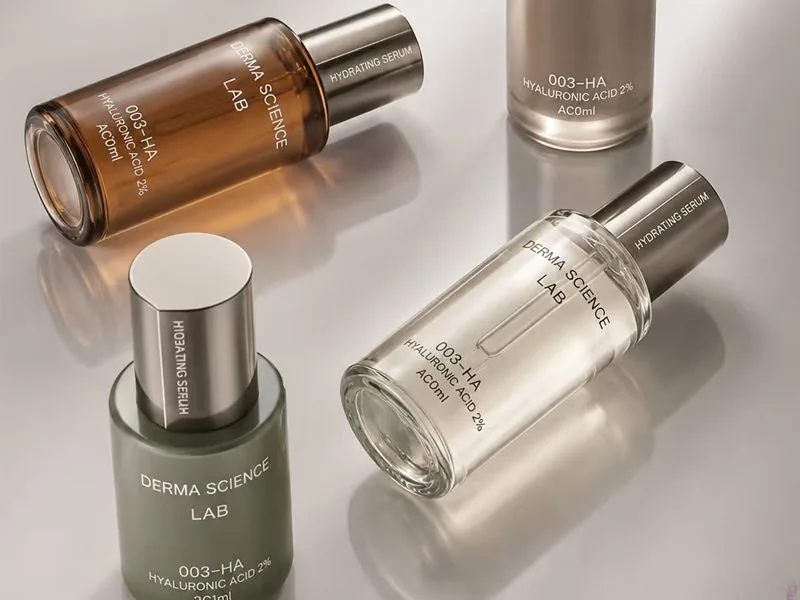
A Practical PPWR Procurement Checklist for Cosmetic Glass Packaging
Before confirming a new packaging order for the EU market, ask your supplier these questions.
1. What materials are used?
Confirm the glass body, cap, pump, collar, coating, label, and other relevant components.
2. Are the decorations documented?
Ask whether the supplier can provide available material information and relevant testing evidence for the specified finish.
3. Are the packaging specifications consistent?
Confirm bottle dimensions, weight, neck finish, and component compatibility against approved samples.
4. Has recyclability been considered?
Review whether decorative elements or mixed materials may complicate sorting and recycling.
5. What documents can the supplier provide?
Clarify available specifications, declarations, test reports, and any documents needed for the buyer's conformity assessment.
6. Can the design be reviewed before mass production?
Confirm the final bottle structure, decoration, closure, and packaging configuration before placing a large order.
These questions help buyers identify potential problems early, even when certain future PPWR assessment criteria are still being finalised.
How NAISI Packaging Supports Beauty Brands
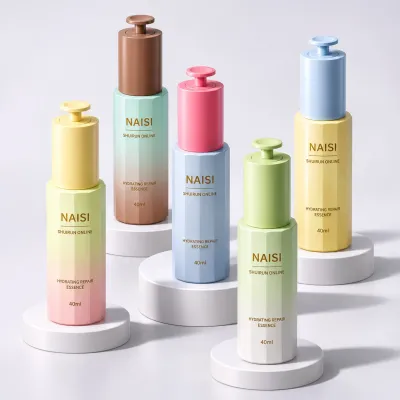
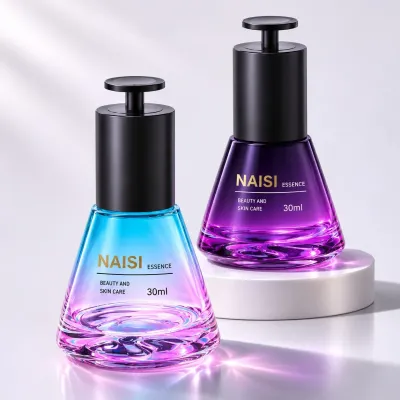
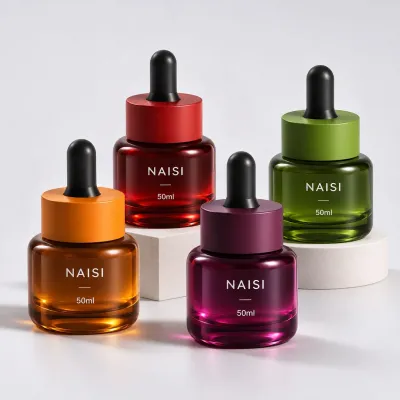
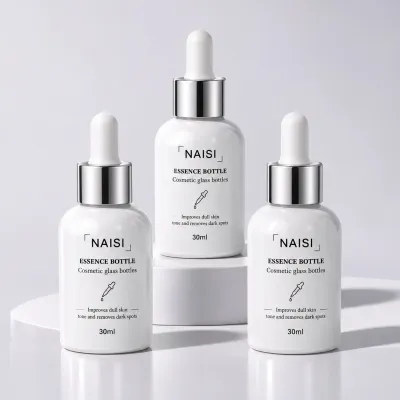
At NAISI Packaging, we manufacture and customise glass packaging for skincare, perfume, and beauty brands.
Our product range includes cosmetic glass bottles, serum bottles, lotion bottles, perfume bottles, cream jars, and coordinated packaging components.
We also offer customisation options such as:
Spray coating
Screen printing
Frosting
Hot stamping
Custom bottle and cap development
For brands supplying the European market, we can discuss packaging specifications, material choices, decoration requirements, and the availability of relevant supplier documentation for individual projects.
Our goal is to help customers make informed packaging decisions and develop solutions that match their product, brand identity, and target market.
Final regulatory conformity assessments and declarations must be handled by the responsible economic operators, with appropriate technical and legal verification.
Final Thoughts: Prepare for PPWR One Step at a Time
The PPWR is already reshaping how packaging is evaluated in the European market.
For beauty brands, the best approach is not to redesign every bottle immediately.
Start by reviewing your existing packaging, identifying materials and components, checking applicable requirements, and preparing for future recyclability and minimisation criteria.
Glass remains a strong packaging option, but successful compliance depends on the complete packaging design and the evidence supporting it.
Planning a new skincare or perfume packaging project for Europe?
Contact NAISI Packaging with your bottle design, capacity, decoration requirements, target quantity, and destination market.
We can help you review the packaging specifications and explore suitable custom glass packaging options.
NAISI Packaging — Custom Glass Packaging for Beauty Brands
Official References
· Regulation (EU) 2025/40 — Official Legal Text
· European Commission PPWR Guidance — June 2026
· European Commission — Packaging Waste
Related Products
- Cosmetic Glass Bottles
- Serum Bottles
- Essential Oil Bottles
- Perfume Bottles
- Cream Jars
- Skincare Packaging Sets
🎨 One-on-One Packaging Consultation
👉 Visit: www.naisi-packaging.com
📞 +86 18922753052