Deutsch
 English
 日本語
 한국어
 العربية
 Русский
 Türkçe
 Português
 Français
Design geprägter Glasflaschen: So entwickeln Sie erhabene Logos und Texturen für Kosmetikverpackungen
A brand approves a rendering with its logo raised from a glass bottle. Then the supplier asks whether the bottle already exists and whether its mold can be modified. The answers may change the development plan.
For embossed cosmetic glass bottles, the raised mark must be formed in the glass during manufacture. It cannot simply be added to finished stock bottles. Before investing in tooling, brands need to understand feasible details, existing-mold options and sample approval.
Confirm the Effect: Molded Embossing or Raised Printing?
Molded embossing forms raised letters or textures as the glass takes shape inside a mold. The mark is part of the container. Raised-effect printing, by contrast, builds a tactile layer on a finished bottle using a suitable decoration process, such as a raised ink system.
For packaging development, the distinction is practical:
Decision | Molded Glass Embossing | Raised-Effect Printing |
What changes? | Glass geometry and corresponding tooling | Surface decoration and artwork |
Design flexibility | Changes may require mold work | Artwork is generally easier to revise |
Tactile result | Integral glass relief | Applied raised layer |
Project fit | Stable, long-running designs and planned volumes | Designs needing more frequent changes, subject to supplier capability |
If the goal is a true raised glass logo, the project needs a tooling discussion. The sections below focus on that route.
Design the Logo for the Actual Bottle
Choose the Location Before Refining the Lettering
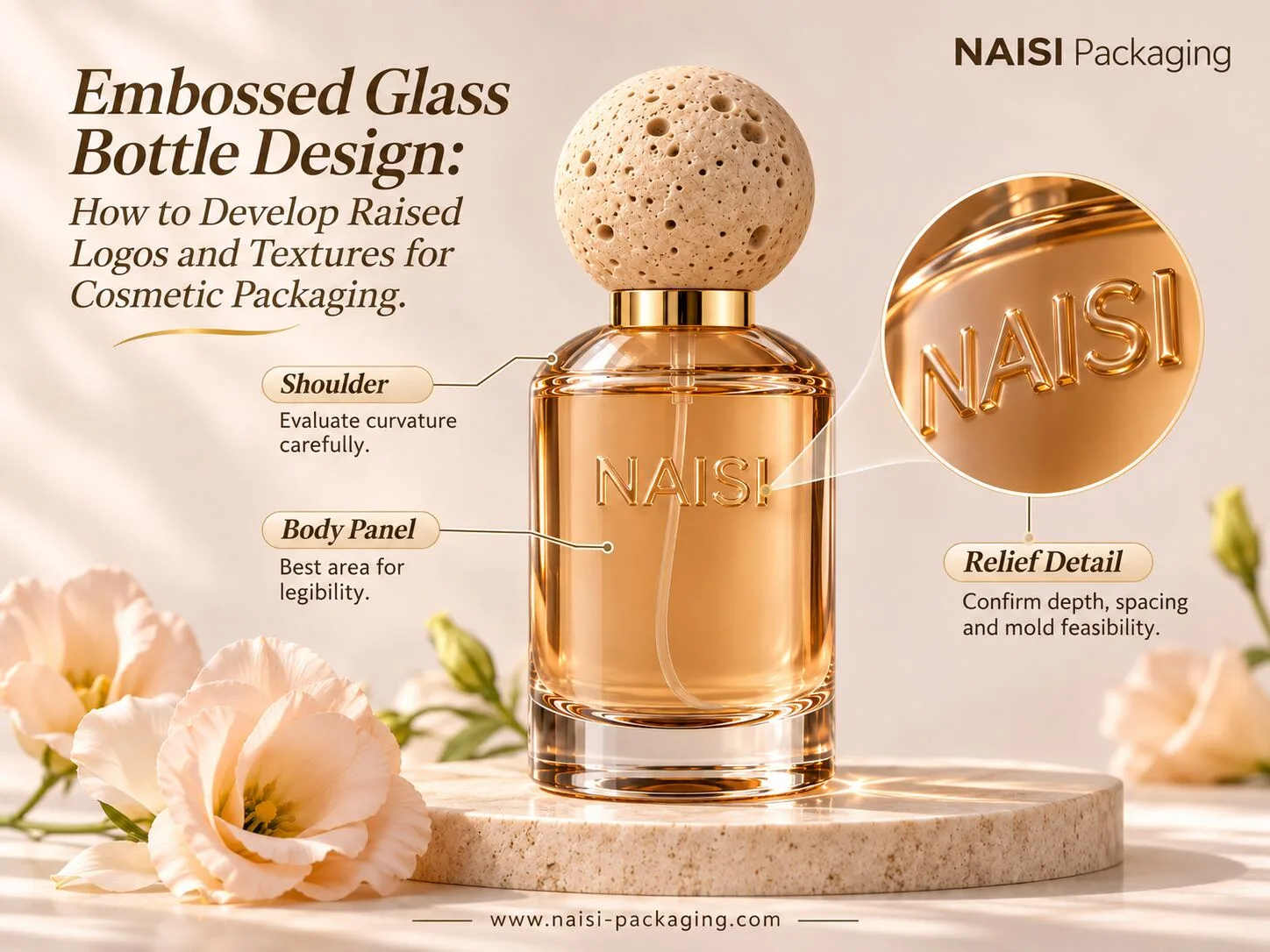
A relatively flat body panel is a practical starting point. On a round bottle, check how far the logo wraps; on a square bottle, consider the flat face and corner transitions.
Shoulder embossing is possible, but changing curvature can affect legibility and forming. Review its placement against the actual bottle and mold.
Mold parting lines matter. Fine lettering across a mold joint may reproduce poorly. Avoid these lines and functional surfaces unless the manufacturer approves the placement.
Simplify Details That Are Too Delicate
Thin serifs, sharp corners and tight letter spacing may lose definition in molded glass. Adjusting strokes and spacing can work better than increasing relief height.
There is no universal minimum lettering size or relief height. Feasibility depends on bottle shape, tooling and forming conditions; confirm dimensions for the selected bottle.
Treat Textures as Part of the Bottle Structure
For ribs, botanical motifs or repeating textures, check how the pattern crosses mold divisions and whether its recesses and transitions can be formed and released.
Pronounced relief also changes local geometry. The glass manufacturer must review wall distribution and forming feasibility; high relief does not automatically cause cracks or bubbles.
Existing Bottle or New Mold: Which Route Fits?
This is often the most important sourcing decision. An existing bottle shape may suit the product perfectly, but that does not mean its current production mold can simply receive a new brand logo.
There are three practical routes:
Route A — Keep the existing bottle and use surface decoration.
If the bottle shape is acceptable and mold changes are not available, screen printing or another suitable decoration can add branding. It will not produce genuine molded relief, but it may avoid new glass tooling.
Route B — Adapt a compatible existing design.
In some mold systems, a supplier may be able to develop modified finishing-mold components, a suitable insert or other localized tooling while retaining parts of the original bottle design.
This is possible only if the tooling arrangement, rights to use or modify it, embossing location and production conditions allow it.
Route C — Develop new custom tooling.
A new mold may be needed when the body silhouette, dimensions, shoulder or other glass features change substantially—or when the proposed relief cannot be accommodated by the existing tooling.
A Practical Development Example
A brand likes an existing 50 mL serum bottle and only wants its wordmark molded into the body.
The first question is whether the supplier can use compatible custom mold components while retaining the original bottle geometry.
If the brand also changes the shoulder, base and overall width, a new mold becomes more likely.
Neither route should be promised until the manufacturing team reviews the design.
Compare quotations on the same basis: what tooling is included, whether a physical glass sample is produced, which revisions may incur extra charges, and when production could begin after approval.
A lower initial tooling quotation is not always the lowest total development cost.
An existing design does not guarantee a low MOQ or ready stock. Confirm tooling, sampling and production requirements for the chosen route.
Before quoting, ask: Can the mold be modified? Which components change? Is new tooling required? Clarify tooling ownership and exclusivity rights.
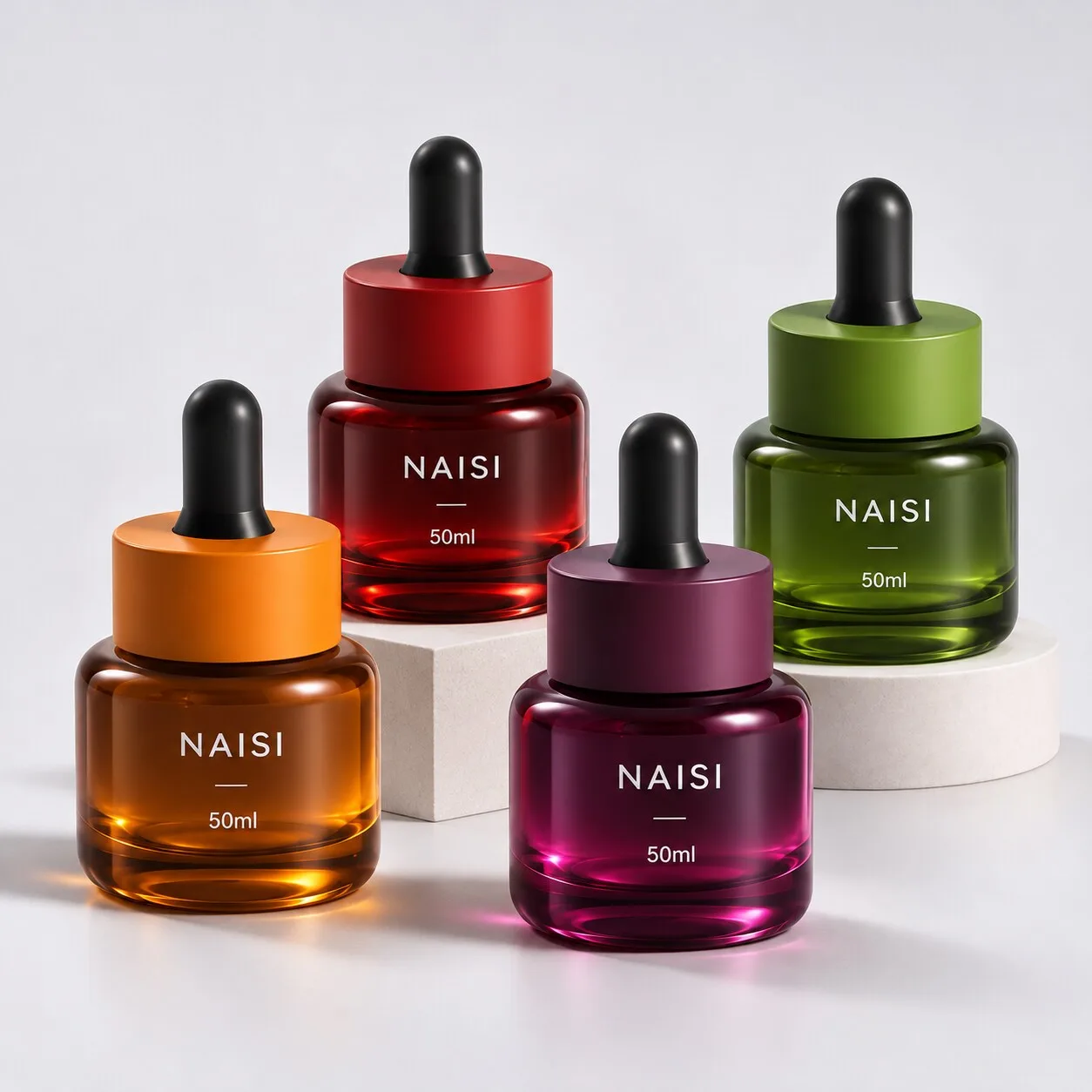
For a visual example of a textured molded bottle already listed by NAISI, see our 50 mL embossed glass perfume bottle.
This is a product reference, not confirmation that its existing mold can be re-engraved with a different customer's logo.
Review Drawings Before Cutting the Mold
Provide a vector logo, bottle drawing or reference, marked embossing position and proposed dimensions. For complex textures, include a 3D reference if available.
The manufacturer should check relief geometry, mold divisions, functional dimensions and forming feasibility. Incorporate changes into the approved drawing before machining.
Changes after tooling begins may require machining or replacement parts, with project-specific cost and lead-time implications.
A rendering or 3D prototype shows appearance, not glass-forming feasibility. Representative glass samples remain necessary.
What to Check on Embossed Glass Samples
Inspect the first glass samples for:
Legibility: Are the smallest letters, spaces and corners clear?
Surface definition: Are raised edges and repeated textures consistent?
Appearance: Does the relief look right under side lighting and through the glass?
Placement: Is it correctly positioned relative to the front face, shoulder and mold joint?
Container function: Are the neck, base and other critical features unaffected?
Later decoration: If coating or printing is planned, does the finished combination remain acceptable?
Review multiple samples, approve the drawing revision and retain a physical reference. Ask what appearance differences are acceptable in production rather than relying on a single showcase sample.
A good first sample does not prove mass-production consistency.
For artwork that will also be printed on the bottle, our glass bottle print area design guide covers printable zones and logo placement on curved surfaces.
Three Mistakes to Avoid
Fine typography copied directly from a printed logo.
The tiny internal spaces disappear in the glass sample. Rework the lettering for molded relief while preserving the brand's recognizable proportions.
A texture crossing an unplanned mold division.
A repeating pattern shows a visible mismatch at the joint. Review the pattern and mold layout together before tooling approval.
Embossing placed where a later print is expected.
Raised glass can disrupt the flat contact or registration needed for another decoration step. Reserve separate zones or confirm the combined process with physical samples.
These examples are illustrative.
What to Send Your Glass Bottle Manufacturer
For an initial inquiry, prepare:
Send This | So the Supplier Can Assess |
Bottle reference, shape and target capacity | Whether an existing design is suitable |
Vector logo or texture artwork | Lettering complexity and relief details |
Preferred embossing position | Curvature, seams and mold feasibility |
Intended appearance and any later decoration | Relationship between relief and surface finishing |
Initial order quantity and repeat-order plans | Appropriate tooling and production route |
Distinguish proposed from supplier-confirmed dimensions and physical-sample approvals.
Frequently Asked Questions
Can a logo be embossed onto bottles already in stock?
No. True molded embossing is created while the glass is formed. Finished stock bottles can receive suitable surface decoration, but their glass cannot be given a new molded logo afterward.
Does a raised logo always require a completely new bottle mold?
Not always. Some existing designs can be adapted using compatible mold components or inserts. Other projects need new tooling. The answer depends on the actual mold and the proposed changes, not just the bottle's outward appearance.
Can an embossed bottle also be spray-coated or screen-printed?
In suitable designs, yes. The relief may change how a coating looks or where printing can be applied. Approve the combined effect on physical samples before production.
Develop Embossed Cosmetic Glass Bottles With NAISI
Start by choosing the development route: surface decoration, compatible mold modification or new tooling. Then confirm the raised logo in drawings and glass samples.
NAISI Packaging supplies glass serum bottles, perfume bottles and custom glass mold-development options for beauty brands.
If you are considering embossed cosmetic glass bottles, send your reference bottle, logo artwork, target capacity and estimated quantity. We can discuss suitable bottle options and custom-development possibilities for your project.
NAISI Packaging | Custom Cosmetic Glass Packaging
WhatsApp: +86 189 2275 3052
Email: naisipackaging@gmail.com
Website: www.naisi-packaging.com