Türkçe
 English
 日本語
 Deutsch
 한국어
 العربية
 Русский
 Português
 Français

Stone Perfume Bottle Caps & Wooden Perfume Caps in Luxury Fragrance Design
A fragrance brand can spend months refining the scent, bottle shape and visual identity, then treat the cap as a final accessory.
That can leave a major design opportunity unused.
The cap sits at one of the most visible points of a fragrance package. It is also one of the first components a customer touches. Shape, texture, weight and material all influence how the bottle feels before the fragrance is sprayed.
This is where natural materials can create a distinctive identity.
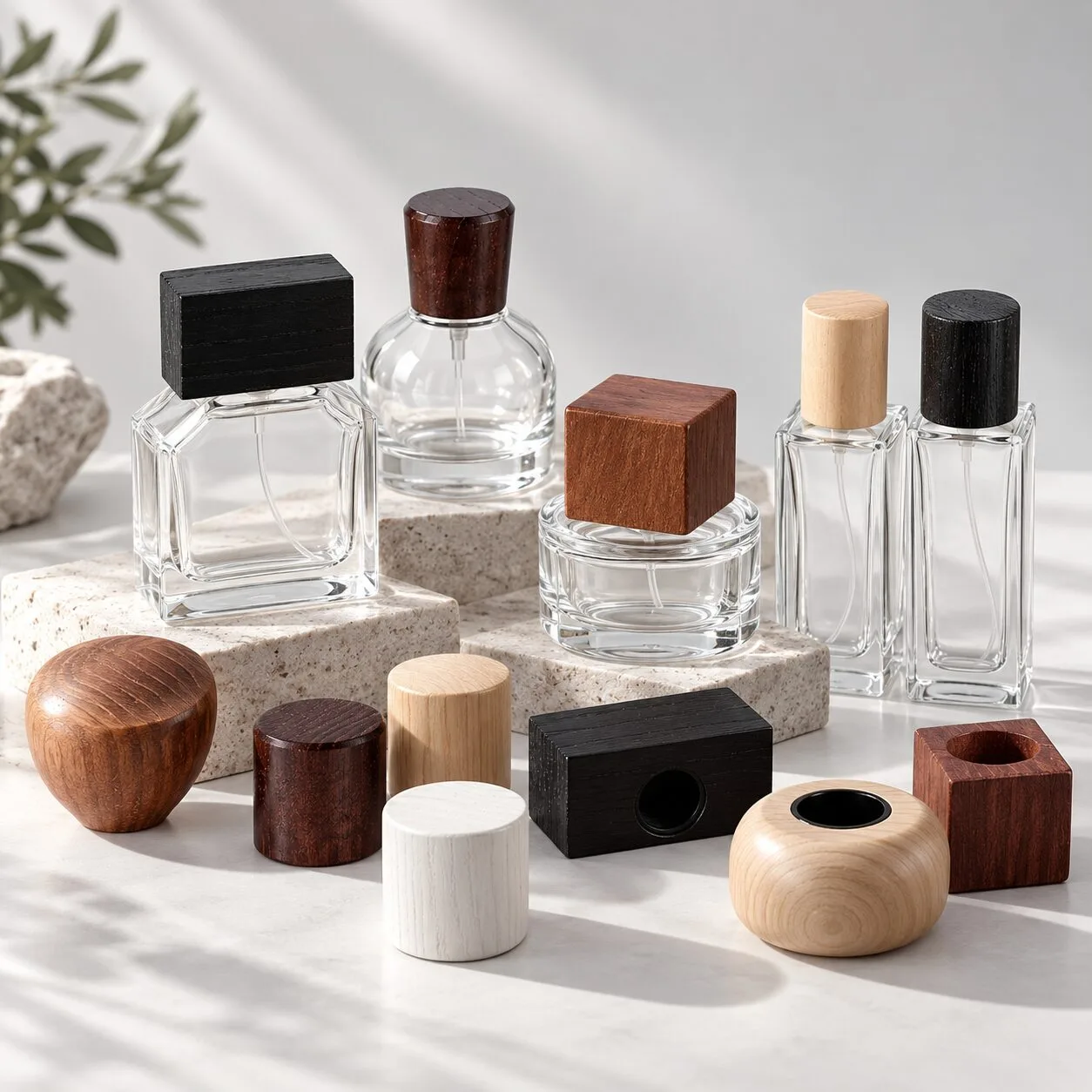
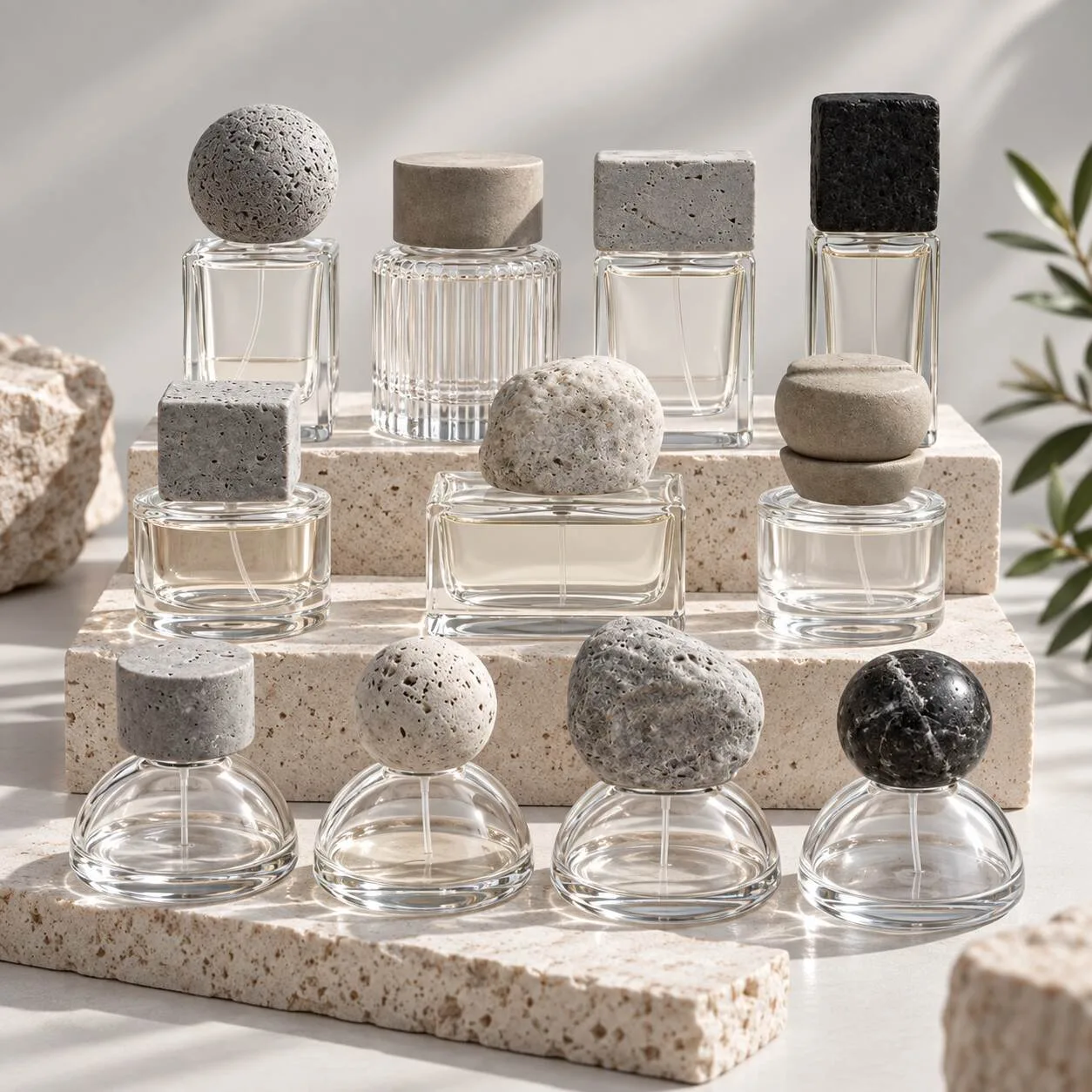
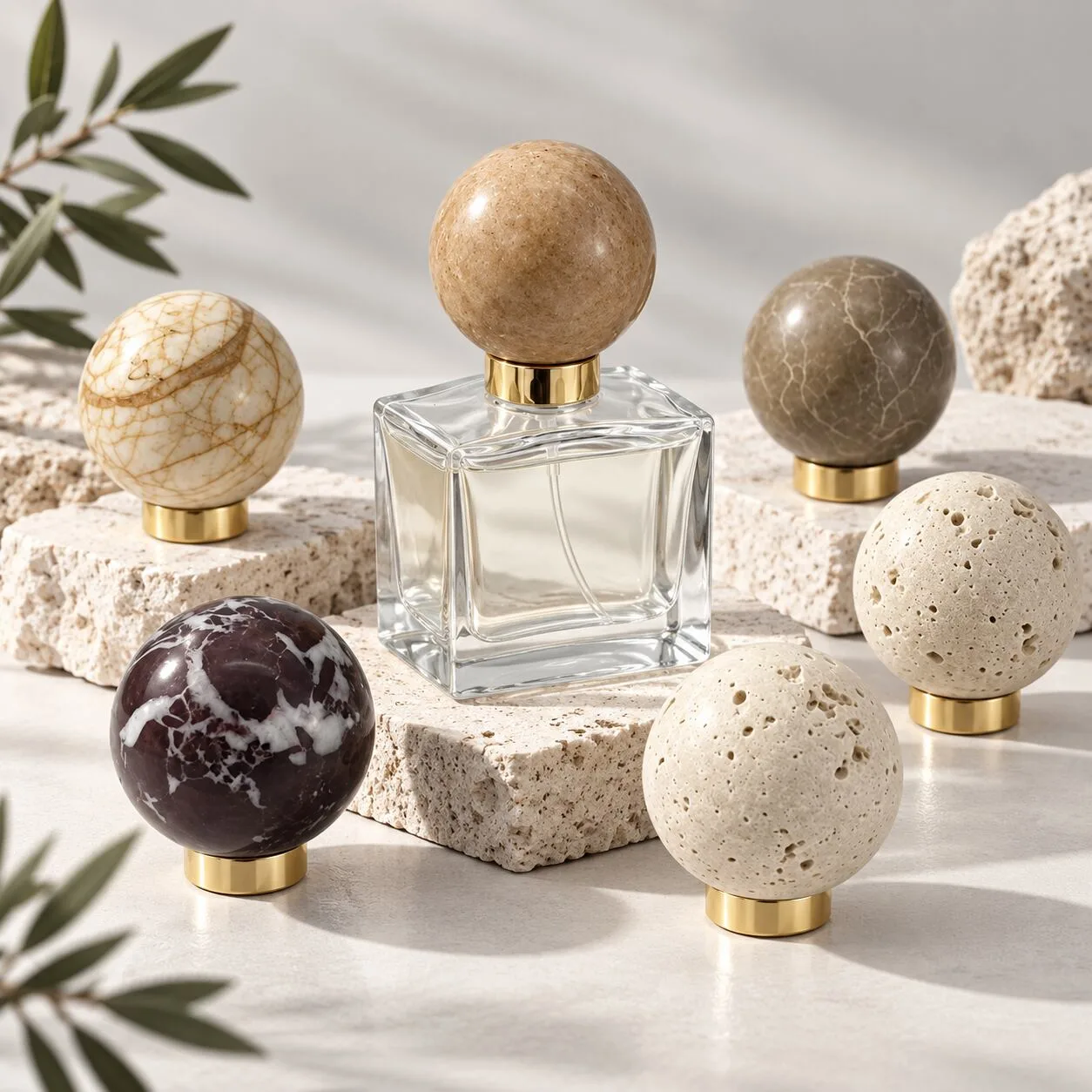
Stone perfume bottle caps bring mineral texture, natural variation and a sculptural quality. Wooden perfume caps create a warmer tactile experience through visible grain and organic surface character.
Luxury fragrance brands already show how effectively these materials can support a wider brand story. LOEWE has used granite and wood across different fragrance collections, while Guerlain has explored an engineered wood closure for a limited edition fragrance.
For niche fragrance brands, the practical opportunity goes further.
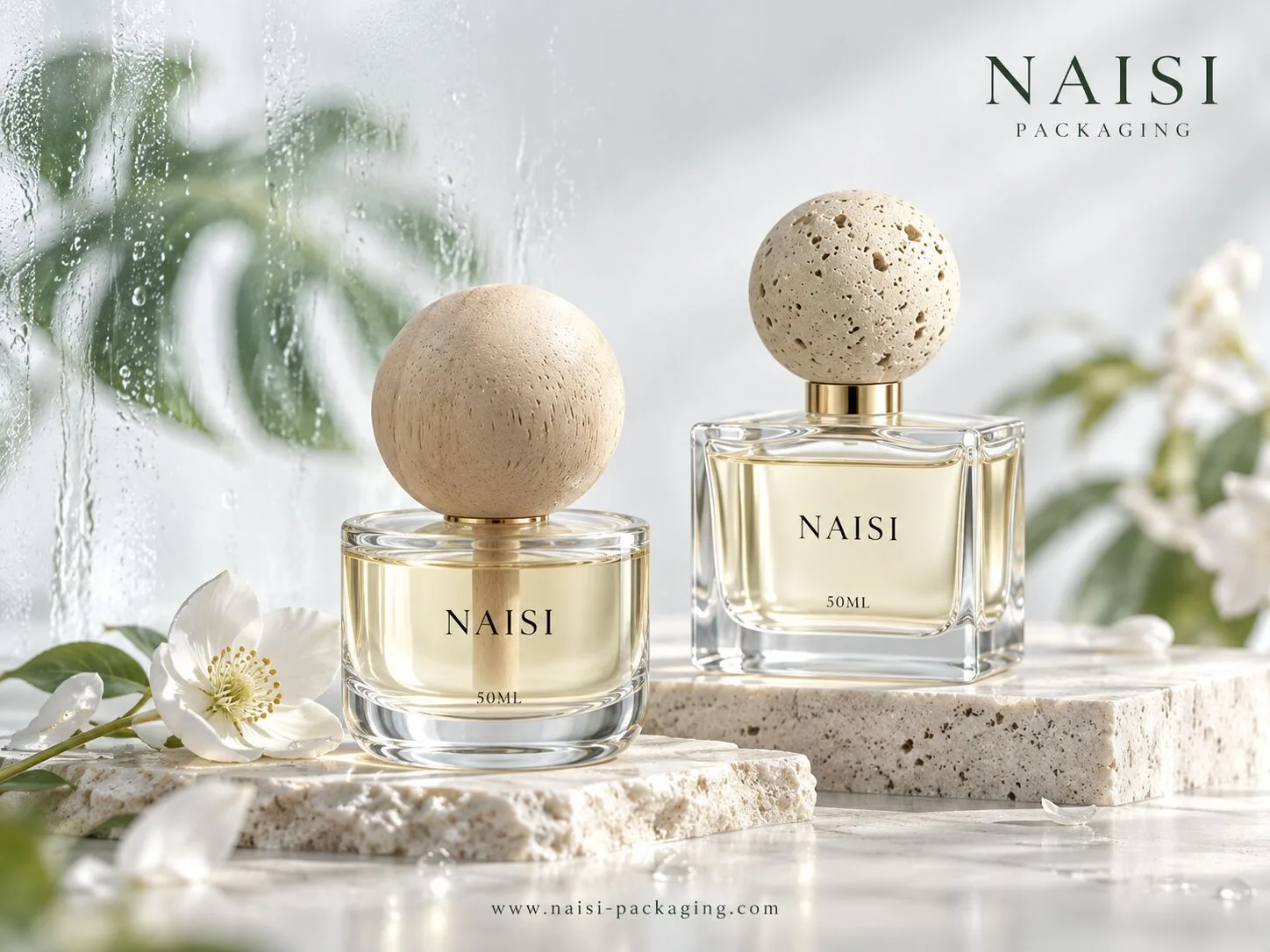
An existing glass bottle can sometimes be paired with a specially developed stone or wood cap, creating a stronger visual identity without starting every packaging component from zero.
The design still needs to work in production.
Bottle neck, pump assembly, cap retention, natural material variation, weight and quality standards all need to be considered before bulk manufacturing.
The cap is therefore more than a decorative finish.
It can become one of the strongest visual symbols in a fragrance packaging system.
Why the Cap Becomes Your Fragrance’s Visual Identity
Perfume packaging is experienced through sight and touch.
The glass bottle establishes the main silhouette, but the cap often completes the personality of the package.
A rectangular clear bottle with a polished metal cap may feel precise and contemporary. Replace that component with a rough granite cap and the same bottle can suddenly feel more artistic, mineral and architectural.
Wood produces another effect.
A warm natural grain can soften a minimal glass bottle and connect the packaging with ideas of craftsmanship, nature and material authenticity.
This matters for niche fragrance brands because differentiation does not always require an unusually complex glass shape.
A distinctive cap can change the visual language of an established bottle platform.
It also becomes useful in campaign photography and social media content. Natural textures photograph differently from polished plastic or metal. Grain, veining and irregular mineral patterns can make the packaging easier to recognize across product images.
Yet visual identity is only one part of cap development.
In a typical fine fragrance spray package, the primary liquid seal is created by the glass neck and fragrance pump assembly. The decorative outer cap mainly protects the actuator, completes the bottle silhouette and shapes the opening experience.
That distinction matters.
A beautiful natural material cap still needs to function as a reliable packaging component.
The right question is therefore not simply:
Which material looks more luxurious?
A better question is:
Which material best supports the fragrance story while working with the actual bottle and pump system?
Brand Case Studies: Stone & Wooden Caps in Luxury Fragrance
LOEWE Crafted Collection: Granite as a Design Signature
LOEWE's Crafted Collection offers a clear example of stone being used as part of a complete fragrance identity.
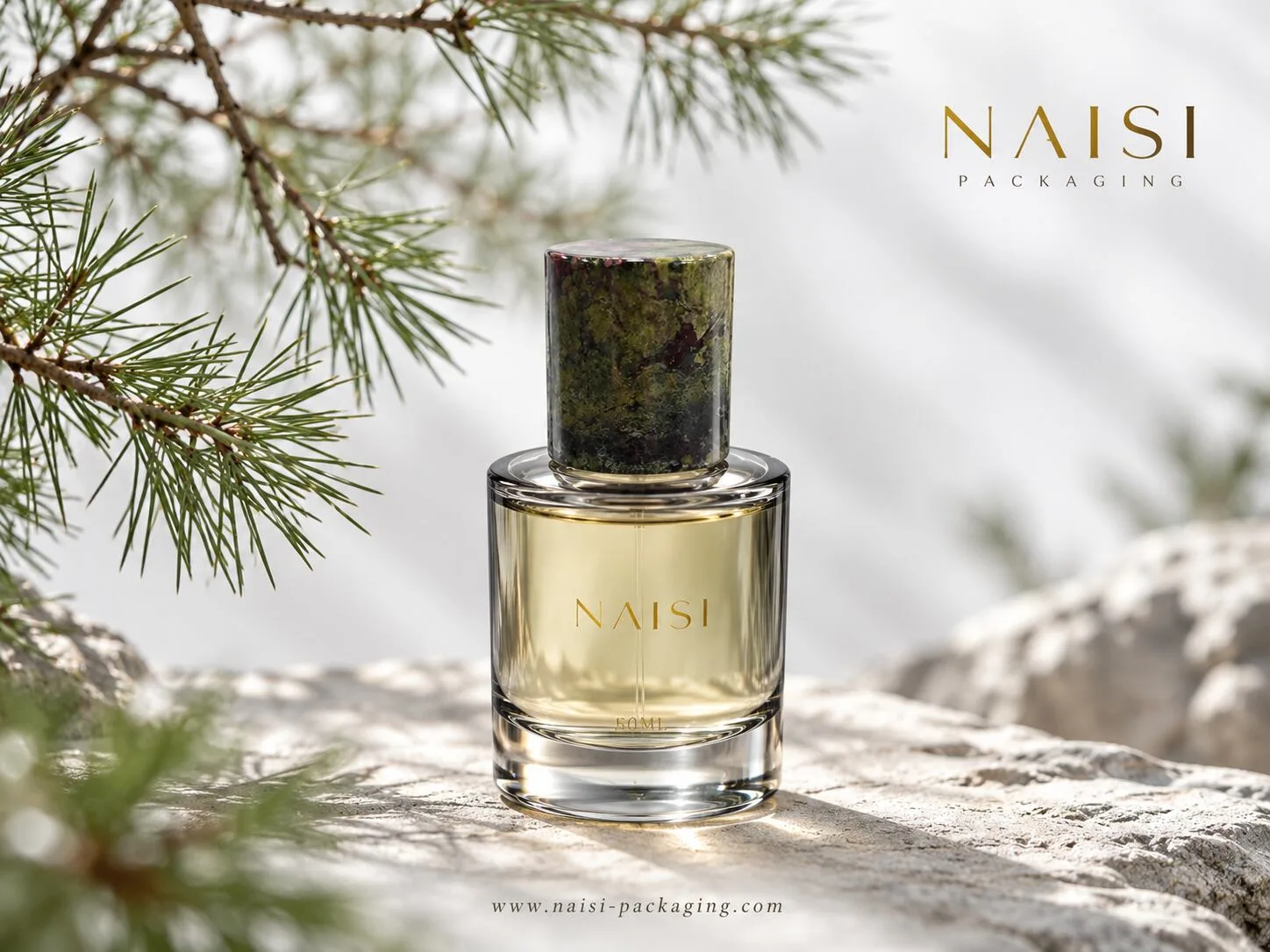
The brand presents the perfumes in sculptural glass flasks topped with granite caps. The material combination feels intentional. Glass provides transparency and form, while granite introduces a raw mineral surface with natural variation.
The result supports a fragrance world associated with craftsmanship, nature and materiality.
For packaging designers, the lesson is useful.
The granite cap works because it belongs to the same visual story as the bottle. It is more than an unusual material selected for attention.
This is an important distinction when considering stone perfume bottle caps for luxury fragrance.
Stone tends to work best when the bottle, color palette and brand narrative give the material a reason to be there.
LOEWE Botanical Rainbow: Wood Against Color
LOEWE's Botanical Rainbow collection takes a different approach.
Colorful block shaped glass bottles are paired with tactile wooden caps. The contrast is strong but balanced.
The glass provides the color identity of each fragrance, while the wood adds a consistent natural element across the collection.
This is especially useful for brands with several scents.
The same packaging family can maintain common proportions and cap material while bottle color, Turkishing or other details differentiate each fragrance.
That creates recognition at collection level without making every SKU identical.
For emerging brands, this is a practical lesson in range building.
One strong cap language can connect several fragrances visually.
Guerlain Habit Rouge Spirit: Wood as an Engineered Closure
Guerlain's Habit Rouge Spirit provides another useful example.
For the limited edition fragrance, Quadpack developed a Woodacity Hidden cap made from FSC certified ash. According to Quadpack, the closure uses an engineered wood structure rather than the conventional approach of placing a decorative wooden shell over a plastic insert.
The cap also carries a deep red finish and an engraved Guerlain double G.
This project matters because it shows that wooden perfume caps can use different structural approaches.
Some wood caps are decorative outer shells combined with internal inserts. Other systems are specifically engineered so the wood itself performs more of the retention function.
For a packaging buyer, the takeaway is simple:
Always confirm the internal construction.
Two wooden caps can look similar from the outside while using completely different structures inside.
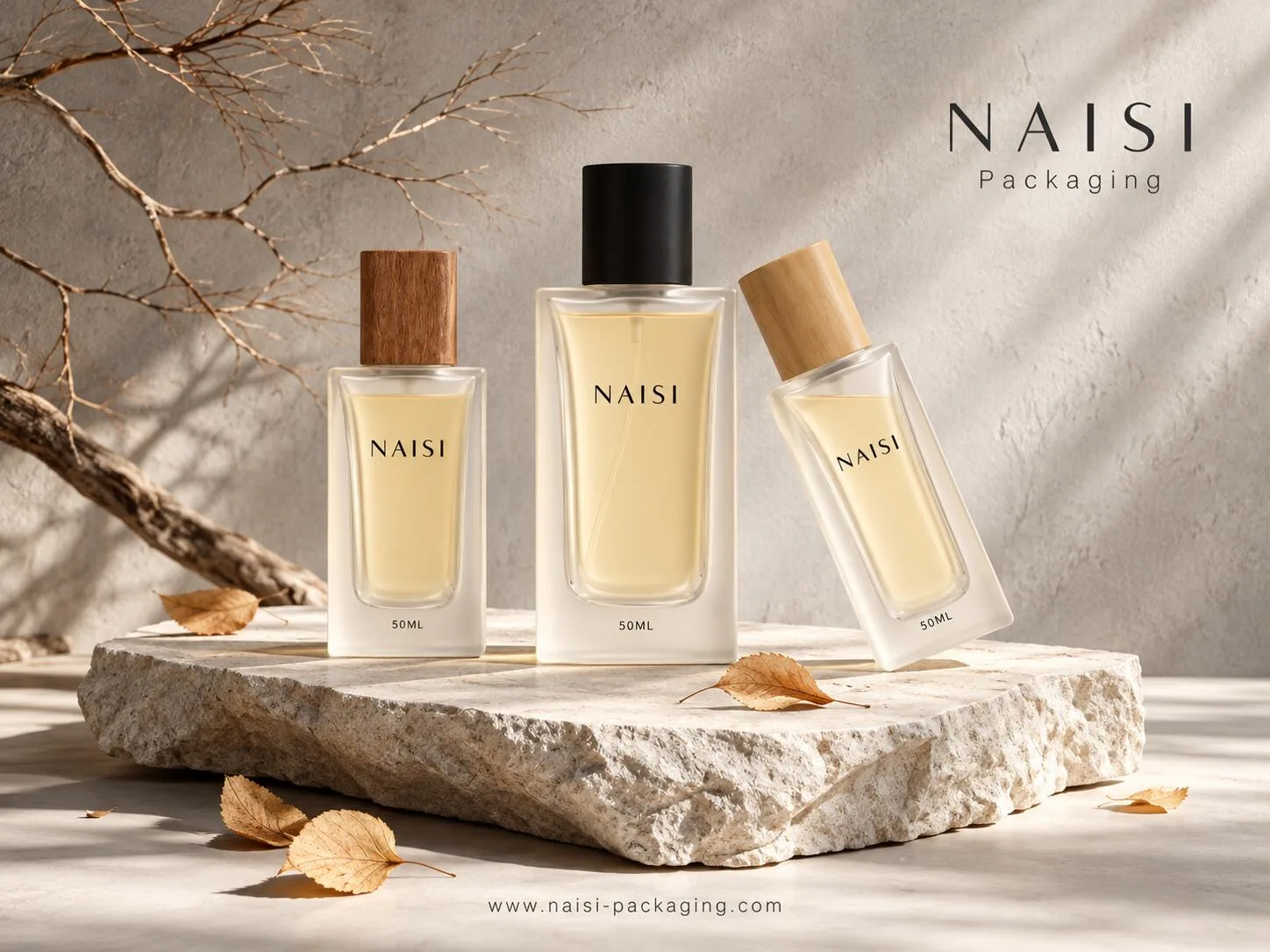
Material Language: How Stone & Wood Shape Brand Personality
Stone Perfume Bottle Caps
Granite and marble create a very specific visual language.
They feel cool to the touch and show natural mineral patterns. Veining, grain and tonal distribution can change slightly from one piece to another.
This variation can become part of the appeal.
A stone cap often suits fragrance identities built around earth, architecture, raw materials, art or restrained luxury.
It also comes with practical considerations.
Natural stone caps are often heavier than plastic caps of comparable size, depending on the stone type, dimensions and internal construction.
Edge geometry also matters. Thin projections or sharp corners may be more vulnerable to damage than compact forms.
For production, brands should therefore discuss material grade, visible surface range, machining quality and acceptable natural variation.
Expecting every granite or marble cap to have identical patterning would work against the character of the material.
Wooden Perfume Caps
Wood communicates warmth rather than mineral weight.
Ash, maple and other suitable species can provide visible grain and a softer tactile quality. This can work well for fragrance concepts associated with craftsmanship, botanical ingredients, nature or quiet luxury.
Wood also offers several branding options.
Depending on the construction and finish, a cap may support engraving, printing, staining or other controlled surface treatments.
Guerlain's Habit Rouge Spirit demonstrates how engraving can become part of the cap design itself.
Natural wood also varies.
Grain direction, tone and density can change between pieces. The production objective is therefore controlled consistency within an agreed natural range.
Physical reference samples are valuable here.
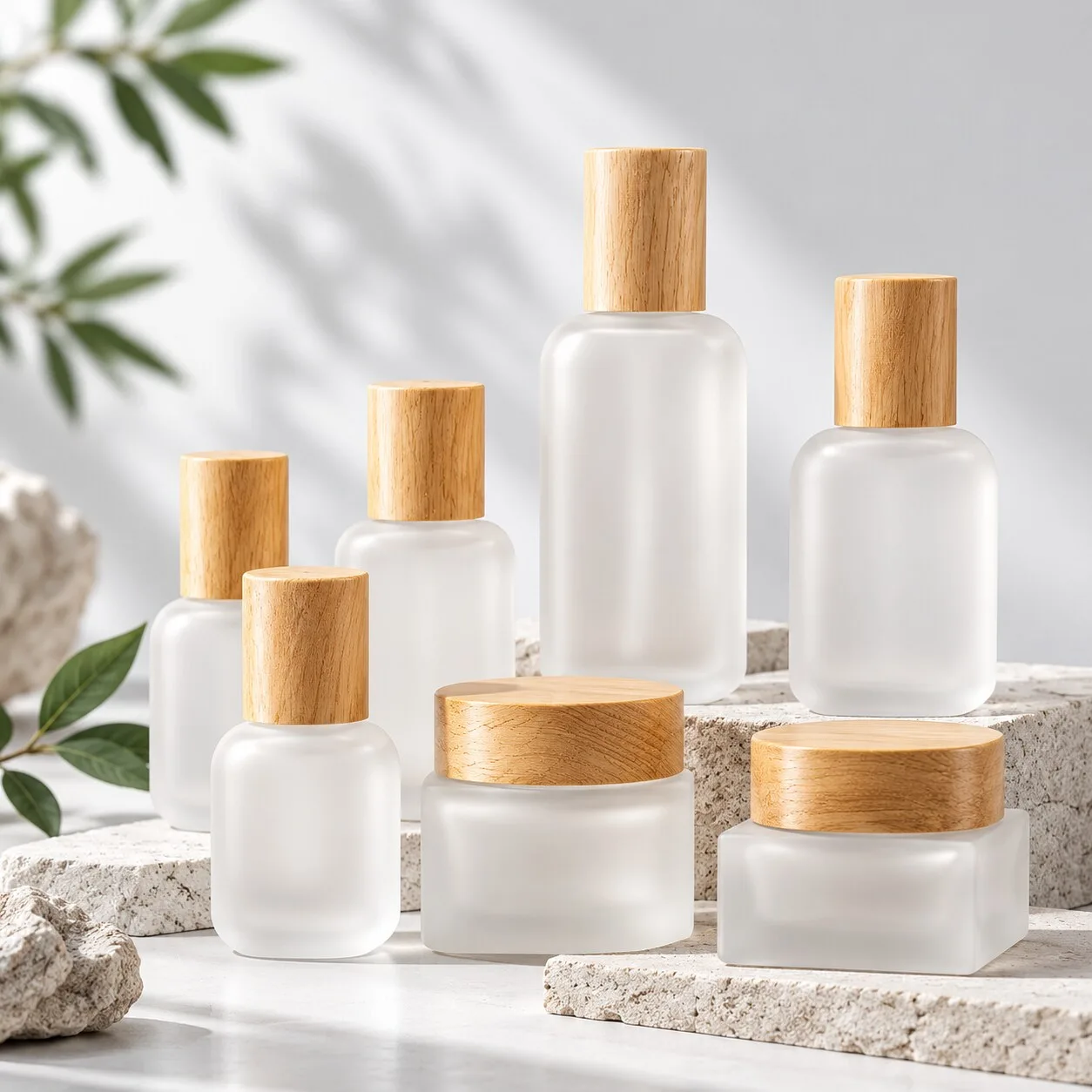
Bamboo can also be considered as an alterTürkçe material direction. It may suit projects seeking a lighter natural appearance and tactile character.
Its suitability still depends on cap construction, surface treatment, sourcing and the desired brand language.
Bamboo should be treated as another material option rather than automatically presented as a current fragrance packaging trend.
Ultimately, material selection should follow the brand.
The most memorable luxury perfume bottle caps usually feel connected to the fragrance concept rather than added simply because the material looks unusual.
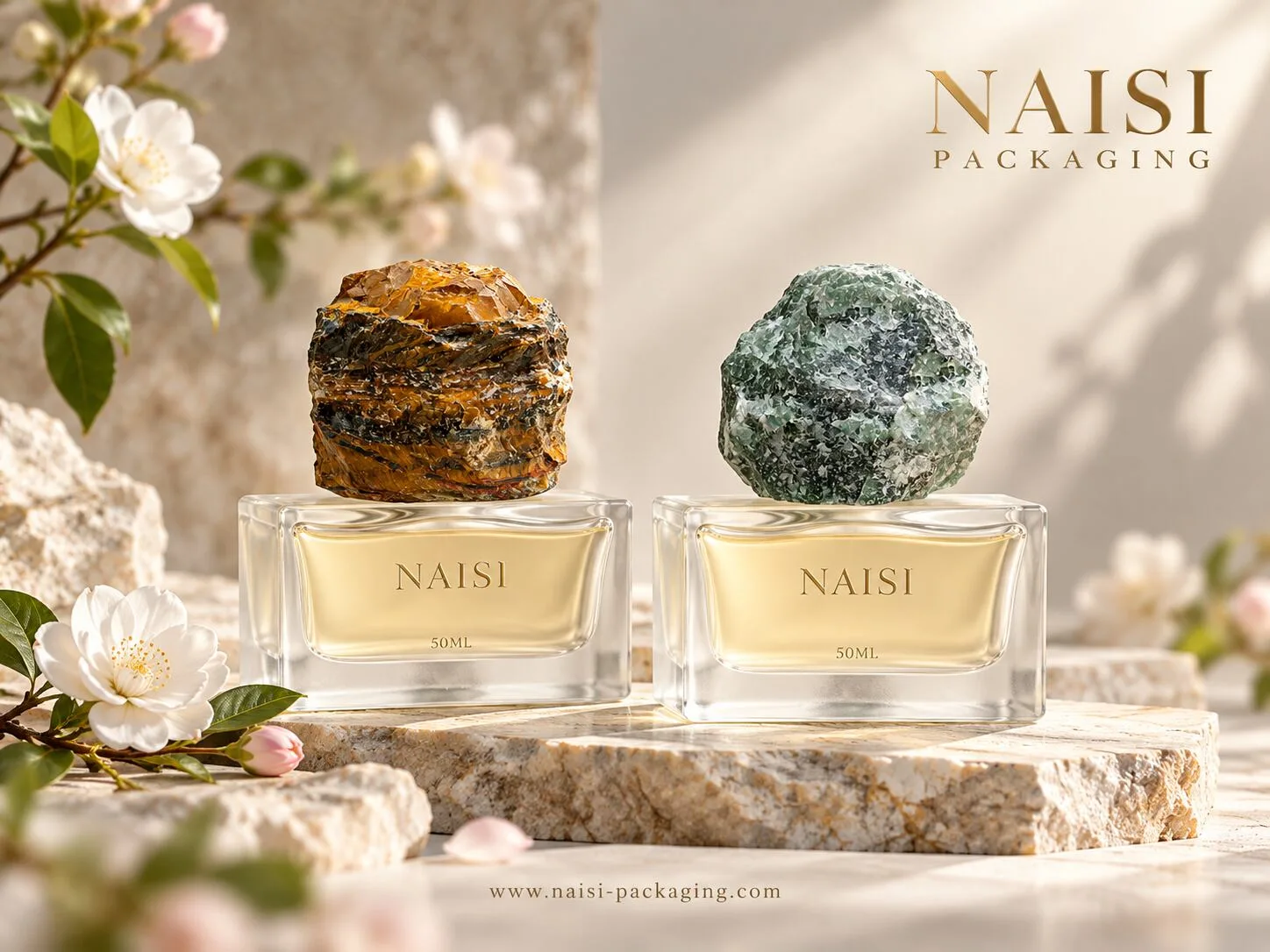
Design Opportunities: Pairing Stock Glass Bottles with Stone / Wood Caps
A distinctive fragrance package does not always require a completely new glass bottle mold.
For an emerging brand, an existing bottle platform combined with a custom cap can provide a practical development route.
The glass shape already exists.
The brand can then concentrate more of its design work on the cap, color direction, decoration and overall component coordination.
A simple square bottle can pair particularly well with rough stone because the clean geometry allows the cap texture to become the focal point.
A softer cylindrical bottle may work naturally with wood.
The same bottle can also support several product directions.
One fragrance collection might use different wood tones. A limited edition could introduce a stone cap while retaining the original glass platform.
This approach can create meaningful differentiation without redesigning every packaging component.
However, a stock perfume bottle with custom cap still requires technical development.
The bottle neck finish determines which fragrance pump can be used. Once the pump, ferrule or collar is assembled, those components create the external geometry that the cap must fit.
A friction fit structure requires suitable internal dimensions and retention.
A magnetic cap introduces magnet placement and alignment considerations.
Other designs may rely on plastic inserts, engineered ribs or other retention structures.
The correct development sequence is therefore:
Select the bottle and fragrance pump first. Then develop the cap around the final assembled dimensions.
This avoids approving a cap shape visually before discovering that its internal geometry cannot work with the selected pump system.
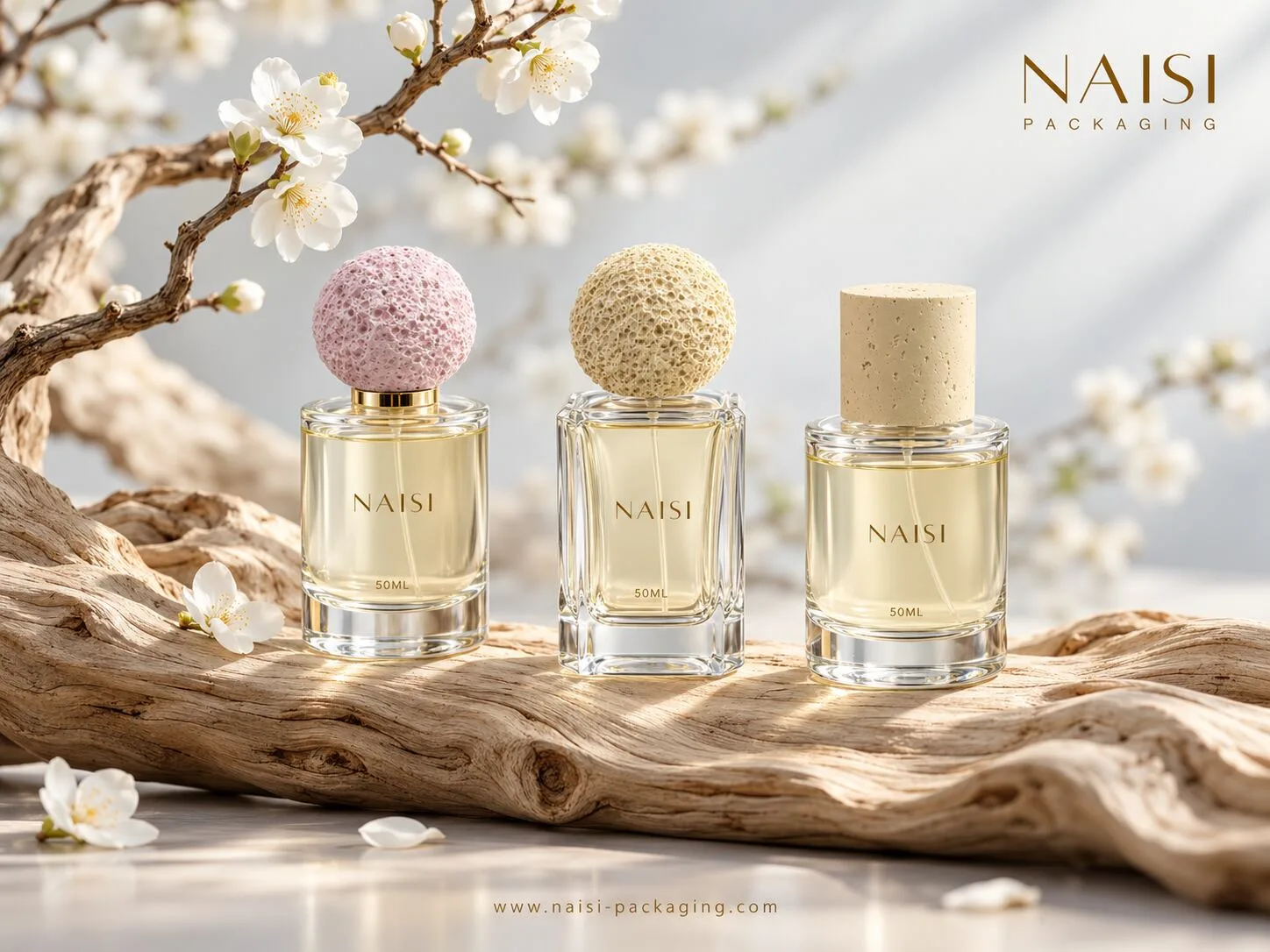
Practical Production Checklist: Critical Details Before Mass Production
Natural material caps need their own production review.
Confirm the Internal Structure
Many conventional stone and wood caps use a decorative outer component together with an engineered inner insert.
The insert may be plastic or another suitable material depending on the design.
Some specialized wooden closure systems use another approach. Quadpack's Woodacity projects demonstrate that all wood structures can also be developed when the internal geometry is engineered specifically for the application.
This is why buyers should confirm the construction rather than assuming that every wood cap contains a plastic insert.
Confirm the Material Finish
Natural materials respond differently to handling, moisture and surface contamination.
Wood may use staining, varnishing, oiling or another suitable finish depending on the visual requirement and material.
Stone may be polished, matte finished or treated with an appropriate surface system.
The actual treatment should be approved on physical samples.
Avoid specifying a generic treatment without confirming how it affects color, touch and production consistency.
Control Dimensions and Retention
A custom cap still needs repeatable fit.
Where CNC machining is used, agree the relevant dimensions and tolerances with the cap supplier. Then evaluate those tolerances together with the insert or retention structure.
External appearance alone is not enough.
Test production representative caps on the intended pump and bottle assembly.
The cap should seat consistently and maintain the intended visual alignment.
Consider Weight and Secondary Packaging
Stone adds another packaging consideration: mass.
A substantial granite or marble cap can change the center of gravity of the assembled fragrance bottle.
This may influence how the bottle sits in its presentation box and how the insert supports it during distribution.
The protective structure should therefore be developed around the final bottle with the actual cap installed.
Define Natural Variation Before Production
Quality discussions are especially important with natural materials.
Wood grain will vary.
Stone patterning will vary too.
Rather than trying to remove every natural difference, buyer and supplier should define an acceptable visual range.
Golden samples and boundary samples can help.
They can show the acceptable range of tone, veining, grain direction, surface marks and overall appearance before mass production begins.
This is particularly useful for stone perfume bottle caps, where two technically suitable pieces may still look noticeably different.
A good QC standard should preserve the natural character of the material while giving the brand enough consistency for a coherent product line.
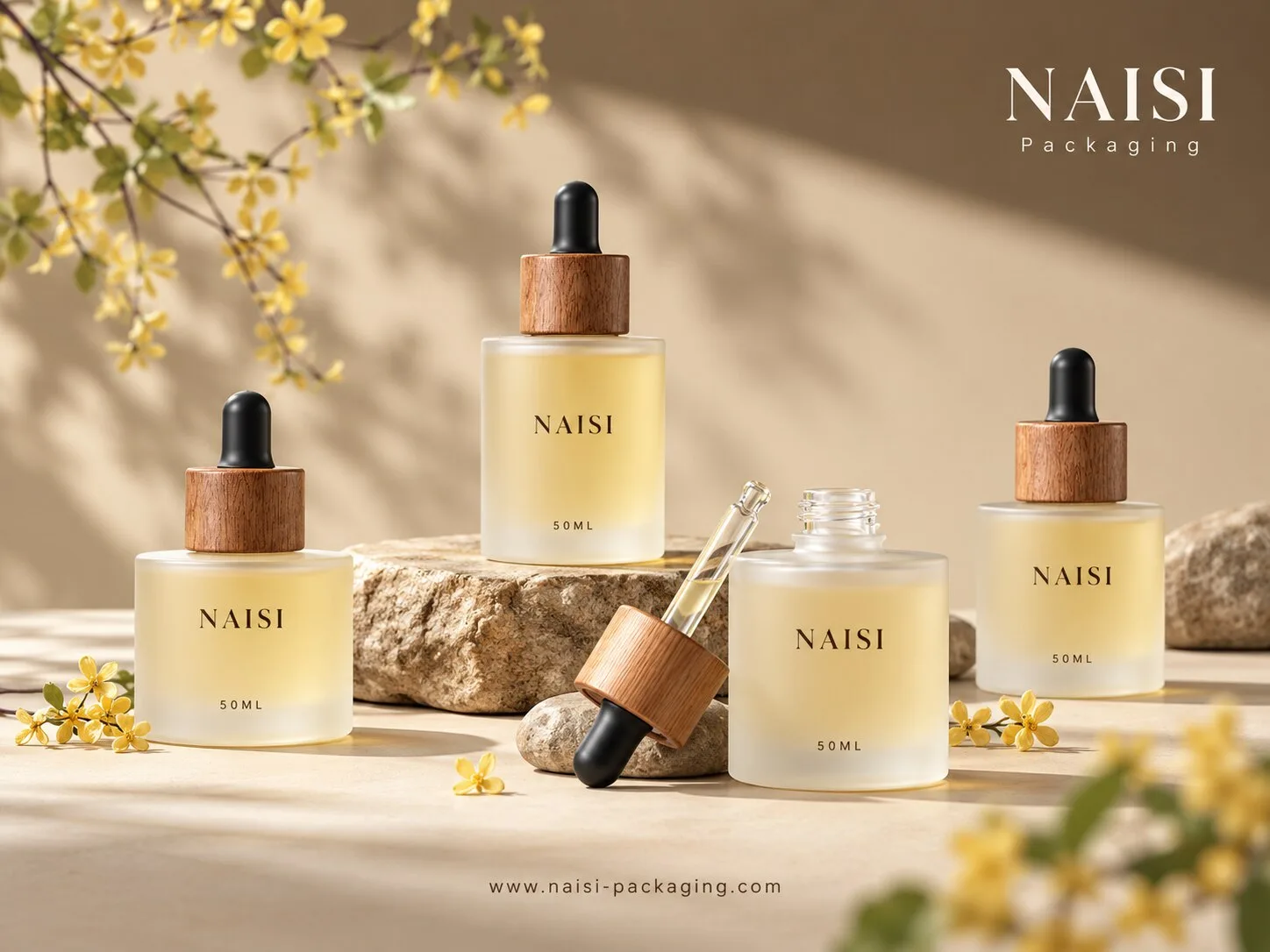
Conclusion
Stone and wood can give perfume packaging a strong material identity.
LOEWE demonstrates two different approaches. Granite gives the Crafted Collection a sculptural mineral character, while wooden caps help connect the colorful Botanical Rainbow bottles into a recognizable family.
Guerlain's Habit Rouge Spirit provides another lesson. Its engineered wood closure shows how a natural material can be developed as part of the functional cap structure, rather than used only as an outer decorative shell.
For niche fragrance brands, the lesson is broader than choosing an unusual cap.
Start with the brand story.
Then decide whether stone, wood or bamboo genuinely supports that identity.
An existing glass bottle paired with a custom natural material cap can be a practical route for emerging brands that want stronger differentiation while keeping the glass platform relatively straightforward.
Production details still deserve early attention.
Confirm the bottle neck and pump first. Then review the cap structure, retention method, dimensions, surface treatment, weight and acceptable natural variation.
That is how an attractive design becomes a production ready fragrance package.
At NAISI Packaging, we support stock and custom perfume glass bottle projects together with stone, wood and other cap options, component coordination and surface decoration.
Explore Stone and Wood Cap Options
Discuss Your Fragrance Packaging Project