English
 日本語
日本語 Deutsch
 한국어
한국어 العربية
 Русский
 Türkçe
 Português
 Français

How to Choose the Right Dip Tube Length for Cosmetic Pumps
A cosmetic pump can have the correct neck finish, suitable dosage and a well designed actuator, yet the consumer may still find visible product left at the bottom of the bottle.
Sometimes the problem begins with the dip tube.
This small tube connects the product inside the bottle with the pump mechanism. Its position inside the container influences how long the dispenser can continue drawing formula as the product level falls.
A tube that finishes too high can begin drawing air while usable product remains below the inlet. Excessive length creates another issue. The tube may bend, curl or position its opening against the bottle base, reducing the available flow path.
Professional packaging suppliers recognize both conditions. TricorBraun identifies correct tube sizing as an important part of pump and sprayer performance, while O.Berk distinguishes between flexible sprayer tubes that may curve toward the container wall and thicker lotion pump tubes that generally use an appropriate clearance near the bottom.
For beauty packaging buyers, the practical objective is efficient product pickup with a clear inlet path.
That makes cosmetic pump dip tube length a small specification with a noticeable effect on dispensing experience, residual product and production consistency.
There is no universal millimetre gap that works for every bottle and pump.
The correct specification comes from the actual bottle geometry, pump design, tube characteristics and formula.
What Is a Cosmetic Pump Dip Tube & Why It Matters
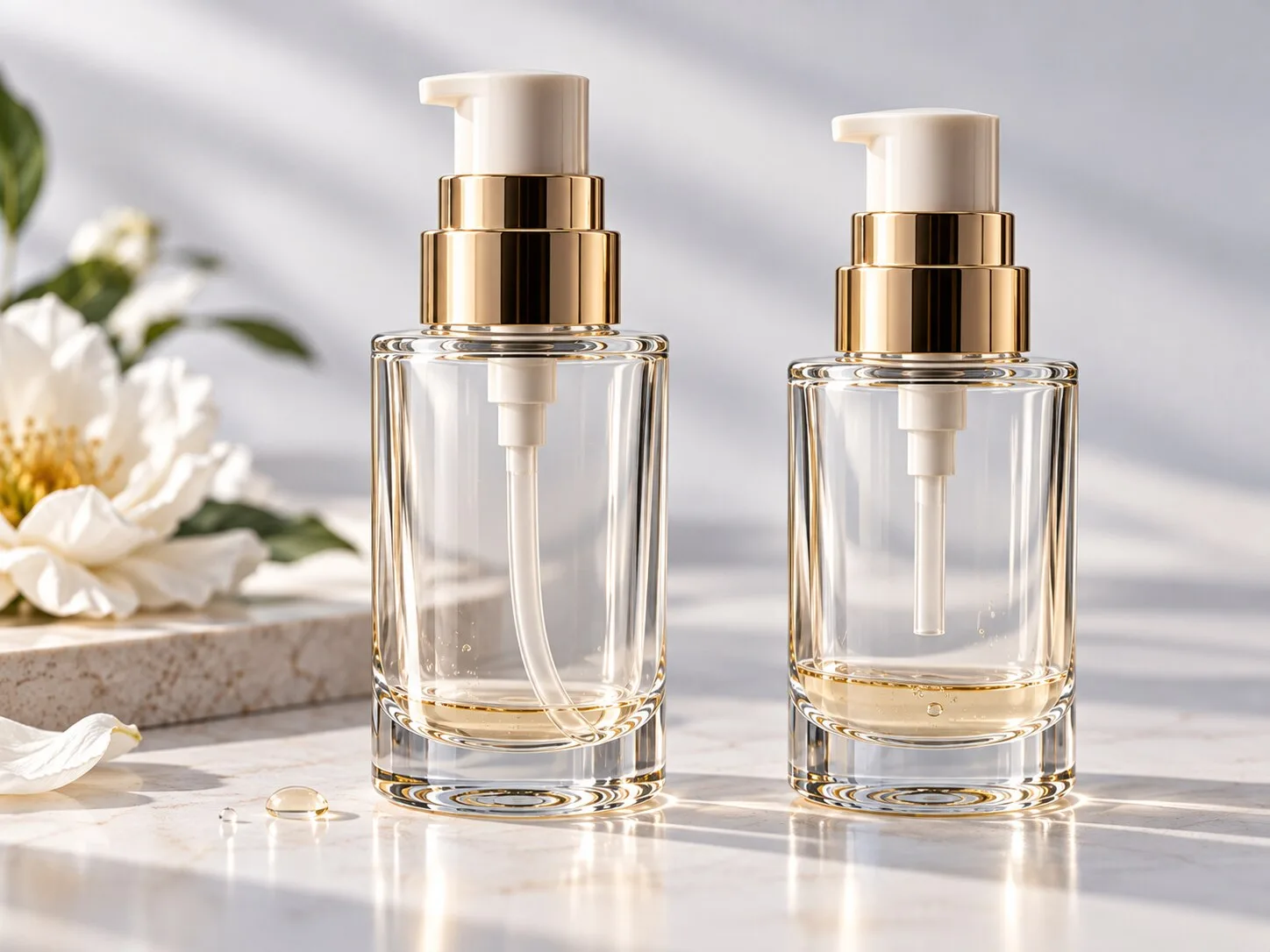
A dip tube is the tube extending from the lower section of a pump or sprayer into the formula.
Its length affects where that product pickup occurs.
A shorter tube positions the inlet higher inside the bottle. As the formula level falls below that point, the pump begins drawing air.
A longer tube reaches farther down, although extra length only helps while the tube remains correctly positioned. Once it bends excessively or presses its opening against the bottom, flow can become less consistent.
This is why product evacuation depends on more than tube length alone.
Bottle bottom shape matters. So do tube diameter and stiffness, pump structure, formula rheology and the way product collects inside the bottle.
The term “maximum liquid pickup” is therefore better understood as a complete package performance question.
Measurement Method Matters Too
Many packaging suppliers measure dip tube length from a defined gasket or sealing reference to the tip of the tube.
TricorBraun uses the top of the gasket as its stated reference. SKS describes its listed dip tube measurements as running from the gasket to the tip. O.Berk also uses a gasket based reference in its cutting method.
The important lesson for procurement teams is consistency.
When a supplier writes:
Dip tube length: 95 mm
the drawing should also show where that 95 mm begins and where it ends.
Different measurement conventions can create different numbers for the same assembled pump. An agreed drawing or approved physical sample removes that ambiguity.
Key Rules to Choose Perfect Dip Tube Length
A reliable dip tube specification starts with the actual container and dispenser.
1. Match Bottle Height and Bottom Curve
External bottle height provides limited information about usable internal depth.
This is especially relevant for cosmetic glass.
A premium glass bottle may have a substantial base. Another design may use an internal curve, raised center or recessed bottom. Two bottles with the same capacity and outside height can therefore require different dip tube specifications.
Start with the technical drawing whenever possible.
Then confirm the tube position with a production representative bottle.
For an existing bottle, internal measurement can also help identify the usable depth between the bottle finish and the lowest accessible product area.
The objective is to position the tube inlet where formula naturally remains as the bottle approaches empty.
A flat bottom bottle may support one tube position. A curved or raised base may work better with a slightly different location.
This is why dip tube length for a glass bottle should follow the actual internal geometry rather than the nominal capacity.
2. Leave Functional Clearance at the Bottle Base
The tube needs a clear path for formula to enter.
A tube ending too high increases residual product because the inlet leaves the formula earlier.
Extra length creates a different challenge.
A thicker tube may buckle or press its opening against the base. When the inlet becomes partially restricted, product flow into the tube becomes less efficient.
O.Berk's technical guidance specifically describes thicker lotion pump tubes as working with a slight clearance that gives product room to enter, while thinner sprayer tubes may be designed to curve toward the sidewall. This distinction explains why one universal bottom gap is unsuitable for every project.
The end cut can also help manage the inlet.
Angle cuts and V cuts are established dip tube configurations that help maintain an entry path near the container base. The available cut style should be confirmed with the pump manufacturer or component supplier. For mass production, approve the tube position through physical sampling.
3. Consider Formula Behavior
Formula viscosity matters, although viscosity does not create a simple rule such as “thicker formula equals shorter tube.”
The entire dispensing path needs to work with the product.
A richer lotion or serum generally needs enough space around the tube inlet for formula to move toward it. Pump chamber design, tube diameter and formula rheology also influence pickup.
A fluid toner behaves differently.
Its formula moves readily through the bottle, while a more viscous product may travel toward the inlet more slowly.
The most useful development method is therefore actual formula testing.
Fill the production representative bottle with the intended product. Prime the pump and observe output at several fill levels.
Pay particular attention as the bottle approaches empty.
This is where pump bottle stops dispensing before empty becomes a practical consumer complaint rather than a drawing issue.
A tube that performs well with a full bottle may reveal its limitations only when the remaining formula falls close to the inlet.
4. Treat Ecommerce Performance Separately
Dip tube fit contributes to dispenser function, but it should be separated from the main causes of transport leakage.
Ecommerce security depends on the complete closure and package.
Neck finish matching, gasket or sealing structure, closure application, pump locking, actuator clearance and secondary packaging all contribute to performance in distribution.
An overlength tube can bend or kink inside the bottle. Current professional supplier guidance clearly supports those dispensing risks. A direct claim that excess tube length itself causes transit leakage is much less robust, so it should not be used as a general rule.
For DTC projects, confirm tube fit during pump development, then validate the complete commercial package separately.
ISTA Procedure 3A covers packaged products weighing 70 kg or less moving through parcel delivery systems. Project 3L addresses generalized ecommerce retailer fulfillment, so the test route should follow the actual distribution model.
Common Dip Tube Mistakes Brands Make
One frequent issue is using the same tube length for several bottles because the capacities look similar.
A 30 ml cylindrical bottle and a 30 ml square serum bottle can have different shoulders, base thickness and internal depth.
Each bottle should be treated as its own package.
Another issue comes from measuring only the visible plastic tube.
Supplier references usually define tube length from a gasket or sealing datum, so procurement drawings should use the same agreed starting point.
Curved glass bases create another source of error.
A tube can appear visually long enough while its actual inlet sits above the area where the final product collects.
Excessive tube length creates the opposite condition.
The tube may bend or curl, changing its final position inside the container. A flat tube opening pressed tightly against the base can also restrict intake.
Cutting consistency matters during production.
If one lot contains meaningful variation in tube length or end cut, the final position can vary from bottle to bottle. The specification should therefore identify both the length and the measurement method.
A clear production instruction is stronger than:
“Tube should almost reach the bottom.”
Use a measurable specification supported by an approved sample.
Best Practice for Mass Production
Begin with the technical drawing of the bottle and the selected pump.
Confirm the bottle neck and pump assembly first. Then establish the supplier's dip tube measurement reference and review the internal bottle geometry.
A practical development process can include several trial lengths around the estimated target.
The purpose is comparison.
Assemble each pump with the real bottle and inspect the tube position. Look for excessive bending and confirm that the inlet remains accessible to product.
Then fill the bottles with the intended formula.
Test dispensing after priming. Continue through normal product levels and into the near empty stage.
This gives the team much more useful information than checking a full bottle alone.
The review can focus on:
pump priming, repeated output, actuator return, tube position and remaining product after the dispenser begins drawing air.
The objective is sensible product evacuation rather than a promise that every last drop will be dispensed.
Once the preferred configuration is selected, record it.
The production specification should identify the pump reference, bottle reference, tube length, measurement datum and tube end configuration. Retain an approved physical sample where practical.
TricorBraun's serum pump portfolio provides a useful commercial example. It lists multiple serum pump configurations with dip tube length made to customer specifications, demonstrating that tube sizing is normally matched to the selected package rather than treated as a universal component dimension.
For DTC products, complete the process with transport validation appropriate to the sales channel.
The tube is approved for dispensing performance. The assembled package is then evaluated for distribution performance.
These are related development steps with different objectives.
Conclusion
The cosmetic pump dip tube length may be a small line on a component drawing, but consumers experience the result every time the bottle approaches empty.
A tube positioned too high can leave accessible formula behind.
Excessive length can produce bending, curling or restricted product entry.
The right specification places the inlet close to the useful product area while maintaining a clear flow path.
Bottle geometry determines much of that position.
Tube stiffness and end cut influence it further. Formula behavior and pump architecture complete the picture.
For procurement teams asking how to measure dip tube length for a pump bottle, start by confirming the supplier's measurement datum. Then work from the actual internal bottle geometry and validate the result with the finished formula.
For brands trying to reduce product residue in a pump bottle, focus on the complete evacuation system rather than tube length alone.
That distinction creates a more reliable package.
NAISI Packaging supplies cosmetic glass bottles for serum, lotion, facial oil and other skincare projects and can coordinate compatible dispensing components according to the selected bottle. For pump projects, dip tube sizing can be reviewed against the bottle geometry and production representative samples before bulk approval.
Our glass packaging can also be customized through frosting, sandblasting, spray coating, silk screen printing and hot stamping.
For a new pump bottle project, sharing the bottle drawing or sample, capacity, formula type, pump requirement and expected quantity gives the packaging team a much clearer starting point.
Have you ever had a pump stop dispensing while visible product was still left at the bottom of the bottle?