日本語
日本語 English
 Deutsch
 한국어
한국어 العربية
 Русский
 Türkçe
 Português
 Français
Facial Oil Packaging Guide: Dropper, Pump or Roll On Glass Bottle?
A facial oil bottle can look beautiful on a shelf and still feel completely wrong once the consumer starts using it.
The packaging system extends well beyond the glass bottle itself.
Facial oils vary in viscosity, flow behavior, ingredient composition and sensitivity to light or oxygen. These differences can influence how easily a formula moves through a pipette, pump or roller ball and how the dispensing system feels during daily use.
Every formula contact component also matters. Depending on the packaging format, the oil may come into contact with an elastomer bulb, gasket, pump chamber, dip tube, wiper, roller housing or liner.
Light exposure adds another consideration.
Amber glass is often considered when a formula requires additional light protection. Cosmetic glass suppliers also offer flint, amber and colored glass options, including blue feeder colored glass. Actual light protection should be evaluated using the glass supplier's technical data together with stability testing for the finished formula. Gerresheimer, for example, lists flint, amber and feeder colored glass within its cosmetic packaging portfolio, while Stoelzle offers amber glass with light filtering properties for sensitive formulations.
This is why facial oil packaging should begin with the formula and the intended application rather than bottle appearance alone.
Does the consumer want a controlled amount in the palm? A fast one handed press? Direct application around the eye area or another targeted zone?
For glass packaging, three formats are especially relevant: droppers, pumps and roll ons.
Each creates a different relationship between the formula, the package and the skincare routine.
Core Selection Factors for Facial Oil Glass Packaging
A practical packaging decision considers the formula, user experience and manufacturing requirements from the start.
Formula Characteristics
Viscosity is one of the first variables to review.
A fluid dry oil can move easily through some dispensing systems, while a richer oil blend may require different pump or applicator characteristics. Formula rheology, surface tension and composition can also influence dripping behavior, priming, residue and dispensing consistency.
This is why the final formula should be evaluated with the actual component system.
Aptar Beauty, for example, develops different cosmetic pump platforms for different formula characteristics. Its PZ3 treatment pump is designed for medium to high viscosity formulas and lists oils and skincare products among its applications.
Material compatibility is equally important.
Dropper suppliers offer several elastomer options because one material does not suit every formulation in the same way. Virospack's cosmetic dropper portfolio, for example, includes bulb materials such as IIR, NBR and TPE.
For facial oil projects, this makes compatibility testing with the finished formula a normal part of component selection.
Light Exposure
Packaging for a light sensitive facial oil may require a colored glass bottle, coating system or another protective strategy.
Amber glass is a familiar option because amber glass systems can provide light filtering properties. The level of protection still depends on the specific glass composition and packaging specification.
Blue glass can be visually distinctive and is available within cosmetic packaging portfolios, but visual color alone should never be used as the technical specification for light protection. The supplier's transmission data and formula stability results should guide that decision.
Intended Application
The dispenser should support the way consumers actually use the oil.
A dropper supports controlled application in small amounts. A pump offers quick one handed dispensing. A roll on allows direct contact with the skin and can add a massage element to the routine.
The brand's recommended usage can also influence the choice.
For pumps, dosage per actuation deserves close attention because the output can shape the number of presses used in each application.
With conventional droppers, consumers control the amount through pipette filling and individual drops. Actual drop size can vary with formula characteristics, pipette geometry and user technique, so the system is better described as controlled dispensing rather than automatically precise volumetric dosing.
Sales and Distribution
Retail and DTC projects can place different demands on packaging.
A retail product may focus strongly on shelf presentation and tactile experience. A DTC package also needs to perform inside its secondary packaging while moving through an individual parcel network.
The bottle, closure and outer packaging therefore need to be evaluated as one system.
Production feasibility belongs in the same discussion. Neck finish, component dimensions, filling process, pipette or dip tube length and assembly method should all be confirmed before scale up.
Glass Dropper Bottles for Facial Oil
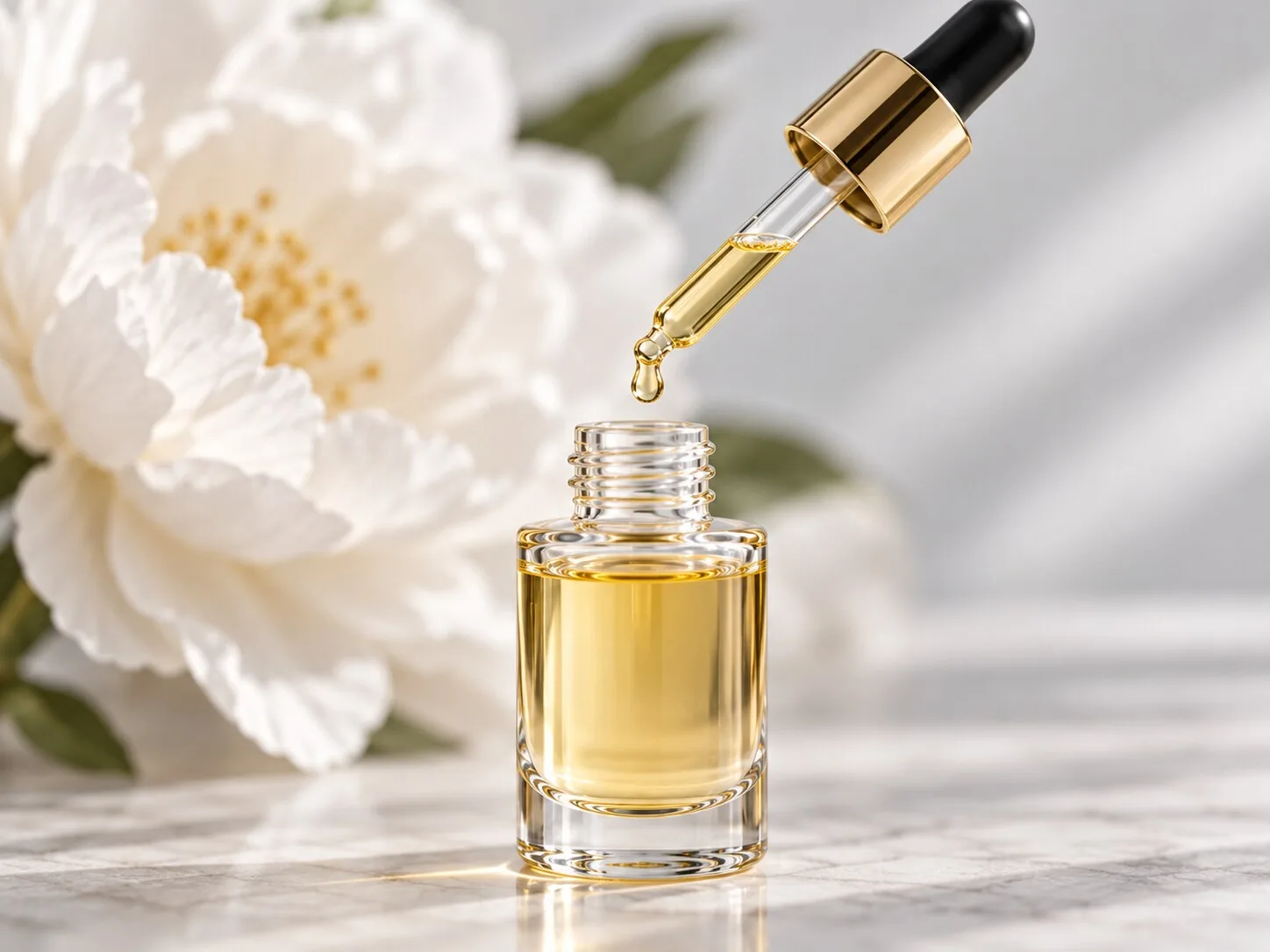
The glass dropper is one of the most familiar formats in facial oil and treatment skincare.
Its appeal comes from the application experience.
The consumer draws a small amount of product into the pipette, then releases it in controlled drops. For products positioned around a deliberate skincare ritual, this interaction can become part of the brand experience.
When a Dropper Makes Sense
A glass dropper bottle for facial oil can work well when the formula flows cleanly through the pipette and the brand wants controlled application in small amounts.
The complete system may include a glass bottle, pipette, bulb, collar and additional components such as a wiper.
Bulb material deserves attention because it can remain exposed to formula vapor or direct product contact depending on the package design and use pattern.
Professional dropper suppliers offer different elastomer options specifically because formulation requirements vary. Quadpack, for example, lists silicone, NBR and TPR options in one of its dropper systems, while Virospack offers several bulb materials across its cosmetic dropper portfolio.
Pipette Length and Wiper Design
Pipette length should match the real bottle geometry.
The objective is convenient access to the product while maintaining the clearances required by the specific dropper design. A production representative bottle and final dropper assembly provide the best basis for confirming fit.
A wiper can also improve the user experience.
Quadpack offers LDPE wipers on its Skin Up dropper systems to remove excess formula from the pipette and support cleaner application.
For facial oils, this can be useful where formula residue around the neck or pipette affects the consumer experience.
Glass Color
An amber face oil bottle can suit formulas that benefit from greater light control, while clear glass remains attractive when formula visibility is important.
The final decision should follow formulation stability requirements and supplier technical information rather than aesthetic preference alone.
Capacity Planning
For beauty projects, 15 ml, 30 ml and 50 ml are useful capacities to evaluate during development. Quadpack's current Skin Up dropper platform, for example, is available in all three sizes.
That does not make them universal standards.
The right capacity depends on recommended usage, intended product life, pricing strategy and brand positioning. A concentrated treatment may suit a smaller format, while a facial oil used more generously across the face and neck may justify a larger fill volume.
Pump Dispensing Systems for Facial Oil
A pump creates a faster and more familiar daily interaction.
For consumers who use oil every morning or evening, one or two presses can feel intuitive. It also supports one handed dispensing and keeps the application routine relatively clean.
The real decision is the pump engine behind the actuator.
Match the Pump to the Formula
Pump performance is formula dependent.
Viscosity, rheology and other formula characteristics can affect priming, flow, output consistency and actuator return.
Some treatment pumps are designed specifically for more demanding formulas. Aptar's PZ3, for example, is designed for medium to high viscosity treatment products and identifies oils and skincare among its intended applications. It is available with defined dosage options rather than one universal output.
For a pump bottle for facial oil, the final formula should therefore be tested with the selected pump.
Water alone provides limited information about how an oil based formulation will behave in actual use.
Pump Dosage
Dosage per actuation should support the intended skincare routine.
A concentrated facial treatment may call for a smaller output than a product intended for generous massage across the face and neck.
This affects more than technical dispensing.
The dose influences how many presses a consumer uses, how quickly the bottle is emptied and how naturally the packaging aligns with the brand's recommended application.
Testing should focus on actual dispensing behavior, including priming, output consistency and the feel of repeated actuation with the finished formula.
Conventional Pumps and Airless Packaging
A conventional pump and an airless system are different packaging architectures.
Many standard cosmetic pumps draw product through a dip tube. Some designs place the metal spring outside the dosage chamber or product pathway to improve compatibility with certain formulas.
Aptar's GSA, for example, places its spring outside the dosage chamber and describes a metal free pathway configuration.
That feature by itself does not define an airless system.
Airless performance comes from the complete dispensing and container architecture, often using a moving piston, pouch or another structure designed to dispense the formula while controlling air entry into the product chamber.
Aptar's EvoClassic illustrates this distinction well. The pump platform can be adapted to atmospheric, airless and tube container configurations, showing that the pump and the overall package architecture need to be considered separately.
For facial oil brands, the first question should therefore be which dispensing architecture suits the formula and consumer experience.
Dip Tube Length and Shipping
Dip tube length should be specified according to the actual pump and bottle geometry.
Bottle height, base shape and the pump manufacturer's recommendations all influence the final cut length. Residual product at the bottom of the bottle also depends on formula flow and container geometry.
For DTC sales, a locking pump can add useful protection.
Aptar's EvoLock uses a twist to lock mechanism designed to reduce accidental leakage during transit and is intended for a broad range of formula viscosities. Aptar also recommends compatibility testing for the specific application.
For packaging teams, this reinforces a simple principle: shipping performance comes from the complete package, not from a single component feature.
Roll On Glass Bottles for Facial Oil
Roll on packaging creates a different type of skincare routine.
Instead of dispensing the formula into the hand, the roller applies it directly to the skin.
This can work especially well for eye contour oils, targeted facial oils, concentrated treatments and products positioned around massage or sensorial application.
Roller Ball Material
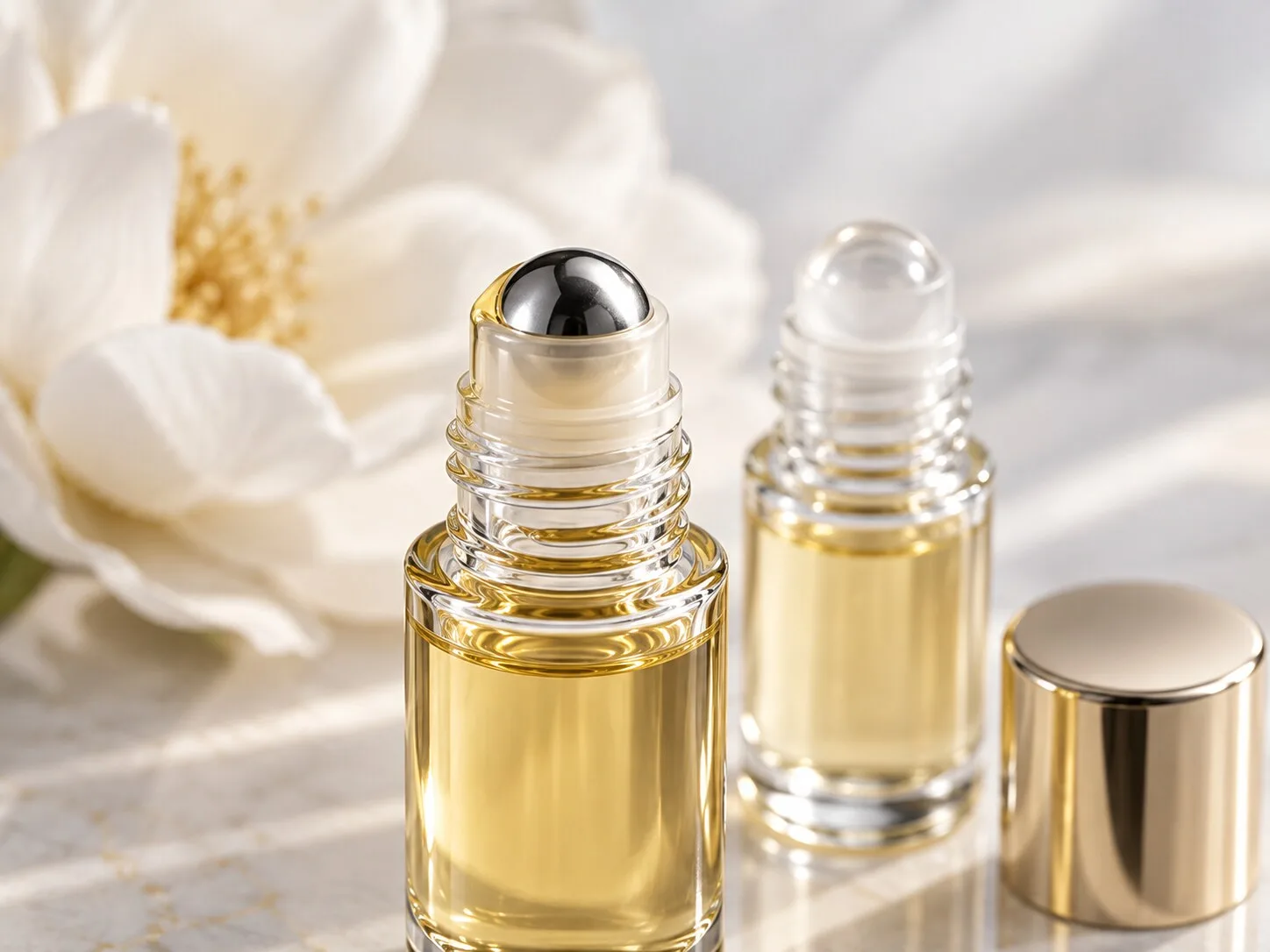
The ball can be produced in several materials.
Miron currently offers roll on systems with glass, plastic and stainless steel balls and lists facial oils and eye contour products among the intended applications.
Each option changes the tactile experience.
Stainless steel can create a cool touch during application. Glass offers a different weight and surface feel. Plastic can support a lighter component configuration.
Material compatibility should still be evaluated with the actual formula and fitment system.
Flow and Application
A roll on bottle for facial oil needs to balance glide and product transfer.
As the ball rotates, a thin layer of formula moves across the surface and reaches the skin. Formula viscosity, ball fit and housing geometry all contribute to the application experience.
Filled samples are therefore important.
The brand should evaluate whether the roller starts easily, moves smoothly and releases an appropriate amount of oil without creating excessive buildup around the ball.
Closure and DTC Considerations
The bottle neck, roller housing and cap work together as a closure system.
Miron's current roll on range pairs its roller components with matching overcaps to protect the mechanism between uses. Its Orion compatible roll on systems cover bottle capacities from 5 ml to 100 ml.
For DTC projects, the final assembled package should be evaluated in its intended shipping configuration.
A compact roll on can be convenient for travel and targeted skincare, but transport performance still depends on component fit, closure security, formula compatibility and secondary packaging.
Side by Side Comparison and Real World Brand Takeaways
Choosing between a dropper, pump and roll on becomes easier when the decision starts with application behavior.
Selection Factor | Glass Dropper | Pump System | Roll On |
Application style | Controlled dispensing in small drops | Defined output per actuation | Direct application to skin |
Consumer experience | Deliberate skincare ritual | Fast one handed use | Targeted and sensorial |
Main formula checks | Pipette behavior, bulb and seal compatibility | Viscosity, priming, dosage, seals | Flow across ball, housing and fitment compatibility |
Dose behavior | User controlled, drop size can vary | Pump output can support repeatable routines | Output depends on ball movement and application |
DTC focus | Closure sealing and dropper protection | Actuator security, locking and sealing | Roller fitment, cap retention and sealing |
Typical project direction | Facial oils and concentrated treatments | Daily use facial oils and oil serums | Eye oils and targeted treatments |
Cost planning | Driven by bottle, pipette, bulb, collar and decoration | Driven by pump engine, closure and bottle specification | Driven by ball, housing, overcap and bottle specification |
Actual cost depends on the complete component specification, decoration, quantity, tooling and assembly requirements.
For a brand launching a classic facial oil, a stock glass bottle paired with a compatible dropper can offer a straightforward starting point.
A daily use facial oil may benefit from a pump when dosage and one handed convenience are central to the routine.
A roll on can give a targeted eye or facial treatment a distinctive functional identity.
A more useful question is:
How should this formula reach the consumer's skin?
That question usually leads to a clearer packaging brief.
Pre Launch Validation Tips for Facial Oil Packaging
Packaging development becomes much more predictable when the complete filled system is evaluated before mass production.
Formula and Component Compatibility
Start with the real formula.
Evaluate all components that may contact the oil, including the bulb, gasket, wiper, pump chamber, dip tube, roller fitment and liner where applicable.
The testing plan should reflect the formulation, package materials, expected storage conditions and project requirements.
Observe both material condition and dispensing behavior.
Changes in elastomer dimensions or feel, seal performance, pump priming, roller movement, visible residue and appearance can all provide useful development information.
Functional Dispensing Tests
A dropper should draw and release the product in a way that suits the intended routine.
A pump should prime, return and dispense consistently with the selected formula.
A roll on should glide smoothly and deliver an appropriate film of product.
Production representative samples are especially valuable here because small changes in component geometry can affect the experience.
Transportation Validation
For DTC brands, evaluate the complete commercial package under a test plan appropriate to the expected distribution channel.
ISTA Procedure 3A covers individual packaged products weighing 70 kg or less moving through parcel delivery systems and simulates relevant transport hazards such as vibration and shock.
For a facial oil project, the post test review can stay practical.
Check the glass bottle, closure security, leakage, dispenser function, insert movement and condition of the retail carton.
Decoration Compatibility
Oil residue can occasionally reach the outside of the bottle during filling or normal consumer use.
Finished decorated samples should therefore be evaluated with the actual product.
Frosting, spray coating, silk screen printing and hot stamping can all create a distinctive premium look. Their performance should be confirmed on the final decorated bottle under the expected handling and product contact conditions.
Conclusion
The best facial oil packaging starts with two questions: how does the formula behave, and how should the consumer apply it?
A dropper supports controlled application in small amounts and creates a familiar premium skincare ritual.
A pump supports convenient one handed use and allows brands to work with defined dosage options.
A roll on applies the product directly to the skin and can be particularly effective for targeted treatments and massage focused routines.
Each format brings its own technical considerations.
Formula compatibility, dispensing behavior, neck finish, sealing, light exposure, transport conditions and decoration all influence the final result.
For facial oil projects, treat the bottle, dispenser, closure, formula and decoration as one packaging system from the beginning.
NAISI Packaging supplies stock and custom cosmetic glass bottles for facial oils, serums and other skincare projects. Bottle development can be combined with frosting, spray coating, silk screen printing, hot stamping and other finishing options. Matching droppers, cosmetic pumps, roller components and closures can also be coordinated according to the selected bottle and project requirements.
Sharing your formula type, approximate viscosity direction, target capacity, preferred application method, quantity and sales channel early can make sampling and component selection much more focused.
For your facial oil projects, which dispensing format creates the most development questions today: dropper, pump or roll on?