Português
 English
 日本語
日本語 Deutsch
 한국어
한국어 العربية
 Русский
 Türkçe
 Français
Cosmetic Packaging for E Commerce: How to Prepare Glass Bottles for Online Beauty Brands
A glass serum bottle can perform perfectly in a wholesale carton and face a very different journey when sold through a DTC website.
In bulk distribution, multiple products are usually packed together in defined carton configurations. Dividers, trays and other protective structures help control movement during transportation. Individual e commerce orders travel differently. A single glass bottle may pass through fulfillment, parcel sorting and last mile delivery before reaching the customer.
For beauty brands, this creates a broader packaging challenge.
The glass bottle needs suitable physical protection. The pump or sprayer needs to remain secure. The retail box should arrive in good visual condition. At the same time, the package still needs to deliver the polished unboxing experience customers expect from skincare, fragrance and premium beauty brands.
This is why e commerce cosmetic packaging works best as a complete system.
The primary glass container, dispensing components, protective inserts, retail packaging and shipping carton all contribute to the final result. For DTC brands, developing these elements together can create a package that performs well throughout distribution while preserving the visual experience that supports the brand.
Unique Challenges of DTC Individual Parcel Delivery
Traditional wholesale distribution and DTC parcel delivery expose beauty packaging to different handling environments.
In wholesale shipments, cosmetic glass bottles are commonly arranged in larger quantities inside master cartons. Internal dividers or trays can separate individual bottles and control movement. Depending on the logistics route, cartons may also travel as part of palletized loads.
A DTC order follows a different path.
The parcel may contain a single serum bottle, perfume bottle or several products with different shapes and weights. During fulfillment and delivery, the package can experience repeated changes in orientation, vibration and impacts associated with parcel handling.
ISTA recognizes parcel delivery as a distinct distribution environment and provides established testing procedures for packaged products moving through these systems.
For DTC beauty packaging, the practical concerns extend beyond glass breakage.
A pump actuator can experience pressure from surrounding packaging. A closure system needs to remain properly assembled throughout distribution. Decorative surfaces can rub against internal materials when contact points are poorly positioned. The retail carton also needs sufficient structural protection to preserve its presentation.
Then comes the customer experience.
For an online beauty brand, the delivered parcel is often the customer's first physical interaction with the product. The condition of the box, the position of the bottle and the opening sequence all contribute to the way the brand is perceived.
Protection and presentation therefore belong in the same development process.
Effective beauty e commerce packaging protects the product while keeping the structure considered, compact and comfortable to open.
Glass Bottle Stability for E Commerce Shipping
The glass bottle itself is the starting point.
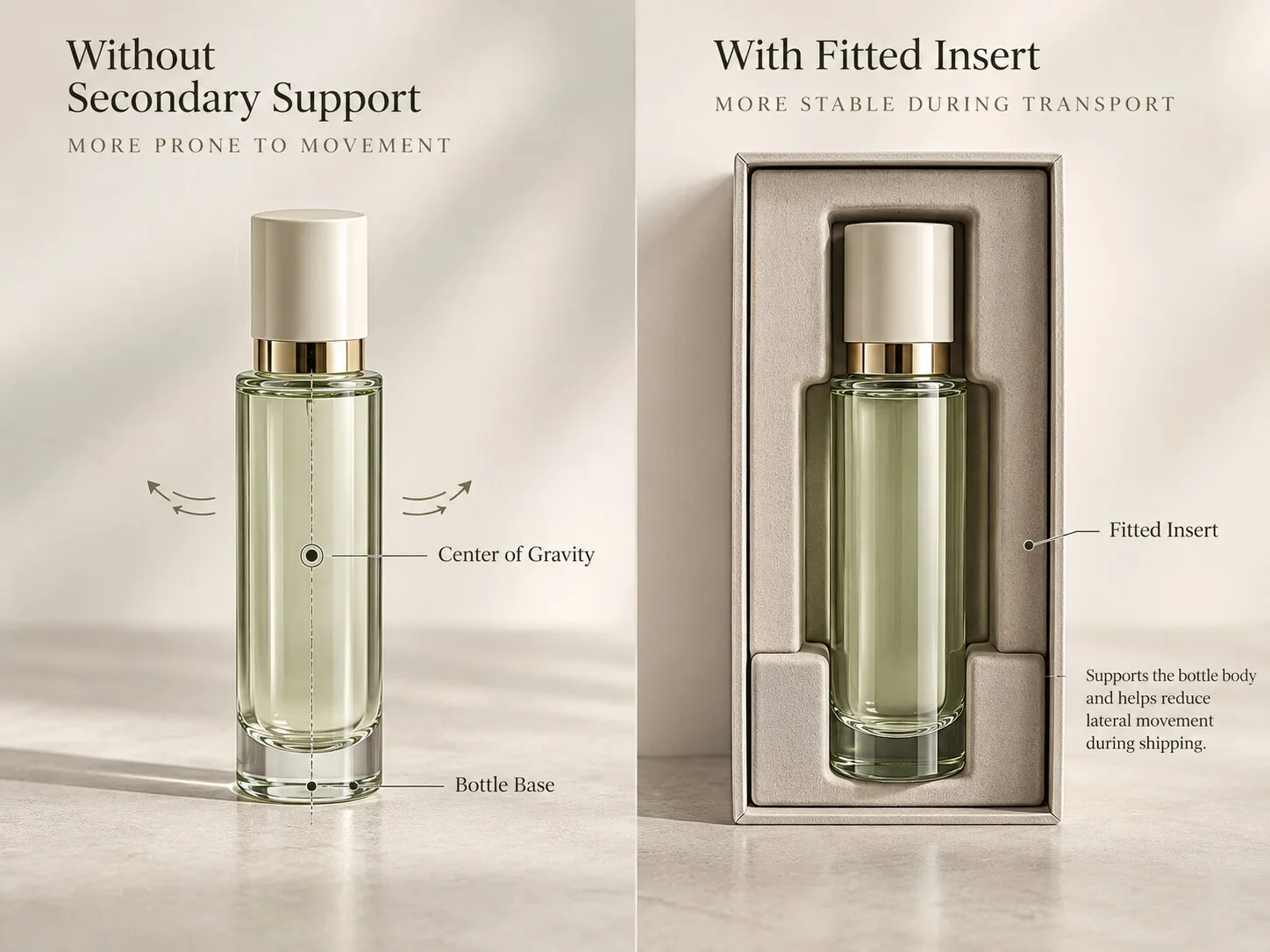
Bottle geometry influences how easily a product can be stabilized inside secondary packaging. A tall, narrow bottle usually requires a different support structure from a short bottle with a broader base. Sculpted and asymmetrical designs may benefit from inserts shaped around their actual geometry.
Center of gravity is particularly relevant when the assembled package includes a substantial cap or dispensing component.
A bottle that stands comfortably on a display surface still needs to be evaluated inside its shipping configuration. Movement in different directions can place new demands on the bottle and the supporting structure around it.
Glass weight also needs to be understood correctly.
A heavier bottle contains more glass, while structural performance depends on a broader combination of factors. Bottle geometry, glass distribution, annealing quality, manufacturing consistency, stress concentration and handling conditions all contribute to how the container performs.
For packaging buyers, this means bottle weight alone provides limited information about transportation performance.
The base is another important consideration.
Its dimensions influence standing stability and how securely the bottle sits inside an insert. A fitted cavity can provide lateral restraint while keeping the bottle in a repeatable position.
The neck area also deserves careful evaluation.
Neck finish dimensional consistency and sealing surface quality influence how well a pump, sprayer, dropper or cap works with the glass container. Correct component matching and consistent assembly help the complete package perform as intended during filling, handling and distribution.
For buyers developing glass bottle shipping packaging, production representative physical samples provide useful information that a 3D rendering cannot fully show.
Assemble the bottle with its intended closure. Place it inside the proposed insert. Review the contact points and the clearance around the shoulder, actuator and decorated surfaces.
Distinctive bottle shapes remain highly suitable for online beauty brands. A well designed protective insert can provide the additional support required by a narrow, tall or irregular container while preserving the visual character that makes the product recognizable.
Pump Selection to Manage Accidental Dispensing
The dispensing system can become one of the most important details in skincare packaging for e commerce.
Parcel transportation involves movement and frequent changes in package orientation. The actuator may also experience pressure when the surrounding packaging leaves insufficient clearance.
A suitable locking system can help reduce the risk of accidental dispensing during transit.
Twist to lock and down lock pump designs allow the actuator to remain in a secured position during handling. Dispensing suppliers such as Aptar offer cosmetic pumps with locking structures designed with transport and e commerce applications in mind.
The complete package still determines real world performance.
A locking pump benefits from adequate clearance around the actuator. An overcap, where used, should fit correctly and remain secure under the intended distribution conditions. The insert should hold the bottle body while keeping unnecessary pressure away from the dispensing head.
Dip tube length is another practical detail.
It should be specified according to the pump design, bottle geometry and component supplier's recommendations. The tube needs to reach an appropriate position inside the container while allowing the dispensing system to operate as intended.
Formula characteristics add another layer.
The same pump can perform differently with two serum formulas.
Viscosity and rheological properties can influence priming, product flow, dose consistency and actuator return. A pump evaluated with water or another simple test liquid may therefore behave differently when assembled with the finished serum, oil or lotion.
This is why cosmetic pump compatibility should be evaluated using the production representative bottle, selected pump and intended formula.
For packaging buyers, the objective is broader than choosing an attractive dispensing component.
The pump engine, dosage option, bottle neck finish, formula and secondary packaging all need to work together.
A secure actuator supports transportation performance. Consistent dispensing after the parcel reaches the customer supports the user experience.
Secondary Packaging: Protection, Product Presentation and Unboxing
Secondary packaging connects logistics with brand presentation.
Its first role is structural.
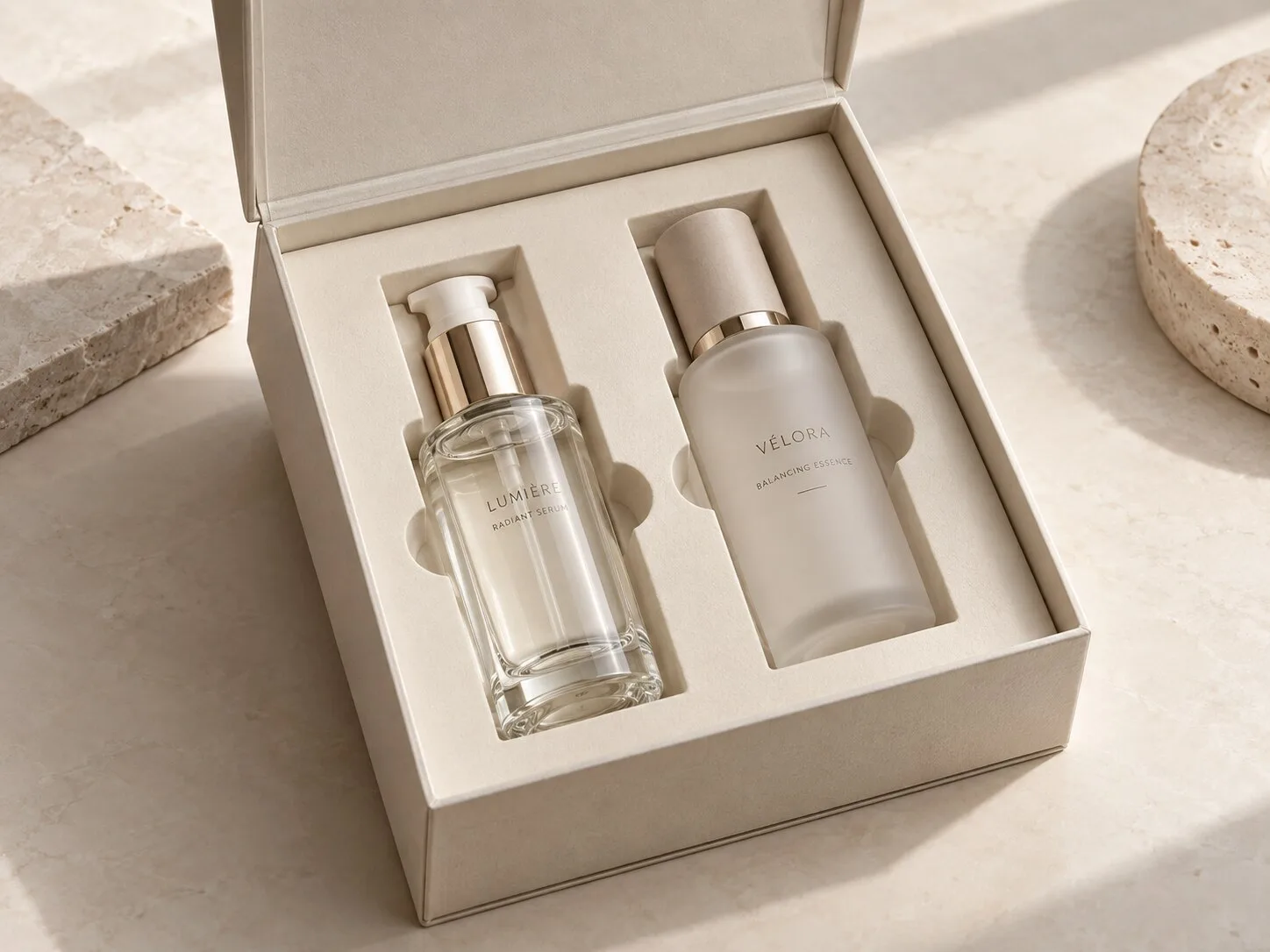
A fitted insert limits movement and helps maintain the position of the glass bottle inside the box. The material and structure should suit the bottle geometry, weight, closure system and desired presentation.
EVA can be used where a precisely cut, visually clean insert suits the product and brand positioning. It can provide stable placement for glass bottles and create an organized presentation inside rigid boxes and beauty gift sets.
Molded pulp offers another approach. Its formed structure can support the product while giving brands a different tactile and material direction.
Paperboard and corrugated inserts are also practical options for many DTC projects.
The appropriate choice depends on the actual product and distribution requirements.
A substantial fragrance bottle with a decorative cap has different structural needs from a compact serum bottle. A premium rigid presentation box also serves a different purpose from a lightweight folding carton designed for efficient fulfillment.
Surface decoration needs consideration during insert development as well.
Frosting, sandblasting, spray coating, silk screen printing and hot stamping can create a distinctive visual and tactile finish. During transportation, repeated contact between a decorated surface and the insert can affect appearance when the fit or contact material needs refinement.
Physical packaging samples help reveal these interactions.
Place the finished bottle inside the proposed insert. Check how comfortably it can be inserted and removed. Review where the glass contacts the material and confirm suitable clearance around the pump, shoulder and key decorated areas.
Then consider the customer's perspective.
A premium beauty packaging unboxing experience comes from thoughtful proportions, precise product positioning and an intuitive opening sequence. A clean structure can create a strong impression without relying on excessive packaging material.
Logistics efficiency belongs in the same discussion.
Larger boxes occupy more shipping volume. Heavy insert systems increase packed weight. Complex pack out structures can also influence fulfillment efficiency.
Effective secondary packaging for cosmetics therefore connects protection, presentation and logistics requirements in one structure.
For DTC brands, the strongest packaging often feels simple to the customer because the technical decisions have already been resolved behind the scenes.
Transportation Validation Before Product Launch
A packaging concept should be evaluated under conditions that reflect its intended distribution route.
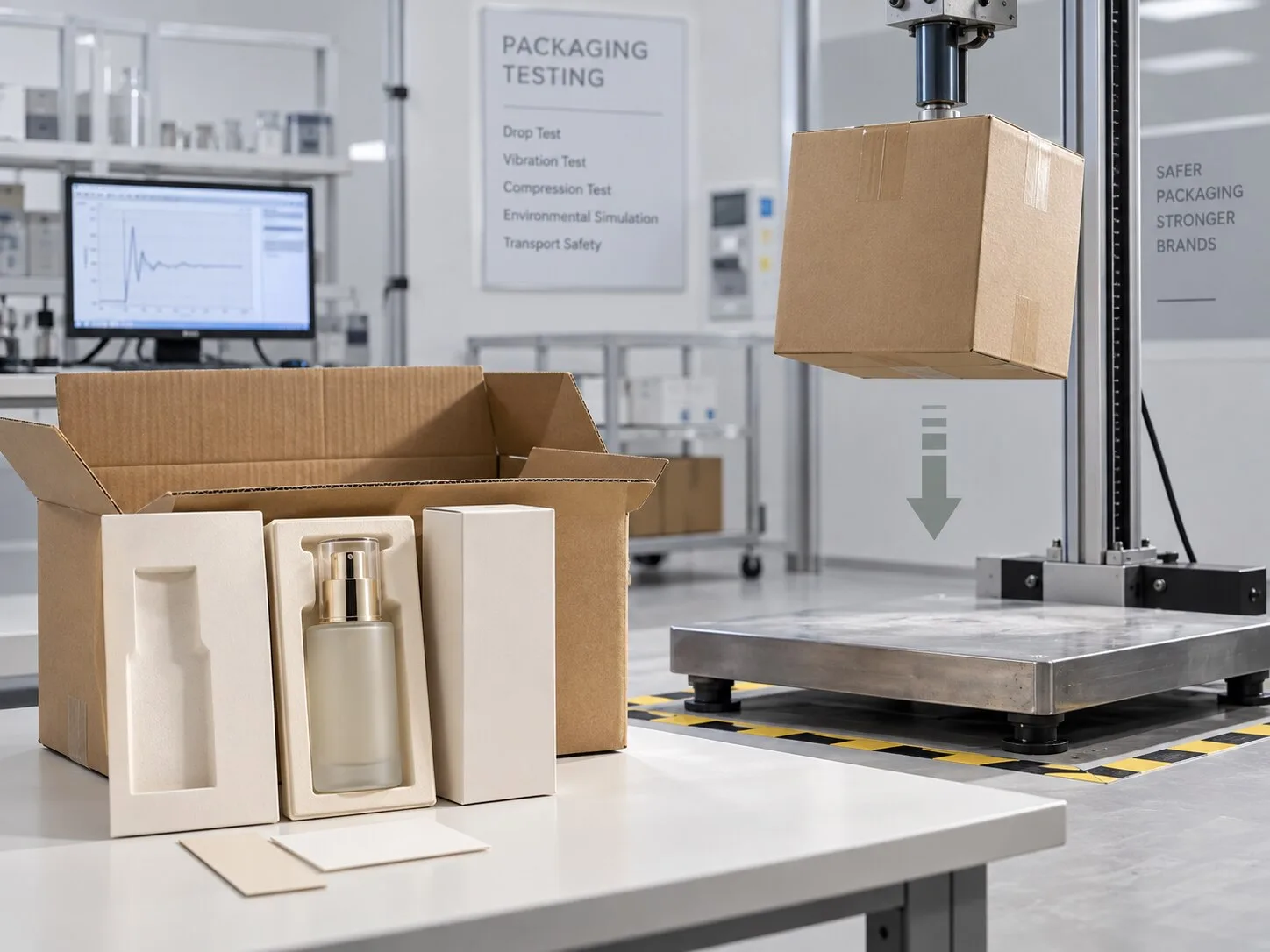
For DTC beauty brands, transport validation can help identify issues related to bottle movement, closure security, leakage, surface abrasion and secondary packaging performance before commercial launch.
ISTA provides established test procedures for packaged products moving through different distribution environments. Procedure 3A, for example, is designed for packaged products weighing 70 kg or less moving through parcel delivery systems and includes simulation of relevant transportation hazards.
The key principle for beauty brands is to evaluate the complete packaged product.
A representative configuration can include the bottle, intended formula or a suitable representative fill, pump or cap, protective insert, retail carton and final shipping box.
The appropriate validation method should be selected according to the actual distribution channel and project requirements.
Transport validation then becomes a practical development step, giving the packaging team an opportunity to refine the complete system before launch.
Practical DTC E Commerce Glass Packaging Checklist
Before approving a glass package for online distribution, procurement and product teams can review five practical areas.
Bottle Stability
Evaluate the finished bottle with its cap, pump or sprayer installed.
Review the base geometry, overall proportions, center of gravity and position inside the protective structure. Pay additional attention to tall bottles, narrow bases and heavy closures.
Closure and Dispensing Security
Confirm neck finish compatibility, sealing and correct assembly.
Where appropriate, evaluate a locking pump or suitable overcap. Provide sufficient clearance around the actuator and test dispensing performance with the intended formula.
Functional Secondary Packaging
Select the insert according to bottle geometry, weight, closure and surface finish.
Check movement control, contact points and product accessibility during unboxing. Review decorated surfaces after handling to confirm that the insert and bottle work well together.
Transportation Validation
Evaluate a production representative complete package under conditions relevant to the expected distribution route.
Use the results to refine bottle restraint, closure protection and secondary packaging where required.
Logistics Efficiency
Review final packed dimensions and weight together with fulfillment requirements.
A compact structure that provides suitable protection can support more efficient storage, packing and parcel delivery while maintaining the desired brand presentation.
This approach turns e commerce cosmetic packaging into a coordinated development project.
It also gives each supplier clearer information.
The glass manufacturer can support primary packaging selection. The dispensing supplier can provide pump and closure specifications. The secondary packaging supplier can develop the insert around the final assembled product dimensions. Filling and fulfillment partners can evaluate the package from an operational perspective.
The customer eventually experiences all of these decisions as one product.
Conclusion
Glass remains a strong packaging choice for DTC skincare, fragrance and beauty brands because it combines visual clarity, tactile quality and extensive decoration possibilities.
Online distribution adds another important design consideration.
The bottle needs stable support. The dispensing system should suit the formula, glass container and intended distribution environment. Secondary packaging needs to control movement while presenting the product well. Appropriate transport validation then provides practical information about how these elements perform together.
For brands developing glass bottle packaging for online beauty products, the most productive time to consider shipping requirements is during packaging development.
This creates more room to coordinate the bottle, closure and secondary packaging as one system.
NAISI Packaging supplies stock and custom cosmetic glass bottles for skincare, fragrance and private Portuguese beauty projects. Custom development can include bottle shapes together with surface decoration such as frosting, sandblasting, spray coating, silk screen printing and hot stamping. Matching pumps, droppers and caps can also be coordinated according to the selected bottle and project requirements.
For a DTC project, sharing the product type, bottle capacity, formula characteristics, closure preference, expected quantity and sales channel early can make packaging development more efficient and focused.
Which part of DTC glass packaging creates the most work for your team today: bottle stability, dispensing security, secondary packaging or transport validation?