Français
 English
 日本語
日本語 Deutsch
 한국어
한국어 العربية
 Русский
 Türkçe
 Português
How to Match Cosmetic Bottles With Pumps, Droppers and Caps: A Complete Guide for Skincare Brands
A glass bottle can look perfect during product selection and still become the wrong package once the pump, dropper or cap is added.
We see this quite often in skincare projects. A brand may spend weeks choosing the bottle shape, glass finish and decoration, then start looking at the dispensing system later. That is usually when questions about neck finish, pump fit, dip tube length, sealing or formula compatibility begin to appear.
From a packaging supplier’s point of view, the bottle and closure should really be selected as one system.
A pump controls dosage and dispensing. A dropper changes how the consumer interacts with the serum. A cap affects sealing, opening and the overall feel of the finished package.
In practice, good closure matching comes down to four things: neck finish, formula characteristics, dispensing experience and production requirements.
This guide explains how to match cosmetic glass bottles with pumps, droppers and caps from a practical B2B sourcing perspective. It also covers common mistakes that can create leakage, dispensing issues, assembly problems or extra work during filling.
Start With the Bottle Neck Finish
Before choosing any closure, start with the bottle neck.
A 30ml or 50ml bottle description tells you the capacity. It does not tell you which pump, dropper or cap will fit.
The neck finish is the real technical reference.
Common continuous thread neck finishes used in beauty and personal care packaging include 18/410, 20/410, 24/410 and 28/410, although available finishes vary by bottle and closure supplier.
These specifications describe the nominal neck diameter and thread style. Two bottles can look very similar from the outside while using different thread profiles or sealing structures.
That is why visual comparison alone is unreliable.
For sourcing, ask for the bottle drawing and the closure drawing whenever possible. This gives both sides a much clearer basis for checking fit.
Bottle Neck Bore and Inner Diameter
The bottle neck bore and inner diameter also need to be checked for dispensing components that extend into the container.
Pump stems, dip tubes, dropper pipettes, inner plugs and other internal components require enough space to move or assemble correctly.
Some dispensing systems also have specific dimensional requirements around the neck opening.
This matters especially when brands use custom glass bottles or unusual shoulder shapes.
Dip Tube and Pipette Length
Dip tube cut length should be confirmed against the actual bottle geometry, pump design and supplier recommendation.
A tube that is too long may bend strongly against the base. A short tube can leave more product behind.
The same logic applies to dropper pipettes.
Pipette length should suit the bottle depth while allowing proper assembly and dispensing. The base shape also matters because a flat bottom and a thick curved glass base create different internal spaces.
There is no single universal gap that works for every bottle.
Sealing Surface and Application Torque
The sealing surface, thread engagement, liner or gasket and application torque all contribute to the final closure performance.
For screw closures, the cap needs to engage correctly with the bottle finish and compress the sealing element as intended.
For buyers, this is why glass bottle closure compatibility should be checked with real production representative samples rather than relying only on a neck diameter description.
How to Match Pumps, Droppers and Caps
How to Match Cosmetic Bottle Pumps
Pumps are widely used for serum, lotion, essence and treatment products because they support convenient dispensing and controlled dosage.
Common categories include treatment pumps, lotion pumps, fine mist sprayers, foam pumps and airless dispensing systems.
Each type serves a different purpose.
A standard threaded glass bottle can accept a compatible screw pump when the neck finish and closure structure match. Airless packaging usually uses a dedicated dispensing architecture, which may include a piston, pouch or specialized inner container.
A standard pump bottle and an airless package are not the same packaging system.
Formula Compatibility and Viscosity
Viscosity is one of the first things to check when choosing a pump.
Very fluid products such as toners and facial mists can work with fine mist sprayers designed for low viscosity liquids.
Lightweight serums and emulsions often fit treatment pumps or suitable lotion pumps.
Heavier lotions and creamier products require dispensing systems designed for higher viscosity formulas.
It is better to follow the pump supplier’s technical specification than to rely on fixed viscosity ranges from a general guide.
Formula rheology, pump engine design, valve structure and outlet geometry can all influence performance.
Always test the intended formula.
Airless and External Spring Pumps
Airless systems can help limit repeated air entry during dispensing, which may be useful for selected oxidation sensitive formulas.
That benefit should be considered as part of the complete stability strategy rather than as a replacement for formulation testing.
Some pumps also use an external spring design that keeps the metal spring outside the product pathway.
This can be useful when a project aims to reduce formula contact with certain metal components. Construction varies by supplier, so buyers should request the exact pump structure.
Pump Output
Pump output should match the intended product use.
A serum requiring a small application amount may benefit from a lower output treatment pump. A lotion used more generously may require a different dosage.
The exact output should be confirmed from the supplier specification and tested with the actual formula.
What to Confirm Before Approving a Pump
For every pump project, review:
The neck finish.
The bottle neck bore.
The dip tube length.
The formula viscosity.
The output per actuation.
The sealing structure.
The filling and assembly method.
The cap or overcap fit.
Brand appearance comes after technical compatibility.
A matte pump, metallic shell or refined treatment pump can support a premium skincare line, but the dispensing system still needs to work first.
How to Match Serum Bottle Droppers
Droppers remain one of the most recognizable closures for facial oils and serum packaging.
The classic structure uses a bulb, collar and glass pipette. Other designs use push button dispensing or controlled dose mechanisms.
The strongest use case is still fluid product.
Facial oils, essential oil blends and lightweight serums usually move well through a suitable pipette.
Medium viscosity formulas may also work when the dropper has been designed for them.
As viscosity increases, standard bulb droppers generally become slower to fill and dispense.
This is why formula testing matters more than a simple viscosity number.
Bottle Compatibility
Droppers are commonly paired with smaller narrow neck glass bottles.
15ml, 30ml and 50ml are common sizes, although larger formats also exist.
The technical decision comes from the neck finish, pipette diameter, pipette length and closure design rather than bottle capacity alone.
Bulb Material
NBR, EPDM, silicone and other elastomer options may be available depending on the dropper design and supplier.
Material compatibility should be confirmed with the finished formula.
This is especially important for oils, essential oil blends and formulas containing solvents.
A bulb that works well with one serum may behave differently with another formula after prolonged contact.
Dropper Positioning
From a branding perspective, droppers naturally support a more ritual focused skincare experience.
A high clarity glass bottle with a refined dropper and minimal silk screen printing can feel premium without excessive decoration.
Amber or colored glass can support another direction, especially for botanical or oil based formulations where additional light protection forms part of the packaging strategy.
How to Match Cosmetic Bottle Caps
Caps cover a wider range of product types.
Common options include screw caps, disc top caps, flip top caps, wide mouth jar lids and closures with liners or inner sealing components.
The neck finish remains the starting point.
A narrow neck bottle may use a screw cap or dispensing closure. A cream jar usually requires a wider thread system matched to the jar finish.
Formula and Sealing
Caps can support products across a broad viscosity range because the consumer may pour, shake, scoop or access the product directly depending on the package format.
For cream jars, brands often combine the outer lid with an inner disc or sealing liner.
This can improve cleanliness and support a more finished unboxing experience.
Some projects also use induction sealing liners or foil seals where the bottle, closure and filling process are designed for that system.
The exact structure should be confirmed with the filling partner.
Premium Closure Options
Closure material and finish can completely change the look of a glass package.
Plastic caps can be customized through color and surface finishing.
Aluminum shells can create a clean metallic appearance.
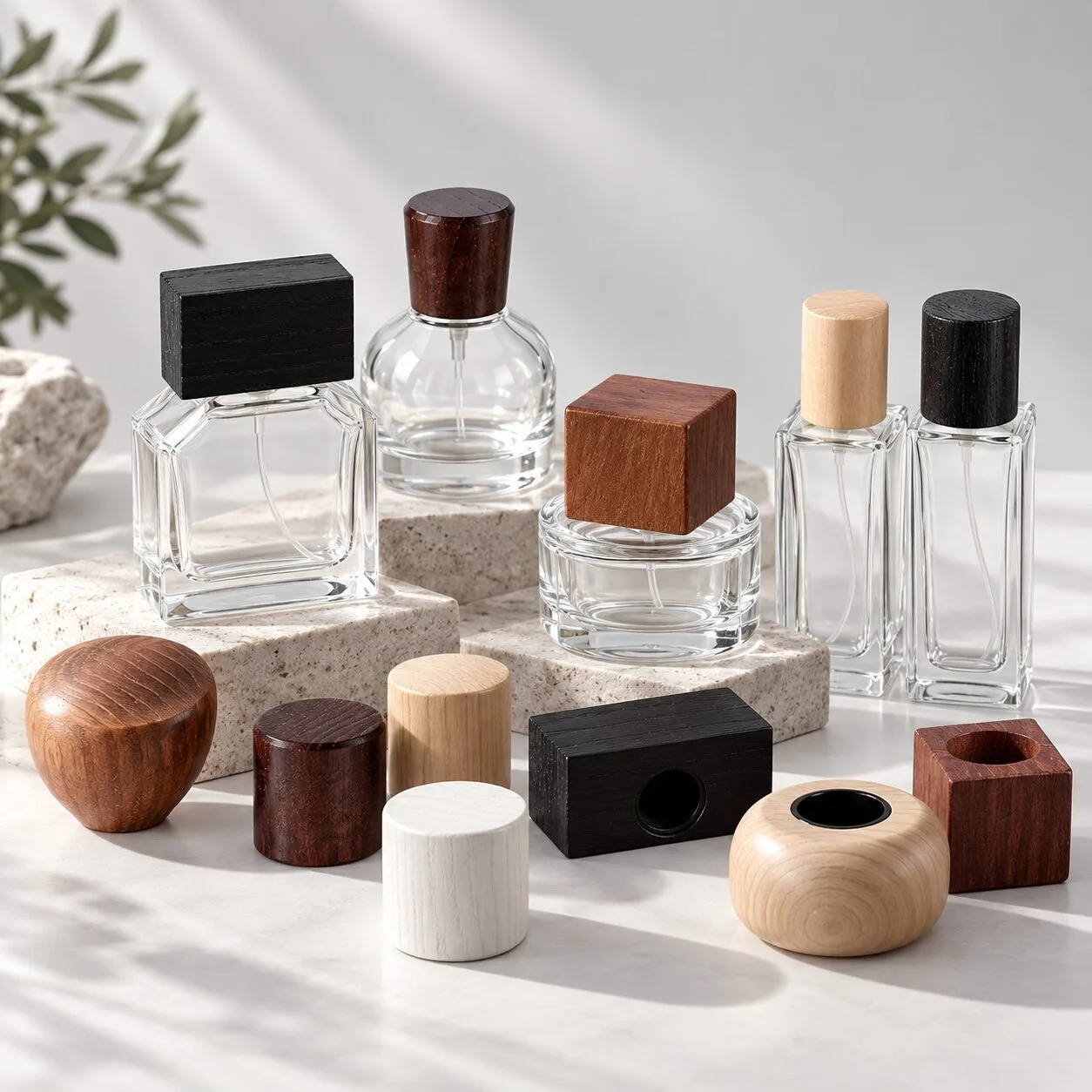
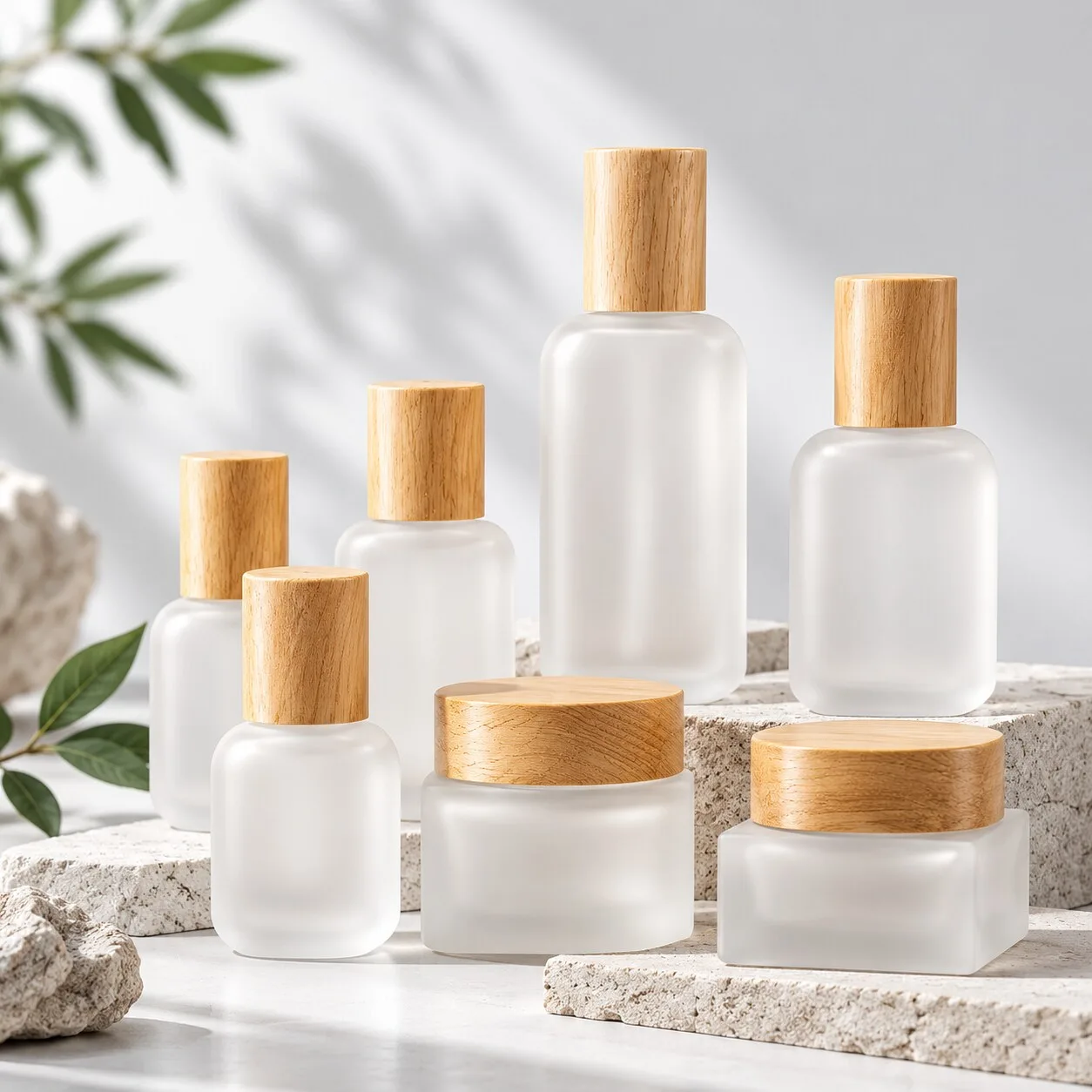
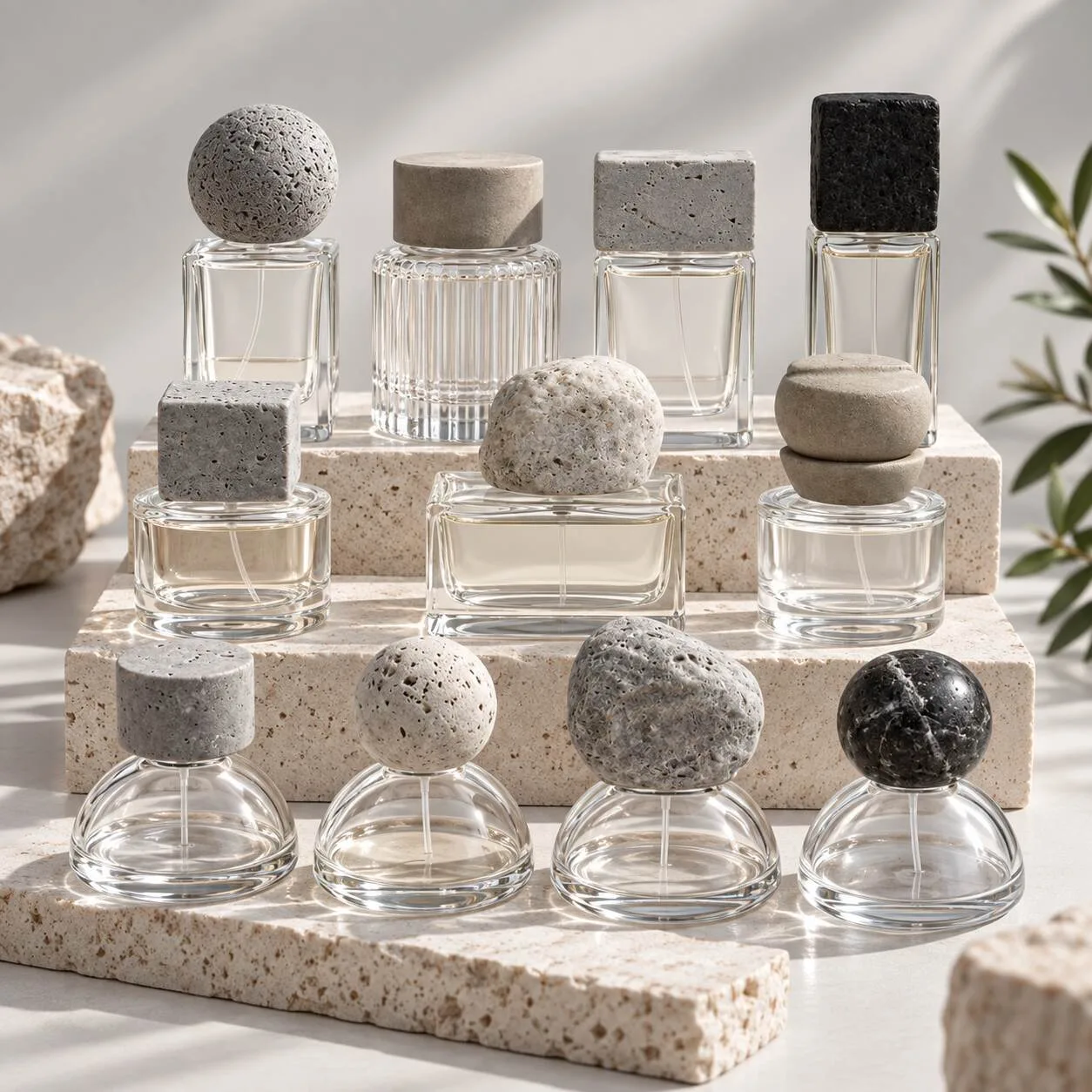
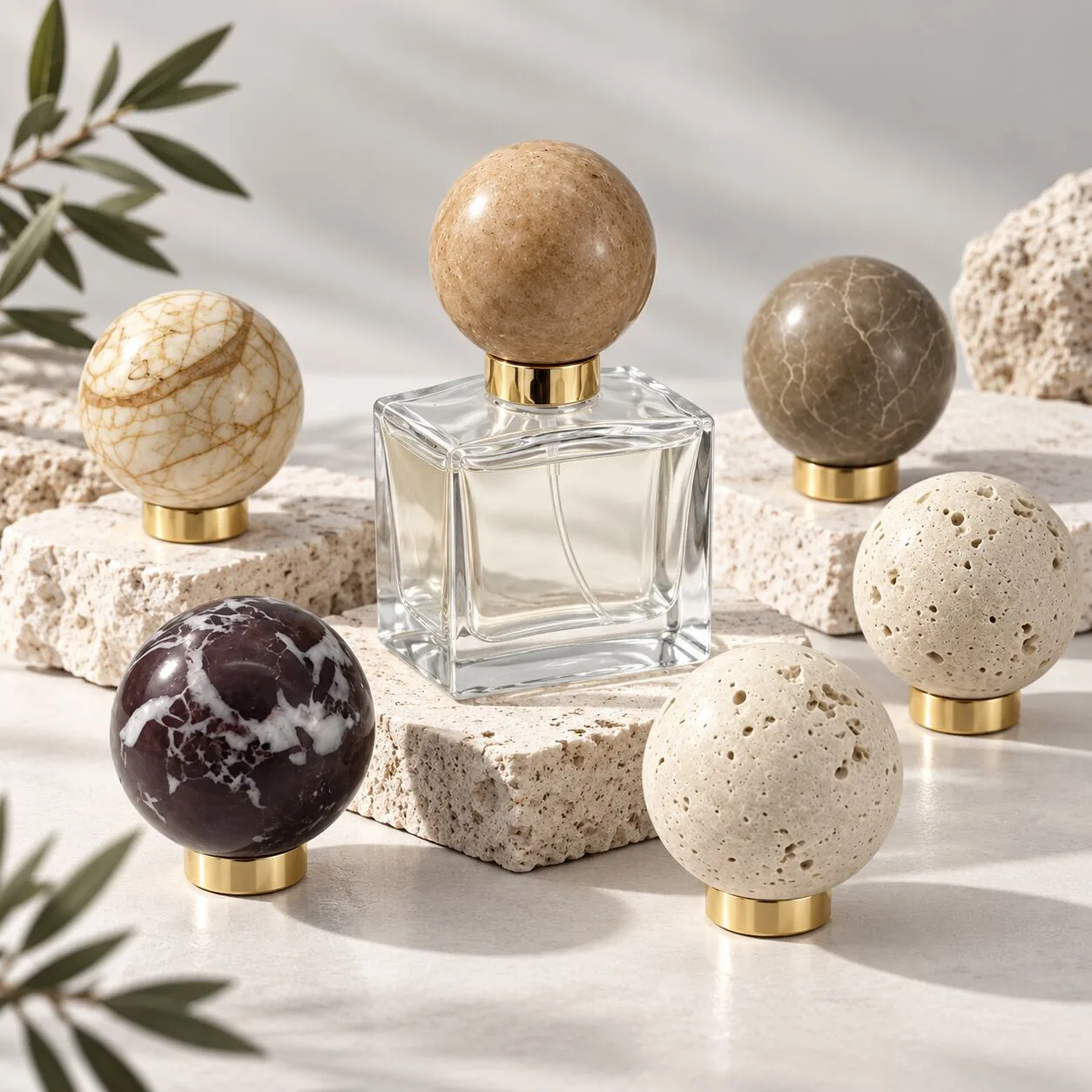
Bamboo, wood and stone style closures can introduce a more tactile natural direction.
Magnetic structures are also used in selected premium packaging concepts.
The technical fit still comes first.
A beautiful cap only becomes a successful packaging solution when thread engagement, sealing and assembly are correct.
Recommended Closure Combinations by Product Type
Toner or Facial Mist
A straight sided glass bottle can pair with a compatible fine mist sprayer when the product is intended for spray application.
For products designed for controlled pouring, a screw or dispensing cap may work better.
The right choice depends on dosage and consumer use.
Active Serum
A narrow neck glass serum bottle can work with a treatment pump, compatible dropper or suitable airless system depending on formula requirements.
For oxidation sensitive formulas, packaging should form part of the overall stability strategy.
Lotion and Lightweight Emulsion
A cylindrical or rectangular glass bottle paired with a compatible lotion or treatment pump is a common solution.
Pump output should match the recommended application amount.
Cream and Mask
Wide mouth glass jars usually use screw lids.
An inner disc or sealing liner can support cleanliness and help reduce product transfer to the outer lid.
Where induction sealing is required, bottle finish, liner and filling equipment should be evaluated together.
Travel and Sample Packaging
Small glass bottles can use miniature pumps, screw caps or other compact closures.
Travel performance should be checked through leakage and transport testing using the finished formula.
Facial Oil and Essential Oil
Amber or colored glass is often chosen for oil based products, especially when the formula benefits from additional light protection.
A compatible dropper can support controlled application and a familiar premium experience.
Bulb and sealing materials should be tested with the actual oil blend.
Six Common Bottle and Closure Matching Mistakes
1. Choosing the Closure by Appearance First
Two pumps or caps can look almost identical while using different neck specifications.
Always confirm the bottle finish before selecting the closure.
2. Incorrect Dip Tube or Pipette Length
A strongly bent dip tube can affect dispensing consistency.
A short tube can leave more product in the bottle.
Cut length should follow actual bottle geometry.
3. Ignoring Formula and Material Compatibility
Every dispensing system contains materials beyond the glass bottle.
Elastomers, plastics, coatings and internal pump parts should be evaluated with the intended formulation.
4. Overlooking the Sealing System
Leakage performance depends on the full package.
Thread fit, sealing surface, liner, gasket, application torque and assembly all contribute.
5. Skipping Compatibility Testing
A package that works with water may behave differently with the final formula.
Use production representative components and evaluate the package under relevant storage conditions.
6. Forgetting About the Filling Line
The closure also needs to work with the production process.
Pump placement, screw capping, dropper insertion and jar sealing may require different equipment.
Sharing packaging samples with the filling partner early gives the project a much clearer route to production.
Final Thoughts: Choose the Closure as Part of the Complete Package
There is no single pump, dropper or cap that works best for every cosmetic glass bottle.
The right closure starts with technical compatibility.
First confirm the bottle neck finish.
Then review formula viscosity, dispensing requirements, material compatibility and sealing.
After that, evaluate filling equipment, visual design and brand positioning.
This order helps brands make better packaging decisions with fewer surprises later.
Quick Bottle, Formula and Closure Selection Table
Product Type | Typical Glass Format | Closure Direction | Main Selection Focus |
Toner | Narrow neck bottle | Fine mist sprayer or dispensing cap | Spray pattern or controlled flow |
Facial Serum | 15ml to 50ml serum bottle | Dropper or treatment pump | Viscosity and dosage |
Facial Oil | Small glass bottle | Dropper | Pipette and bulb compatibility |
Lotion | Pump bottle | Lotion or treatment pump | Viscosity and output |
Cream | Wide mouth jar | Screw lid | Sealing and inner disc |
Travel Product | Mini glass bottle | Compact pump or cap | Leakage and transport |
Sensitive Formula | Formula specific packaging | Suitable pump, dropper or airless system | Stability and compatibility |
For sourcing teams, the most useful information to send a supplier includes the bottle drawing, neck specification, formula type, approximate viscosity, preferred dispensing method, target capacity and expected order quantity.
NAISI Packaging supplies cosmetic glass bottles together with compatible pumps, droppers and caps for skincare packaging projects.
Surface customization can include frosting, sandblasting, spray coating, silk screen printing and hot stamping according to the selected bottle and design.
If you are comparing closure options, share your bottle drawing and formula type first. A complete package can then be evaluated around fit, dispensing performance and production requirements.
What is the biggest closure matching challenge you have experienced in a skincare packaging project?