日本語
日本語 English
 Deutsch
 한국어
한국어 العربية
 Русский
 Türkçe
 Português
 Français
Dropper vs Pump Serum Bottle: Which Packaging Is Right for Your Formula?
A good serum formula can still lose value when the dispensing system is poorly matched to it.
This happens more often than many skincare brands expect. The bottle looks right, the decoration fits the brand, and the formula has already passed development. Then sampling begins and practical questions appear. The dropper picks up too little product. The pump output feels excessive. A thicker serum moves slowly through the dispensing system. The closure works beautifully with water during testing but behaves differently with the actual formula.
For serum packaging, two formats dominate many beauty projects: the classic dropper bottle and the pump bottle.
Both can support premium skincare. Both can work with glass packaging. Their performance, however, depends heavily on formula viscosity, dispensing requirements, component construction and how consumers are expected to use the product.
The choice therefore deserves more than a visual decision.
This guide compares dropper vs pump serum bottle packaging across eight practical dimensions, from dosage and formula compatibility to filling and travel use, helping skincare brands choose a system that works at both the product and production level.
First Understand the Basic Positioning of Dropper and Pump Packaging
Dropper Serum Bottles
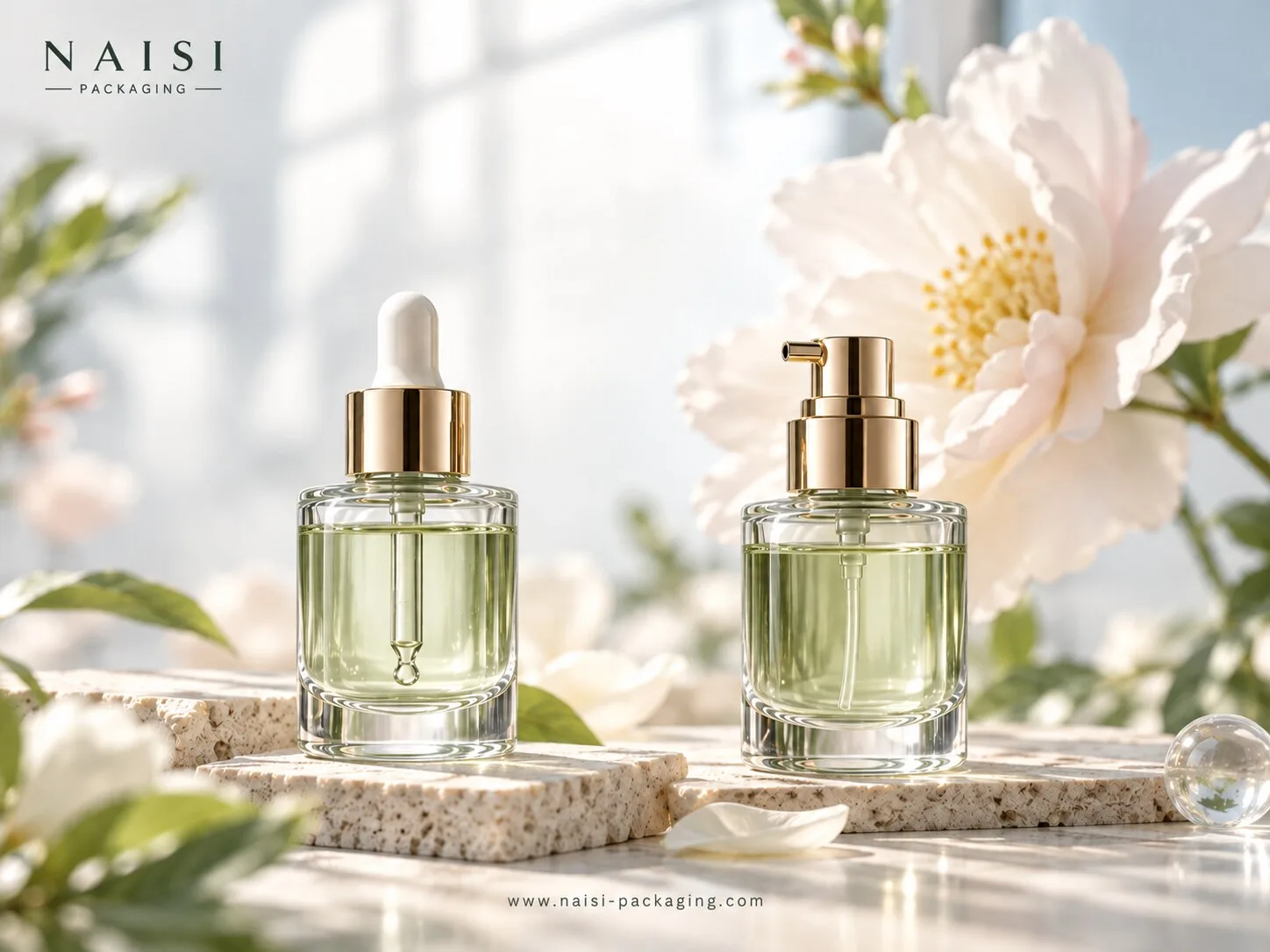
A serum dropper bottle normally uses a pipette connected to an elastomer bulb or similar actuator. When the user compresses and releases the bulb, liquid is drawn into the pipette and dispensed in drops.
This format is widely associated with facial oils, fluid serums, botanical formulations and concentrated skincare.
Its appeal is partly functional and partly emotional.
Consumers can see the liquid enter the pipette and control how much they dispense. That interaction creates a slower, more deliberate skincare ritual, which fits many premium, natural and treatment oriented brands.
High clarity glass can make this format particularly attractive. A clear or lightly tinted serum displayed through a refined glass bottle can become part of the visual experience.
Pump Serum Bottles
A pump uses a mechanical dispensing system to deliver product through repeated actuation.
There are several structures within this category. Standard treatment pumps, lotion pumps and airless systems operate differently and should be evaluated separately rather than treated as one identical format.
For serum applications, treatment pumps are common because they can provide relatively controlled output in a compact closure.
Airless packaging uses a different internal package architecture, often with a moving piston, pouch or other system designed to dispense product while limiting repeated air entry into the product chamber.
This makes pump packaging attractive for brands prioritizing quick application, controlled dispensing and reduced repeated exposure during use.
The important point is simple: a pump bottle and an airless bottle are not automatically the same thing.
Eight Core Differences Between Dropper and Pump Serum Bottles
Dosage Accuracy
Dosage is one of the first areas where the two systems behave differently.
With a dropper, the amount dispensed depends on several variables. Pipette diameter, bulb design, formula viscosity, how strongly the user compresses the bulb and how the liquid forms a drop can all affect the final quantity.
This gives consumers flexibility.
Someone may use three drops in the morning and five at night. For facial oils and concentrated products, that sense of control can be useful.
A pump generally provides more repeatable output when it is operated correctly and matched to the intended formula.
Pump suppliers usually specify an approximate dosage per actuation for a particular pump engine. This allows formulators and product developers to design usage instructions around a more consistent dispensing quantity.
Even here, physical testing matters. Formula viscosity and pump performance can influence real world output, so the supplier specification should be confirmed with the actual product.
For brands that want a highly repeatable daily dose, a suitable pump can offer an advantage.
For brands where flexible drop by drop control is part of the ritual, a dropper may be more appropriate.
Formula Viscosity Compatibility
Viscosity is often the deciding factor.
Droppers work especially well with fluid oils, lightweight serums and other formulas that can move easily through the pipette.
Some medium viscosity products can also work with droppers when the pipette opening, bulb design and formula properties are suitable. The practical limit depends on the complete dropper system rather than a universal viscosity number.
As viscosity increases, drawing product into a narrow pipette can become slower and less convenient.
Pump systems offer a broader range of possibilities because different pump engines are designed for different formula characteristics.
A treatment pump can suit many serum textures. Lotion style pumps can support somewhat heavier products. Airless systems are available for a range of skincare viscosities, although every airless pump still has its own operating limits.
This is why the product name alone provides very little technical guidance.
Two products both called "serum" can behave completely differently. One may flow almost like water. Another may have a gel texture.
Always test the intended formula.
User Interaction
Packaging creates part of the skincare ritual.
Droppers make the dispensing action visible. The user opens the bottle, draws up product and releases individual drops. This slower sequence can reinforce a sense of treatment, craft and concentration.
That experience fits naturally with facial oils, botanical serums and high end formulations where the application ritual is part of the brand story.
Pump bottles communicate something different.
They feel efficient and direct. The user presses once or twice and immediately receives the product. Many pump systems can also be operated with one hand, which suits fast morning routines and high frequency daily skincare.
Neither interaction is inherently more premium.
A well designed glass pump bottle with precise component fit can feel extremely refined. A dropper bottle with poor proportions can feel ordinary.
Premium perception comes from the complete package: bottle quality, glass clarity, closure fit, surface decoration, dispensing action and the way everything feels together.
Contamination Exposure
This topic needs careful wording because packaging format influences exposure but does not determine product preservation on its own.
A dropper bottle is opened during each use. The pipette is removed from the package and then returned.
If the pipette tip touches the skin, fingers or another surface, material can potentially be transferred back toward the package. Consumer instructions and good dropper design can help manage this.
A conventional pump usually keeps more of the internal product path enclosed during dispensing.
Airless systems can go further by limiting repeated air entry into the product chamber as product is dispensed. This can be valuable for certain formulas, but the term "airless" should not be interpreted as absolute zero exposure to oxygen throughout the product's entire life.
The formula itself still needs an appropriate preservation and stability strategy.
Packaging supports that strategy. It does not replace it.
For sensitive formulations, brands should evaluate the complete package through compatibility and stability testing rather than assuming one dispensing style automatically provides sufficient protection.
Formula Compatibility
Component compatibility is another area that deserves early testing.
In a dropper system, the formula can interact with more than just the glass bottle.
The bulb material, pipette, closure insert, wiper or sealing components may all need evaluation depending on the structure. Certain oils, solvents, acids or other formula ingredients can behave differently with different elastomers and polymers.
The exact material specification should therefore come from the component supplier.
Pump systems contain their own set of materials.
Depending on the pump architecture, the formula may contact plastic components, seals, pistons, valves and other internal parts. Some pump systems are designed so that the metal spring sits outside the product path, while others use different internal constructions.
This is why saying "pump" tells a buyer very little about formula compatibility.
Ask for the pump specification.
Then conduct compatibility testing with the intended formula.
Look for changes in dispensing, swelling, cracking, discoloration, odor, leakage or other signs that the package and formula need adjustment.
Premium Positioning
The visual language of dropper and pump packaging can support different brand identities.
A glass dropper bottle has long been associated with concentrated skincare, facial oils and botanical formulations.
Pair it with high flint glass, restrained typography and a precisely finished closure, and it can create a very strong premium impression.
The transparency of the bottle also gives brands an opportunity to make the formula itself part of the visual identity.
Amber, green and customized glass colors can move the same structure toward a very different aesthetic.
Pump packaging often communicates precision and convenience.
A clean glass serum bottle with a compact treatment pump can fit clinical skincare, dermatologist inspired products and modern performance driven brands. Minimalist packaging works particularly well here because the dispensing system itself creates a more engineered visual character.
Airless packaging can also support a technical positioning where controlled dispensing and product protection are part of the product story.
The strongest choice is the one that matches the formula and the brand promise at the same time.
Filling and Mass Production
Dispensing format also affects production planning.
Dropper bottles require the bottle to be filled and then assembled with the complete dropper closure. Depending on the filling line, bottle geometry, closure and production scale, this may involve automatic, semi automatic or manual assembly steps.
The line needs to handle the bottle and closure accurately.
Pipette length is another important detail. It should suit the internal bottle height and geometry while leaving appropriate clearance at the base.
Pump bottles follow a different assembly sequence.
The filling line must accommodate the bottle dimensions and then apply the selected pump or closure correctly. Screw pumps may require controlled torque. Snap on or other pump structures need the corresponding assembly process.
Airless packages may use their own filling requirements depending on system design.
There is no universal rule that a pump is always faster to fill than a dropper.
Actual production efficiency depends on the component, equipment and filler.
For B2B buyers, the better approach is to share the intended packaging with the contract filler early. Confirm bottle handling, filling method, closure assembly and line compatibility before approving mass production packaging.
Travel and Daily Use
Travel performance depends heavily on the complete closure design.
Dropper packaging contains several sealing interfaces, including the bottle neck, dropper closure and sealing components. A properly matched system can perform well, while weak component matching can increase leakage risk.
Air travel also introduces changing pressure conditions, so travel oriented packaging should be tested under relevant conditions rather than judged simply by closure type.
Pump packaging can offer convenient everyday portability when the actuator includes an appropriate cap, locking mechanism or protective structure.
Again, the pump itself does not automatically guarantee leak resistance.
A suitable neck finish, seal, actuator design and assembly are all part of the result.
For brands selling through ecommerce or travel channels, conduct package testing with the finished formula and final secondary packaging.
How to Choose Between a Dropper and Pump Serum Bottle
Choose a Dropper Bottle When
A dropper is worth considering when the formula is relatively fluid and the brand wants consumers to control the amount drop by drop.
Facial oils are a natural application.
Lightweight water based serums and selected concentrated treatments can also work well where the formula moves easily through the pipette.
The format is especially attractive when application ritual forms part of the premium experience.
Natural beauty, botanical skincare, niche treatment brands and products positioned around concentrated ingredients often use this packaging language successfully.
A dropper also gives designers opportunities to showcase glass.
A high clarity bottle with a simple pipette closure and restrained decoration can create a sophisticated look with very few elements.
Choose a Pump Bottle When
A pump becomes attractive when consistent dispensing and fast daily use are priorities.
Many hydrating serums, treatment essences and medium viscosity skincare products can work well with a suitable treatment pump.
For formulas requiring a more enclosed dispensing environment, a correctly selected pump or airless system may help reduce repeated product exposure during use.
The exact package should still be selected around formula stability requirements.
Pump packaging also fits brands with clinical, functional or technology focused positioning.
A precise actuator, minimalist glass bottle and clean typography can create a polished professional appearance.
For frequent daily use, the convenience is difficult to ignore.
Three Procurement Checks Before Final Approval
The first is formula compatibility testing.
This should happen with production representative bottles and dispensing components, using the actual or representative formula. Evaluate dispensing performance, sealing, component appearance and material interaction under conditions relevant to the intended product.
The second is filling line compatibility.
Speak with the filling partner before the packaging specification is completely locked. Confirm bottle dimensions, closure type, assembly method and any equipment requirements.
This can prevent expensive adjustments later.
The third is complete package cost.
Unit component price is only one part of the calculation.
Also consider filling efficiency, decoration, assembly, rejected components, secondary packaging, transport protection and potential after sales issues.
A slightly more expensive dispensing system can make commercial sense if it gives the product better consistency and creates a smoother production process.
Conclusion
A serum bottle is not simply a container around a formula.
The dispensing system controls how consumers access that formula every day.
Dropper packaging can provide flexible dosage, strong ritual value and an elegant presentation for fluid serums and oils. Pump packaging can deliver convenient operation and more repeatable dispensing across a wider range of product concepts. Airless systems add another packaging architecture for projects where limiting repeated air entry is valuable.
The right choice starts with the formula.
Then consider dosage, viscosity, compatibility, brand positioning, filling equipment and how customers will actually use the product.
For packaging buyers, the most reliable process is to test the bottle, dispensing system and formula as one complete package before production.
NAISI Packaging supplies cosmetic glass serum bottles with compatible dropper and pump solutions, along with custom frosting, spray coating, silk screen printing and hot stamping for skincare packaging projects.
The goal is simple: match the packaging to the formula first, then build the visual identity around a system that already works.