日本語
日本語 English
 Deutsch
 한국어
한국어 العربية
 Русский
 Türkçe
 Português
 Français
Glass Serum Bottle Sizes Explained: 15ml, 30ml, 50ml and Beyond
Choosing the right serum bottle capacity looks like a small packaging decision until the product moves into pricing, filling, shipping and actual consumer use.
Many skincare brands naturally begin with 30ml because it is familiar across the serum category. Yet capacity works best when it is selected around the formula, recommended dosage, dispensing system, target retail price and customer experience.
A concentrated facial oil may fit naturally into a compact 15ml bottle. A daily hydrating serum may benefit from 30ml or 50ml. A larger treatment product used across the face, neck and body may require another format entirely.
For packaging buyers, serum bottle sizes also influence bottle proportions, pump or dropper selection, decoration area, carton dimensions and inventory planning.
This guide compares the most commonly requested capacities from a practical cosmetic glass packaging perspective, with a focus on how beauty brands can build a size strategy that supports both product positioning and commercial development.
Why Serum Bottle Capacity Matters
Capacity influences how consumers understand a skincare product before they even read the ingredient list.
A small bottle often communicates concentration, targeted treatment or premium positioning. A larger bottle can suggest daily use, generous application or greater product value. Both can work successfully when the size supports the formula and brand story.
Usage cycle is one of the first considerations.
A serum designed for one or two small applications each day can remain practical in a smaller volume. A product intended for broader application or more generous dispensing may create a better experience in a larger bottle.
Retail price is closely connected.
Smaller capacities allow brands to create an accessible entry point for premium formulas. Larger sizes can support a stronger value perception for consumers who already use the product regularly.
Packaging cost should be evaluated as a complete system rather than simply calculated by the amount of serum inside.
Every serum package may include a glass bottle, dropper or pump, cap, decoration, inner components, carton and shipping protection. Moving from 30ml to 50ml does not mean every packaging component increases proportionally in cost.
This is why packaging cost per milliliter can vary considerably between formats.
The visual design also changes with capacity. A 15ml bottle has limited space for branding, while a 50ml bottle can provide more room for silk screen printing, color effects and visual hierarchy.
Capacity is therefore a product development decision, not simply a filling specification.
15ml Serum Bottles: Compact and Focused
A 15ml serum bottle is particularly suitable for products where a small quantity already represents a meaningful usage period.
Eye serums, concentrated facial treatments, booster formulas and selected facial oils often fit this type of packaging direction.
From a branding perspective, 15ml can create a refined and concentrated impression.
A compact high clarity glass bottle paired with a carefully proportioned dropper can feel highly premium even with minimal decoration. Frosted glass, restrained silk screen printing or a subtle metallic detail can further support this positioning.
Small capacities also work well for trial collections.
A skincare company launching several targeted formulas might use 15ml bottles to create a discovery set. Consumers can experience more than one product without purchasing several full size items at once.
For ecommerce brands, compact packaging can also help create visually attractive bundles.
The design needs careful control, however.
Logo placement becomes especially important because the printable area is smaller. Long ingredient facing text, complex graphics or oversized decoration can quickly make a small bottle feel crowded.
The dispensing system deserves equal attention.
A dropper should be matched to the internal bottle height and neck finish. For pump packaging, the dosage should suit the intended product use rather than being selected only according to bottle capacity.
A 15ml package works best when the formula genuinely supports a compact format.
30ml Glass Serum Bottles: A Familiar Core Size
The 30ml glass serum bottle is one of the most recognizable formats in skincare packaging.
Its popularity comes from flexibility.
Thirty milliliters can accommodate many facial serums, treatment oils and concentrated skincare products while offering enough physical space for premium glass proportions, brand decoration and a well balanced closure.
This size also works with several dispensing directions.
A dropper can support formulas where consumers prefer visible and controlled dispensing. A compatible treatment pump can create a cleaner daily routine. The appropriate choice depends on viscosity, dosage, product positioning and the complete closure system.
For a premium skincare brand, 30ml offers plenty of design possibilities.
Clear high flint or high clarity glass can emphasize formula color and glass transparency. Frosting can soften the presentation. Spray coating can introduce a brand color, while silk screen printing or hot stamping can carry the visual identity.
The format can also fit easily into a broader skincare collection.
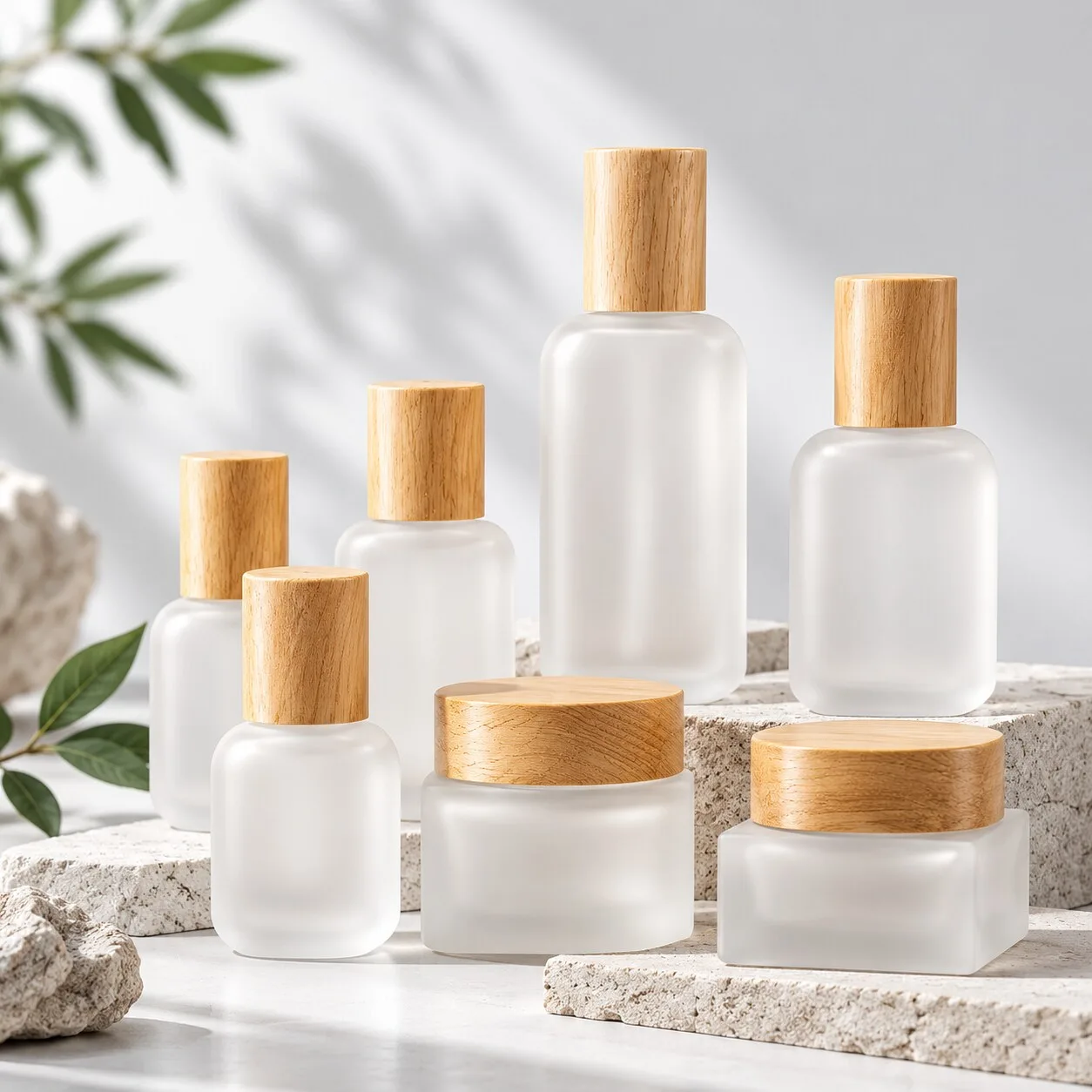
A brand might pair a 30ml serum bottle with a 50ml lotion bottle and a 50g cream jar using the same glass appearance, cap color and decoration language.
This creates consistency across several product categories.
Still, 30ml should be treated as a strong option rather than an automatic answer.
A daily use serum with a generous recommended dosage may benefit from a larger size. A concentrated treatment positioned at a higher price point may work more naturally at 15ml or 20ml.
The right decision comes from product strategy.
50ml Serum Bottles: More Volume for Daily Skincare
A 50ml serum bottle gives brands more flexibility when the product is designed for frequent or generous use.
Hydrating serums, barrier support products, lightweight treatment emulsions and other daily skincare formulas can fit naturally into this format when the recommended dosage supports the volume.
From the consumer perspective, a larger bottle can create a longer usage cycle.
That can be attractive for loyal customers who already know the product and prefer purchasing less frequently.
For the brand, 50ml can also support a different retail position.
Rather than presenting the serum as a small concentrated treatment, the package can communicate a more substantial everyday skincare product.
The larger glass body also provides more design area.
Minimalist typography has more negative space around it. Gradient spray coating has a broader surface to develop across. Frosted finishes can feel particularly elegant when paired with simple cylindrical or rectangular bottles.
Pump dispensing is often considered for this capacity because it can support convenient daily use, although droppers remain possible where the formula and packaging system are suitable.
The package should always be tested with the intended formula.
Viscosity, dosage, dip tube or pipette dimensions, pump function, leakage performance and component compatibility all matter more than capacity alone.
From a sourcing perspective, brands should also compare the finished package rather than only bottle price.
A 50ml container may use more glass and occupy additional carton space, yet the cap, pump, printing setup and other fixed packaging elements may remain similar to those used on smaller formats.
The complete landed cost provides the clearer commercial picture.
20ml, 60ml, 100ml and Other Serum Bottle Sizes
Serum packaging does not need to stop at 15ml, 30ml and 50ml.
Different markets and product concepts use a broader range of capacities.
A 20ml bottle can sit between concentrated treatment packaging and the conventional 30ml format. It can work especially well for premium formulas where the brand wants a compact presentation while offering slightly more volume than a 15ml package.
Larger sizes such as 60ml can support daily treatment products and hybrid skincare categories.
At 100ml and above, the product often begins to move away from the traditional concentrated facial serum format and toward essence, treatment lotion, body serum or larger format skincare.
Product terminology should follow the actual formula and usage.
A brand may call a product a serum for marketing purposes, while the packaging requirements may resemble those of an essence or lightweight lotion. Packaging buyers should therefore focus on viscosity, required dosage and application behavior rather than relying only on the product name.
Custom capacities can also be developed through custom glass molds where the bottle volume itself is important to the brand architecture.
For many projects, however, using an existing glass bottle family across several capacities provides a more practical starting point.
Dropper or Pump: Capacity Is Only Part of the Decision
Bottle size and dispensing system should be developed together.
Droppers are common for facial oils and many fluid serum formulations because they allow users to control the amount dispensed. Pump systems can suit daily skincare products where quick and consistent dispensing supports the intended routine.
Neither format is automatically more premium.
A high clarity glass bottle with a precisely designed pump can feel highly sophisticated. A well proportioned dropper bottle with a refined cap can create an equally strong premium impression.
Formula characteristics should guide the decision.
Viscosity, composition, dosage requirements and intended application all affect dispensing performance.
The closure must also match the bottle neck finish.
For droppers, pipette length and bulb performance should be evaluated with the actual bottle. For pumps, dip tube length, output and component configuration need to suit the product.
Complete package testing provides the most reliable confirmation.
How Bottle Size Changes Packaging Design
Capacity affects proportions more than many brands expect.
A design that looks balanced on a 50ml bottle may feel crowded when transferred directly onto 15ml glass.
This is especially relevant when brands build multiple capacities within the same collection.
Logo size may need slight adjustment. Decoration placement can shift according to bottle shoulders and base proportions. The cap should remain visually balanced with the glass body.
Premium packaging usually benefits from restraint.
A simple high clarity glass bottle, controlled surface finish and precise branding can create greater visual confidence than filling every available area with decoration.
Larger bottles provide more visual space, but that space does not need to be completely occupied.
For minimalist skincare, negative space often becomes part of the design itself.
When possible, review physical samples of each intended capacity rather than approving the entire range from digital renderings alone.
Glass transparency, bottle weight, proportions and component fit are much easier to evaluate in hand.
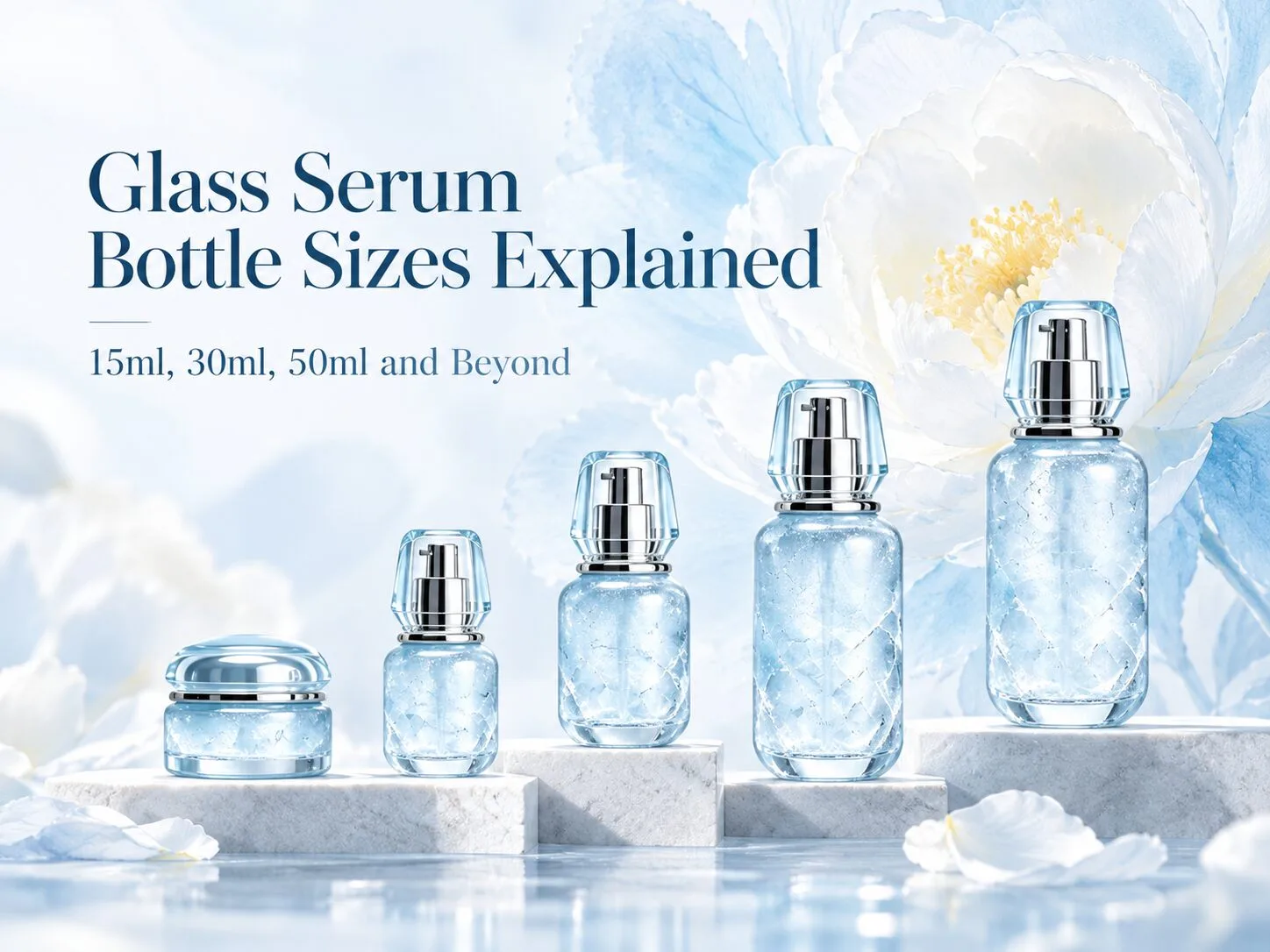
Comparing 15ml, 30ml and 50ml Serum Bottle Sizes
Factor | 15ml | 30ml | 50ml |
Typical role | Concentrated treatment | Core facial serum | Daily or larger volume serum |
Visual impression | Compact and focused | Balanced and familiar | More substantial |
Travel and trial sets | Strong option | Suitable | More selective |
Branding area | Limited | Flexible | Generous |
Dropper use | Common where suitable | Very common | Possible |
Pump use | Possible | Common | Common |
Premium positioning | Strong | Strong | Strong |
Inventory strategy | Useful for targeted ranges | Practical core format | Best aligned with expected usage |
Best selection basis | Concentration and dosage | Formula and positioning | Usage cycle and value strategy |
These are practical positioning references rather than fixed industry rules.
Actual bottle selection should reflect the intended formula, target customer and commercial model.
How to Choose the Right Serum Bottle Size for Your Brand
Start with the formula.
Ask how much product is normally used per application and how frequently the customer will apply it. This gives the brand a realistic view of the expected usage cycle.
Next, look at positioning.
A premium booster may feel appropriate at 15ml. A hero facial serum might sit naturally at 30ml. A hydration focused daily product could benefit from 50ml.
Then calculate complete packaging economics.
Compare the glass bottle, dispensing component, decoration, carton, filling and freight rather than focusing only on the bottle body.
Consider channel strategy as well.
A compact format can work well in discovery kits, travel collections and premium treatment sets. A larger bottle may support ecommerce value bundles, repeat purchase programs or established hero products.
Sampling should come before final commitment.
Where suitable stock bottles are available, compare several capacities physically. Fill them with a formula that closely represents the commercial product and evaluate dispensing, proportions, decoration area and consumer handling.
This often reveals much more than a drawing.
Building a Coordinated Serum Packaging Collection
Brands with several skincare products can use capacity strategically across the range.
The goal does not have to be one bottle size for every formula.
Instead, build a recognizable packaging language.
For example, a brand might use a 15ml treatment bottle, 30ml hero serum and 50ml daily serum while keeping the same glass quality, bottle silhouette, cap finish and logo placement.
Consumers see three different product roles while still recognizing one brand family.
Existing bottle collections can make this approach easier because several capacities may already share similar proportions and closure directions.
Decoration then provides another layer of consistency.
Frosted glass can continue across the collection. A single brand color can appear through spray coating. Silk screen printing or subtle hot stamping can keep the identity recognizable without making every SKU visually identical.
For expanding beauty brands, this can create a more scalable packaging system.
Custom Glass Serum Bottle Solutions
NAISI Packaging supplies stock and customizable cosmetic glass bottles for serum, facial oil and skincare applications.
Available options can include compact serum bottles, standard 30ml formats, larger skincare bottles and coordinated packaging families depending on current model availability.
Glass appearance and decoration can be customized through processes such as frosting, sandblasting, spray coating, silk screen printing and hot stamping according to the selected bottle and design requirements.
Pump, dropper and cap matching should be evaluated together with the bottle.
For brands developing a proprietary shape or capacity, custom glass bottle development can also be considered according to project requirements.
The most effective starting point is to share the intended formula type, preferred capacity, dispensing system, visual direction and target quantity. This allows bottle selection and decoration planning to happen as one packaging project.
Visit www.naisi-packaging.com to explore cosmetic glass packaging solutions.
Conclusion
There is no single serum bottle capacity that suits every skincare brand.
15ml works well for concentrated and targeted products. 30ml remains a flexible core option for many facial serum concepts. 50ml can support longer usage cycles and daily skincare positioning, while larger capacities open opportunities for essence, treatment lotion and body serum categories.
The most effective serum bottle sizes are chosen around formula usage, dispensing performance, pricing, visual positioning and supply chain requirements.
For brands developing a new product, compare several capacities before locking the packaging specification.
A bottle is more than a container for a certain number of milliliters. Its size influences how the product is priced, presented, used and remembered.
When capacity, glass quality, closure and decoration work together, the packaging becomes part of the product strategy itself.