Deutsch
 English
 日本語
日本語 한국어
한국어 العربية
 Русский
 Türkçe
 Português
 Français
30ml vs 50ml vs 100ml Glass Perfume Bottles: How to Choose the Right Size for Your Brand
Choosing a perfume bottle size looks simple until a fragrance brand starts planning the actual launch.
Should the first collection use a compact 30ml bottle that feels accessible and easy to carry? Is 50ml a better core size for everyday retail? Or would a substantial 100ml presentation communicate more value for an established fragrance?
The answer affects much more than the amount of fragrance inside the bottle.
Glass perfume bottle sizes influence product positioning, retail price architecture, packaging cost, shipping weight, carton configuration, inventory planning and the way consumers experience a fragrance. The same scent presented in 30ml and 100ml formats can play two very different roles within a brand portfolio.
Sales channels matter as well. A compact bottle may work beautifully for discovery driven online customers or travel oriented collections, while a larger format can appeal to established customers who already know the fragrance.
For packaging buyers, there is another layer to consider. Different capacities may require different bottle dimensions, glass weights, pumps, caps, cartons and decoration layouts. These details affect sourcing efficiency long before the finished perfume reaches a retail shelf.
This guide compares 30ml, 50ml and 100ml perfume bottles from a practical B2B sourcing perspective. The goal is to help fragrance brands select capacities according to positioning, sales strategy, packaging development and purchasing requirements rather than relying on size alone.
Why Perfume Bottle Size Selection Matters
Bottle capacity contributes to the visual character of a fragrance.
A smaller bottle can feel compact, refined and collectible. A larger bottle creates more physical presence and gives designers a broader surface for color, decoration and branding. Neither automatically feels more premium. Glass clarity, proportions, base design, component coordination and finishing quality usually have a stronger influence on perceived quality.
Capacity also shapes pricing architecture.
A 30ml format can provide consumers with a lower commitment entry point into a fragrance collection. A 50ml format often sits comfortably between accessibility and product quantity. A 100ml format can communicate greater volume value to customers who already enjoy the scent.
For the brand, packaging economics extend beyond the glass bottle itself. The complete cost structure can include the sprayer, collar, cap, decoration, inner packaging, cartons, freight and warehousing. A larger bottle generally uses more glass and occupies more shipping space, although the actual landed cost depends on the specific bottle design and logistics configuration.
Inventory strategy deserves equal attention.
Launching several capacities at once creates more SKUs to forecast, decorate, pack and store. A focused size strategy can make an early fragrance launch easier to manage. As sales data becomes clearer, additional capacities can then expand the collection.
Channel strategy is another factor. Ecommerce, department stores, fragrance boutiques, travel oriented sales and gift sets can each favor different capacity combinations.
The right size therefore supports both brand presentation and supply chain planning.
30ml Glass Perfume Bottle: Features & Best Use Cases
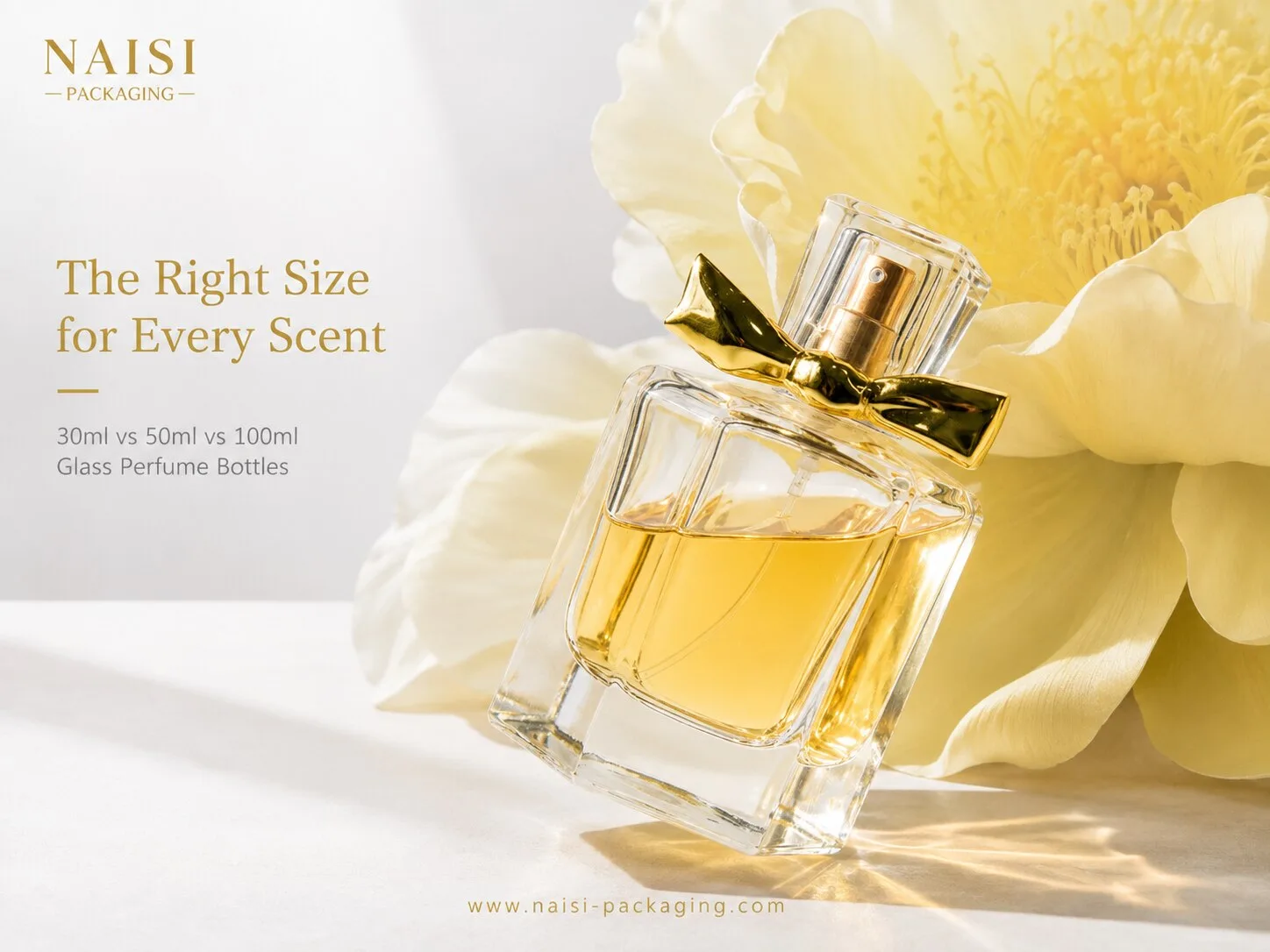
A 30ml perfume bottle gives brands a compact format with plenty of creative potential.
Its smaller dimensions make it attractive for customers who enjoy carrying fragrance in a handbag or trying a scent before committing to a larger volume. For niche fragrance houses and emerging brands, 30ml can also create a collectible feel when several fragrances are presented as a coordinated series.
From a launch perspective, the format works particularly well when a brand wants to introduce a new fragrance at a more accessible retail price point. It can support initial market testing while keeping the finished product visually consistent with larger bottles in the same collection.
Gift sets are another strong application. A 30ml bottle can be paired with complementary products or additional fragrances to create a more varied unboxing experience.
For packaging design, small dimensions require careful control of proportion. Logo size, typography, label area, silk screen placement and decorative details need enough breathing room. A minimal design often works particularly well because the smaller surface keeps every detail visually prominent.
There is one important purchasing distinction, however. Smaller capacity does not automatically mean a lower packaging MOQ. Minimum order requirements depend on the bottle supplier, existing inventory, production schedule, components and decoration process.
The same principle applies to profitability. A smaller retail format does not inherently generate a lower margin. Margin depends on fragrance cost, packaging cost, retail pricing, distribution and the brand's commercial model.
For startups, designer fragrance labels and brands building a multi scent collection, 30ml can be a flexible strategic size rather than simply a miniature version of the main bottle.
50ml Glass Perfume Bottle: The Market Standard Size
For many fragrance projects, the 50ml perfume bottle is an especially versatile starting point.
It offers enough physical presence for premium glass, a substantial base and refined decoration while remaining relatively compact in the consumer's hand. This makes it suitable for both established fragrance houses and newer brands developing their first core collection.
From a design perspective, 50ml provides useful flexibility.
A clear high flint glass bottle can emphasize fragrance color and clarity. Frosting can create a softer visual character. Spray coating offers controlled color and opacity, while silk screen printing and hot stamping can introduce branding details without overwhelming the bottle.
The format also fits naturally into many retail strategies. It can serve as a principal ecommerce SKU, a standard boutique offering or the central size within a fragrance collection.
This does not mean 50ml is universally the highest selling perfume capacity. Actual sales depend on market, price point, fragrance category, brand recognition, consumer habits and distribution channel. Buyers should use their own sales data and target market research when selecting the main capacity.
Its real advantage is balance.
For a brand that wants one principal bottle size, 50ml often provides a practical middle ground between compact presentation and generous product volume. It can also create a useful foundation for future size extensions.
A brand might launch with 50ml, introduce 30ml later for gifting or customer acquisition, and add 100ml for established best sellers.
For procurement teams, this approach can keep the initial packaging range focused while leaving room for growth.
100ml Glass Perfume Bottle: Premium & Loyal User Focused
A 100ml perfume bottle creates a different kind of presence.
The larger glass body provides more visual space for proportion, color and decoration. When combined with good glass distribution, balanced dimensions and coordinated components, it can deliver the substantial presentation associated with a flagship fragrance.
It is particularly relevant for established scents and customers who already know what they want.
A repeat buyer who regularly wears one fragrance may appreciate the larger volume. Brands can therefore position 100ml as a value oriented larger format, a flagship presentation or part of a tiered size architecture.
The larger dimensions also create opportunities for packaging designers. Minimal silk screen graphics can have more negative space around them. Gradient spray coating has a larger surface across which to transition. Frosted surfaces and carefully selected caps can create strong shelf presence.
At the same time, the complete logistics picture becomes more important.
Larger bottles generally require more packaging space and may increase finished product weight. Secondary packaging, carton dimensions, pallet configuration and freight should therefore be evaluated as part of the total landed cost.
Inventory should follow expected demand. A 100ml SKU can work particularly well for proven fragrances and established customer groups, while a new scent may benefit from gathering market feedback through a more focused initial size strategy.
Again, MOQ depends on the actual packaging configuration. Capacity alone does not determine minimum production quantity.
Core Comparison: 30ml vs 50ml vs 100ml Perfume Bottles
Each capacity can perform a specific job within a fragrance portfolio.
Factor | 30ml | 50ml | 100ml |
Brand role | Entry, compact, collectible | Core collection | Larger or flagship format |
Visual presence | Compact and refined | Balanced and versatile | Strong shelf presence |
Consumer use | Trial, handbag, gifting | Everyday fragrance | Frequent use, loyal customers |
Ecommerce | Highly suitable | Highly suitable | Suitable with freight planning |
Boutique retail | Suitable | Strong core option | Strong for established scents |
Gift sets | Excellent | Suitable | Selective |
Inventory planning | Useful for focused launches | Strong core SKU | Best aligned with proven demand |
Decoration area | More limited | Flexible | Generous |
Packaging cost | Design dependent | Design dependent | Often higher due to size and glass use |
MOQ | Supplier and process dependent | Supplier and process dependent | Supplier and process dependent |
Launch risk | Depends on order quantity and demand | Balanced core option | Requires careful demand planning |
The table highlights an important point: there is no universal winner.
A minimalist 30ml high flint bottle with a precisely fitted cap can feel more premium than a poorly proportioned 100ml bottle. Likewise, a well designed 100ml bottle can become an impressive signature object for a fragrance brand.
Capacity provides the framework. Design execution creates the experience.
How Brands Choose the Right Size
For a new fragrance launch, start with the commercial role of the product.
If the brand is testing several scents or wants to offer an accessible entry format, 30ml can provide useful flexibility. A 50ml option can then serve as the main retail product for customers ready to purchase a fuller size.
Brands planning a long term hero fragrance may prefer to establish 50ml as the central SKU. It provides enough space for premium decoration and feels substantial without moving immediately into the logistics requirements of a larger bottle.
Once customer demand becomes established, 100ml can extend the range for repeat purchasers and fragrance enthusiasts.
Gift sets create another opportunity.
Rather than treating every capacity as an independent product, brands can build a size architecture. A 30ml fragrance might accompany a 50ml hero bottle in a seasonal set, while established collections can offer 50ml and 100ml versions of the same scent.
Packaging consistency becomes important as the range grows.
Where technically appropriate, brands can maintain similar bottle proportions, glass appearance, cap design, decoration language and secondary packaging across different capacities. The goal is to make each SKU recognizable as part of the same fragrance family.
Before finalizing the range, procurement teams should also compare bottle availability, component compatibility, decoration MOQ, carton requirements and total landed cost for each capacity.
Custom Glass Perfume Bottle Solutions
Packaging development does not always need to begin with a completely new bottle mold.
NAISI Packaging supplies stock and customizable glass perfume bottles across commonly requested capacities, including 30ml, 50ml and 100ml options depending on current model availability.
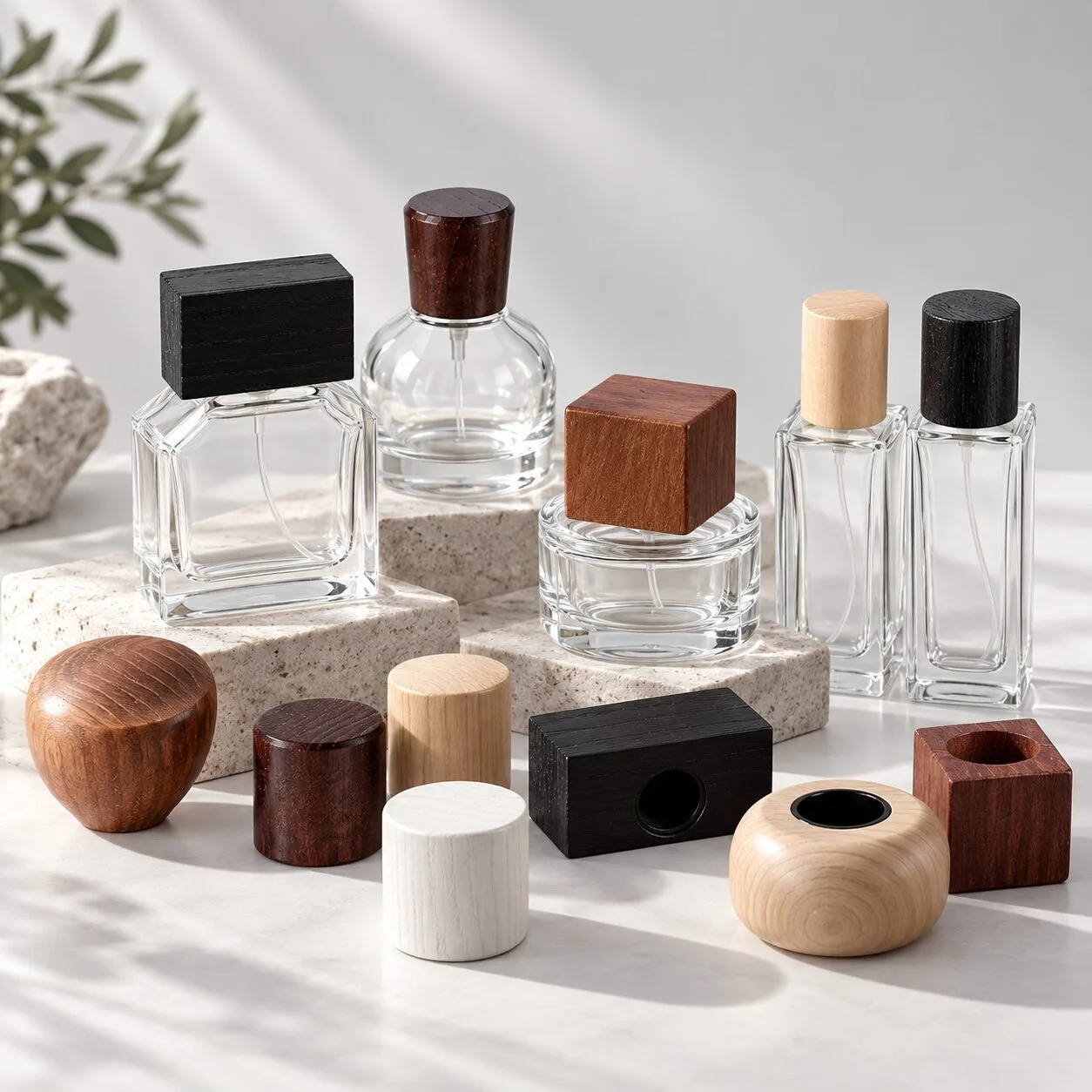
For brands that want to differentiate an existing bottle, decoration can create a distinctive visual identity. Available solutions can include frosting, sandblasting, spray coating, silk screen printing and hot stamping according to the selected bottle and design requirements.
Components should be evaluated as a complete system. Bottle neck finish, fragrance sprayer, collar and cap need to work together technically and visually. Physical samples allow brands to review assembly, proportions, decoration and dispensing performance before moving toward production.
For projects requiring a proprietary bottle structure, custom mold development can also be considered. Technical drawings, bottle dimensions, neck specifications, decoration requirements and component matching should be confirmed during development.
Stock bottle availability and MOQ vary by model, component and decoration process, so purchasing requirements are best reviewed project by project.
Brands can explore fragrance packaging solutions and discuss suitable bottle capacities with NAISI Packaging at www.naisi-packaging.com.
Conclusion
The choice between 30ml, 50ml and 100ml is ultimately a portfolio decision rather than a simple capacity comparison.
A 30ml bottle can support discovery, gifting, portability and new fragrance introductions. The 50ml format offers a balanced foundation for many core fragrance collections. A 100ml bottle can extend established scents toward loyal users who prefer a larger volume and stronger physical presentation.
For many brands, a practical strategy is to build around one core capacity first, then expand according to real customer demand. A 50ml hero SKU paired with selected 30ml and 100ml extensions can create a clear product ladder, although the final structure should always reflect the brand's market and sales data.
The best glass perfume bottle sizes are the ones that align packaging design, retail positioning, inventory planning and consumer use.
Choose capacity as part of the complete fragrance strategy, and the packaging becomes easier to scale as the brand grows.
Frequently Asked Questions
What is the most popular perfume bottle size?
30ml, 50ml and 100ml are all widely used fragrance capacities. There is no single size that leads every market or sales channel. For many brands, 50ml is a practical core format because it balances product volume, bottle presence and retail flexibility. Actual popularity should be evaluated using the brand's target market and sales data.
Is 30ml or 50ml perfume better?
It depends on the role of the product. A 30ml format works well for portable use, gifting, discovery oriented purchasing and compact collections. A 50ml format provides more volume and can work effectively as the main retail SKU. Some brands offer both to create different entry points within the same fragrance collection.
Do 100ml perfumes sell well?
They can perform strongly when customers already know and regularly use the fragrance. Established scents, repeat purchase products and classic collections are natural candidates for a 100ml option. New brands should compare expected demand, retail pricing, inventory requirements and logistics before deciding how much stock to carry.
Are glass perfume bottles better for fragrance preservation?
Glass is widely used for fragrance because it provides a strong barrier and is compatible with many fragrance packaging applications. Preservation, however, depends on the complete package. Glass composition and color, sprayer system, neck finish, sealing components, formula compatibility, storage temperature and light exposure should all be considered. Brands should test the intended fragrance with the complete bottle and closure system before commercial production.
🏭 Watch Our Fabrik Production Videos