Русский
 English
 日本語
日本語 Deutsch
 한국어
한국어 العربية
 Türkçe
 Português
 Français
Perfume Bottle vs Skincare Bottle: What's Really Different?
Choosing a glass bottle often starts with appearance. A beautiful shape, a premium finish and the right capacity can immediately attract attention.
But when perfume and skincare packaging move from the design stage into filling, assembly, transportation and daily use, the differences become much more important.
A perfume bottle and a skincare bottle may both be made from glass. They can even share similar shapes and decoration techniques. Yet the bottle neck, dispensing system, formulation requirements and decoration specifications can be quite different.
For beauty brands, understanding these differences before placing an order can make packaging development much smoother.
Here are five areas worth checking before choosing your next cosmetic glass bottle.
Neck Finish: The First Specification to Check
The bottle neck is one of the most important technical interfaces between the glass container and its closure.
For fragrance packaging, crimp finishes such as FEA 13 or FEA 15 are widely used with perfume spray systems. The pump collar is mechanically crimped onto the glass neck, creating the connection between the bottle and the fragrance sprayer. CETIE provides industry guidance for crimping pumps onto FEA type glass finishes used in perfumery.
Screw neck designs are also available for perfume packaging, particularly where brands want a removable closure or refill oriented solution. Industry suppliers currently offer both crimp and screw versions for similar bottle shapes and capacities.
Skincare packaging uses a broader range of neck finishes because the dispensing method can vary considerably.
A serum bottle may use a dropper or pump. A lotion bottle may use a larger pump. An essence or mist may require a spray component.
This means the right question is not simply, "Is this a perfume bottle or a skincare bottle?"
A better question is:
Which neck finish matches the dispensing component and filling process of the product?
The bottle, pump, collar, gasket and other components should be evaluated as one packaging system.
Dispensing System: Spray Performance vs Controlled Application
The dispensing experience is another major difference.
Perfume packaging is usually designed around a fine mist sprayer. The system needs to deliver a consistent spray pattern while maintaining a reliable connection with the bottle.
The crimping process itself is important because the aluminium ferrule and glass neck need to work together correctly. CETIE's technical guidance specifically addresses the crimping process for FEA type glass finishes.
Skincare packaging covers a much wider range of dispensing formats.
Serums may use droppers or pumps. Lotions often use pumps. Some lightweight formulas use fine mist systems, while creams generally require a jar or another dispensing format.
Formula viscosity and the desired consumer experience both influence the component selection.
This is why a beautiful bottle should always be tested with the actual dispensing component before mass production.
A bottle can look perfect on a specification sheet and still require adjustment once the complete package is assembled.
Glass Design: Weight, Shape and Functional Requirements
Glass thickness should be considered as part of the complete bottle design rather than treated as a simple difference between perfume and skincare packaging.
Perfume bottles often use substantial glass structures because weight, proportions and visual presence are important elements of fragrance packaging.
A heavier base can create a distinctive hand feel and strengthen the visual language of a premium fragrance collection.
Skincare bottles can also feature substantial glass bases and thick walls, especially in premium serum and cream packaging.
At the same time, skincare packaging often needs to balance appearance with filling efficiency, handling and transportation requirements.
The important point for buyers is simple:
Glass weight and wall design should follow the bottle structure, capacity, manufacturing process and intended use.
A heavier bottle is not automatically a better bottle.
For both perfume and skincare packaging, consistency in glass distribution and dimensional control matters during production.
Surface Decoration: Similar Techniques, Different Considerations
Both perfume bottles and skincare bottles can use a wide range of glass decoration techniques.
Frosting can create a soft matte appearance.
Spray coating can introduce colour or a more opaque visual effect.
Silk screen printing works well for logos, text and graphic details.
Hot stamping can add metallic accents and strengthen a premium visual identity.
Electroplated or metallized components can also be used as part of a more elaborate packaging design.
The difference comes from how these finishes interact with the product concept and the complete packaging system.
For fragrance packaging, the decoration should work with the alcohol based product environment and the intended handling conditions. Coating and printing systems should therefore be evaluated for their suitability for the application.
For skincare packaging, the same principle applies. The formula, bottle surface, decoration system and expected use conditions should be considered together.
A decoration sample gives the brand a much better basis for evaluation than a digital rendering alone.
This becomes especially important when a design combines several finishing processes.
Product Compatibility: The Most Important Final Check
The final selection should always connect the glass bottle with the actual formula.
Glass is widely used in both fragrance and skincare packaging because it provides a stable container material for many cosmetic applications. However, the packaging system still needs appropriate compatibility evaluation.
Perfume formulas commonly contain alcohol, fragrance compounds and other ingredients. The packaging system therefore needs reliable sealing and component compatibility to support the intended product experience.
Skincare formulas can vary even more.
A serum, facial oil, lotion and cream may have completely different viscosity and ingredient profiles. Light sensitivity can also influence whether a brand chooses clear, frosted, amber or other glass presentations.
For active skincare products, packaging selection should be evaluated alongside formulation stability and compatibility testing.
The practical approach is to test the complete system:
Glass bottle + dispensing component + closure + decoration + actual formula
This gives the product team a much clearer picture before production begins.
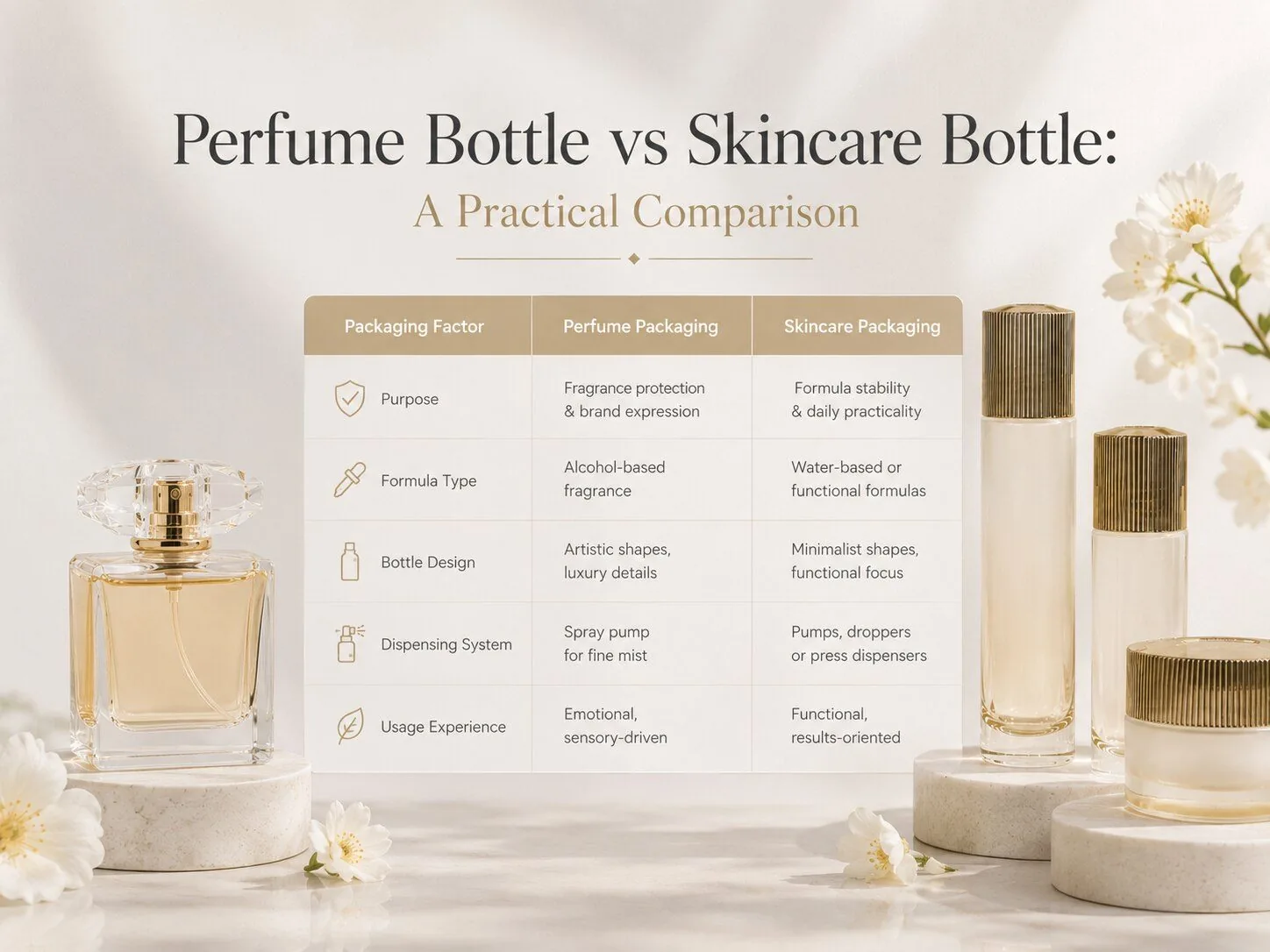
Perfume Bottle vs Skincare Bottle: A Practical Comparison
Packaging Factor | Perfume Packaging | Skincare Packaging |
Common dispensing system | Fine mist sprayer | Pump, dropper, cap, sprayer |
Neck finish | Crimp and screw options | Various screw and dispensing finishes |
Main packaging focus | Spray experience, sealing, fragrance presentation | Controlled dispensing, formula fit, usability |
Glass design | Often emphasizes weight and visual presence | Balances aesthetics, handling and filling requirements |
Decoration | Frosting, coating, printing, hot stamping and other finishes | Similar decoration options with formula and use considerations |
Formula consideration | Alcohol and fragrance composition | Water, oils, emulsions and active ingredients |
Key buyer check | Bottle and sprayer compatibility | Bottle, dispensing system and formula compatibility |
The table highlights an important point.
The difference is not simply perfume bottle versus skincare bottle.
The real difference is how the glass container works with the product and its dispensing system.
How Should Brands Choose the Right Glass Bottle?
For a new perfume or skincare product, start with the formula and user experience.
Then define the dispensing method.
After that, confirm the neck finish, bottle dimensions, glass weight and decoration requirements.
Only once these specifications are clear should the brand move into sampling and production planning.
For example, a 30ml premium serum may need a compact bottle with a dropper or precision pump. A 50ml fragrance may require a crimp neck designed for a fine mist sprayer. Both can use high clarity glass and premium decoration, yet their component systems remain different.
This approach also helps packaging buyers compare suppliers more accurately.
Instead of comparing two bottles only by photographs or unit price, compare the technical specifications behind them.
Ask for the neck finish.
Confirm the compatible pump or sprayer.
Review the glass weight and dimensions.
Check the decoration process.
Then test the complete package with the actual formula.
That is where a reliable packaging decision starts.
Final Thoughts
Perfume and skincare glass packaging share many manufacturing possibilities, but their packaging systems are designed around different product experiences.
For fragrance brands, spray performance, sealing, bottle presence and component compatibility are central considerations.
For skincare brands, dispensing method, formula characteristics, usability, glass appearance and decoration all play important roles.
The best packaging choice comes from connecting these elements early in development.
At NAISI Packaging, we work with beauty brands on glass bottles for both fragrance and skincare applications, including stock bottle selection, surface decoration and customized packaging development.
If you are comparing perfume bottles and skincare bottles for an upcoming product, the most useful starting point is the complete packaging specification rather than the bottle shape alone.
Which specification do you usually check first when sourcing a new cosmetic glass bottle: neck finish, glass material, decoration or dispensing system?
🎨 One-on-one Pantone Color Matching Consultation
🏭 Watch Our Фабрика Production Videos