English
 日本語
日本語 Deutsch
 한국어
한국어 العربية
 Русский
 Türkçe
 Português
 Français
What Is the Best Glass Material for Skincare Packaging? Flint Glass VS High Flint Glass Full Comparison
Two serum bottles may share the same shape, the same capacity, and even the same decoration. Yet one immediately communicates luxury, while the other feels noticeably more ordinary.
The difference often begins with the glass itself.
Many beauty brands spend months refining formulas, selecting fragrances, and perfecting packaging artwork. Material selection, however, is frequently reduced to comparing bottle prices. This approach overlooks one of the most influential elements of premium packaging: the quality of the glass.
For skincare packaging, the choice between Flint Glass and High Flint Glass affects far more than appearance. It influences decoration results, perceived product value, manufacturing consistency, transportation performance, and long-term brand positioning.
For emerging brands, this decision can also shape purchasing costs throughout the product lifecycle. A bottle that appears inexpensive at the quotation stage may generate higher expenses later through decoration inconsistencies, packaging damage, or reduced shelf appeal.
This guide explains the practical differences between Flint Glass and High Flint Glass, compares their performance across key criteria, and helps beauty brands select the most suitable material according to product positioning rather than price alone.
The Hidden Costs of Choosing the Wrong Glass Material
Packaging material influences much more than manufacturing cost. It becomes part of the customer's first impression, the production process, and the overall commercial success of a product.
Visual Quality Shapes Brand Perception
Consumers often judge product quality within seconds.
Glass with lower optical clarity may display a subtle green or gray tint under natural lighting. Tiny inclusions or bubbles can also become more noticeable after decoration.
High clarity glass delivers a cleaner appearance. It enhances the natural color of serums, creams, facial oils, and fragrances, allowing formulations to become part of the visual experience.
For premium skincare brands, this difference contributes directly to perceived product value.
Decoration Results Depend on Glass Quality
Surface decoration performs best on a consistent substrate.
Processes such as frosting, spray coating, silk screen printing, hot stamping, and electroplating require stable surface quality to achieve uniform results.
Higher purity glass generally provides more consistent decoration performance, especially when brands pursue sophisticated finishes or luxury packaging aesthetics.
For projects involving multiple production batches, consistent raw materials also help maintain color stability and appearance across different manufacturing runs.
Transportation Performance Matters
International shipments place significant demands on cosmetic packaging.
Although transportation performance depends on bottle design, wall thickness, annealing quality, protective packaging, and logistics conditions, material consistency also contributes to manufacturing quality.
Well-controlled production processes combined with premium glass materials often support more stable dimensional accuracy and improved production consistency, helping brands reduce unnecessary quality risks during global distribution.
Packaging Influences Purchasing Decisions
Beauty products compete visually before customers experience the formula.
Premium packaging communicates craftsmanship, product value, and attention to detail.
When packaging aligns with a brand's positioning, customers naturally associate higher quality with the product inside.
For many skincare brands, the bottle becomes part of the marketing investment rather than simply a production cost.
Understanding Flint Glass and High Flint Glass
Before comparing performance, it helps to understand what these two materials represent.
What Is Flint Glass?
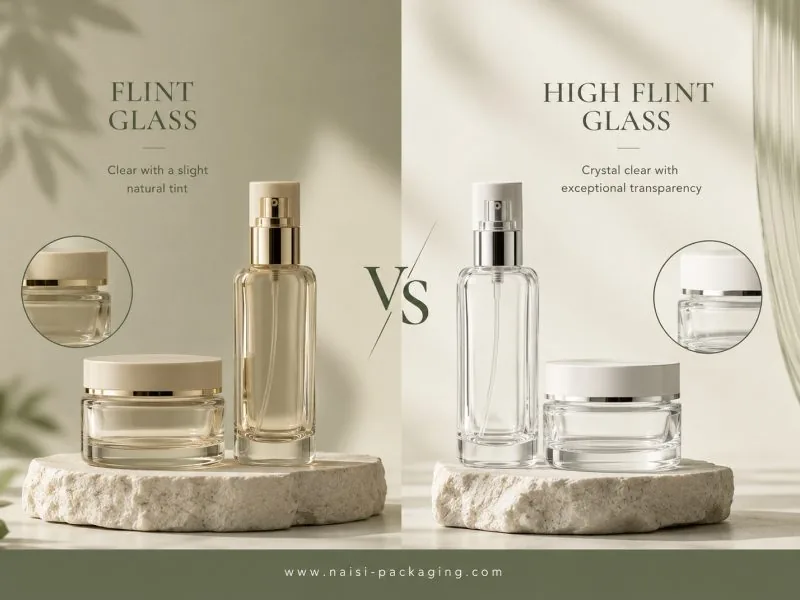
In cosmetic packaging, Flint Glass usually refers to standard clear soda lime glass widely used for bottles and jars.
It provides reliable strength, good transparency, and cost efficiency for many everyday skincare and personal care products.
Modern cosmetic Flint Glass manufactured by qualified suppliers meets the performance requirements for a broad range of beauty applications while offering attractive production costs.
It remains one of the industry's most commonly used materials.
What Is High Flint Glass?
High Flint Glass refers to a higher clarity grade of cosmetic glass produced with carefully selected raw materials and tighter manufacturing control.
The result is exceptionally transparent glass with excellent visual purity.
Many premium skincare brands choose High Flint Glass because it showcases formulas beautifully while providing an elegant, crystal clear appearance that enhances luxury positioning.
It has become a preferred material for premium skincare, fragrance, facial oils, ampoules, and gift collections.
Flint Glass VS High Flint Glass
The following comparison highlights the practical differences brands should consider during packaging selection.
Comparison | Flint Glass | High Flint Glass |
Visual Appearance | Clear with a slight natural tint depending on formulation and lighting | Crystal clear with exceptional transparency |
Product Presentation | Suitable for everyday skincare products | Ideal for premium formulations where appearance is part of the brand story |
Decoration Performance | Excellent for standard decoration processes | Provides highly refined results for frosting, spray coating, hot stamping, and electroplating |
Manufacturing Consistency | Reliable for large production volumes | Selected for projects requiring enhanced visual consistency |
Typical Positioning | Daily skincare, body care, travel products | Luxury skincare, serums, perfumes, gift collections |
Rather than viewing one material as universally better, experienced packaging buyers evaluate both according to the commercial goals of each product line.
Premium products benefit from premium materials.
High-volume collections often prioritize manufacturing efficiency and balanced cost control.
The most successful beauty brands frequently combine both approaches within the same portfolio.
For example, an entry-level moisturizer may use Flint Glass to maintain competitive pricing, while a flagship anti-aging serum adopts High Flint Glass to reinforce premium positioning.
This layered packaging strategy supports stronger profit structures while maintaining a consistent brand image across different price segments.
Why High Flint Glass Has Become Increasingly Popular
Consumer expectations continue to evolve.
Today's beauty customers pay close attention to packaging details shared through social media, unboxing videos, and online product photography.
High transparency allows skincare formulas to appear brighter, cleaner, and more refined under both studio lighting and natural daylight.
This visual advantage supports premium branding across e-commerce stores, retail shelves, and digital marketing campaigns.
For brands investing heavily in photography and content creation, the bottle itself becomes part of the visual storytelling.
High Flint Glass helps elevate that experience naturally.
How to Choose the Right Glass Material for Different Skincare Products
Every skincare product serves a different purpose, and packaging should reflect that purpose. Instead of applying one material across an entire product line, experienced beauty brands build a layered packaging strategy that aligns with product positioning, customer expectations, and pricing.
Flint Glass Works Well for High-Volume Product Lines
Standard Flint Glass remains an excellent choice for many everyday beauty products. It delivers reliable quality while helping brands maintain competitive production costs.
Typical applications include:
· Daily facial lotions
· Toners
· Body care products
· Travel-size collections
· Trial kits
· Entry-level skincare ranges
For products focused on accessibility and repeat purchases, Flint Glass offers an effective balance between appearance, functionality, and manufacturing efficiency.
Many successful private label brands use Flint Glass for their core collection while reserving premium materials for flagship products.
High Flint Glass Elevates Premium Collections
When packaging becomes part of the brand experience, High Flint Glass offers significant visual advantages.
It is commonly selected for:
· Facial serums
· Essential oils
· Luxury moisturizers
· Anti-aging creams
· Perfume bottles
· Gift sets
· Clean beauty collections
· Professional skincare lines
Crystal-clear transparency allows the natural color of the formula to become part of the presentation. Rich amber oils, golden serums, and translucent gel textures appear brighter and more refined, reinforcing a premium brand image.
For brands investing in high-end photography, influencer collaborations, and retail merchandising, this visual quality often supports stronger product differentiation.
Colored Glass Starts with High-Quality Clear Glass
Many brands assume that amber, green, blue, or black cosmetic bottles begin with colored raw materials.
In reality, premium colored cosmetic glass often starts with high-quality clear glass before decorative color treatments are applied, depending on the production method and design requirements.
Using a cleaner base material helps achieve more vibrant colors, improved consistency, and a more sophisticated finish after spray coating, frosting, or other decorative processes.
For luxury cosmetic packaging, this approach creates richer visual depth while maintaining excellent decoration quality.
Five Common Purchasing Mistakes When Selecting Glass Materials
Even experienced buyers occasionally focus on the wrong evaluation criteria.
These are some of the most common mistakes packaging suppliers encounter.
1. Comparing Only Bottle Prices
The quotation is only one part of the total packaging cost.
Decoration consistency, production efficiency, shipping performance, and customer perception all contribute to the real commercial value of the packaging.
A bottle with a lower purchase price may ultimately create higher operational costs throughout the product lifecycle.
2. Using Standard Glass for Premium Positioning
Luxury skincare customers expect exceptional presentation.
If the packaging appears less refined than the product inside, the perceived value of the entire product can decrease before the customer even experiences the formula.
Premium formulations deserve packaging that supports the brand story.
3. Applying Premium Materials Across Every Product
Using High Flint Glass for every SKU is not always the most efficient purchasing strategy.
Many successful brands divide their product portfolio into multiple pricing tiers.
Hero products receive premium packaging, while daily-use collections focus on manufacturing efficiency.
This balanced approach supports healthy profit margins while maintaining a consistent brand identity.
4. Ignoring Material Documentation
For international projects, buyers often request supporting material documentation as part of their supplier evaluation process.
Depending on the destination market and customer requirements, documentation may include material declarations, testing reports, or other compliance-related information.
Important: Specific regulatory requirements vary by country, product category, and customer. Brands should always confirm applicable compliance requirements for their target market before mass production.
5. Approving Samples Without Reviewing Mass Production Standards
A beautiful prototype represents only the beginning.
Professional suppliers maintain stable raw material sourcing, quality control procedures, and production management to help ensure that mass production reflects approved samples as closely as possible.
Consistency across multiple production batches is often just as important as the appearance of the initial sample.
How NAISI Packaging Supports Material Selection
Choosing the right glass material should never feel like guesswork.
At NAISI Packaging, we work closely with skincare, fragrance, and beauty brands to recommend packaging solutions that align with both commercial objectives and product positioning.
Our product range includes both standard Flint Glass and High Flint Glass cosmetic bottles and jars across a wide selection of capacities and designs.
Whether you're developing a minimalist skincare collection, a luxury anti-aging line, or a complete fragrance series, our team helps identify the most suitable material before decoration begins.
Beyond bottle manufacturing, we provide integrated surface decoration services, including:
· Frosting
· Spray coating
· Silk screen printing
· Hot stamping
· Electroplating
· UV printing
· Custom color matching
Because decoration is completed within our integrated production system, brands benefit from better communication, improved production efficiency, and consistent quality management throughout the project.
For businesses launching new collections, we also offer stock packaging solutions with flexible order quantities alongside fully customized packaging development.
Our goal is simple.
Help beauty brands build packaging that reflects the quality of the products inside while maintaining practical cost control and dependable production support.
Conclusion
Choosing between Flint Glass and High Flint Glass is not about finding a universally superior material.
It is about selecting the right material for the right product.
Flint Glass remains an excellent solution for high-volume skincare collections where efficiency and cost management are priorities.
High Flint Glass creates exceptional visual clarity that complements premium skincare, fragrances, serums, and luxury gift collections.
The strongest beauty brands rarely rely on a single packaging strategy. Instead, they match packaging materials to product positioning, allowing every collection to communicate its own value while supporting long-term commercial growth.
Glass packaging is far more than a container.
It is part of your customer's first impression, your brand identity, and the experience that continues long after the purchase.
Selecting the appropriate glass material from the beginning creates a stronger foundation for every stage that follows.
Looking for the Right Glass Material for Your Next Project?
If you're unsure whether Flint Glass or High Flint Glass is the better choice for your skincare or fragrance collection, our team is happy to help.
NAISI Packaging provides physical sample comparisons, professional packaging recommendations, and complete customization services to support brands from concept through production.
Whether you're launching your first product or expanding an existing collection, we'll help you choose the packaging solution that balances premium appearance, production efficiency, and long-term value.
Contact NAISI Packaging
Website: www.naisi-packaging.com
Email: naisipackaging@gmail.com
Let's build packaging that brings your brand vision to life.
Frequently Asked Questions
Is High Flint Glass stronger than standard Flint Glass?
High Flint Glass is primarily selected for its superior clarity and premium appearance. The overall durability of a cosmetic bottle also depends on its structural design, wall thickness, manufacturing process, and annealing quality.
Which glass material is better for serum bottles?
High Flint Glass is widely used for premium serum bottles because its exceptional transparency highlights the appearance of high-value formulations and supports luxury brand positioning.
Can both materials be decorated?
Yes. Both Flint Glass and High Flint Glass can be processed with frosting, spray coating, silk screen printing, hot stamping, electroplating, UV printing, and other decorative techniques. High Flint Glass often provides more refined visual results for premium finishes.
Should every product use High Flint Glass?
Not necessarily. Many successful beauty brands combine Flint Glass for everyday products with High Flint Glass for flagship collections, creating a balanced packaging strategy that supports both profitability and brand value.