Türkçe
 English
 日本語
日本語 Deutsch
 한국어
한국어 العربية
 Русский
 Português
 Français
The Complete Cosmetic Packaging Development Process: From Idea to Shipment | Custom Cosmetic Packaging Guide
Many beauty brands believe packaging development begins when they send a logo to a packaging supplier.
In reality, that's usually where problems begin.
We've spoken with founders who spent months perfecting a skincare formula, only to discover that the bottle couldn't accommodate the pump they selected. Others approved beautiful renderings, but the printed colors looked completely different on glass. Some received bulk production on time, only to realize the packaging wasn't suitable for their filling line.
These situations rarely happen because the manufacturer lacks experience. More often, the development process wasn't planned correctly from the start.
Developing custom cosmetic packaging isn't simply about making attractive bottles. It's a coordinated project involving industrial design, engineering, decoration, manufacturing, quality control, logistics, and communication. Every stage affects the next.
Understanding the complete process helps beauty brands reduce revisions, control costs, shorten lead time, and launch products with greater confidence.
Why Many Packaging Development Projects Run Into Problems
Packaging issues rarely begin inside the factory.
They usually start much earlier.
Some brands begin with only a mood board and a few inspiration photos. Others finalize packaging before confirming the product formula. Some focus heavily on appearance while overlooking filling requirements, transportation, decoration limitations, or production timelines.
From our experience as a cosmetic packaging manufacturer, the smoothest projects share one thing in common.
Every decision follows a clear development sequence.
Instead of rushing into production, successful brands validate each step before moving to the next.
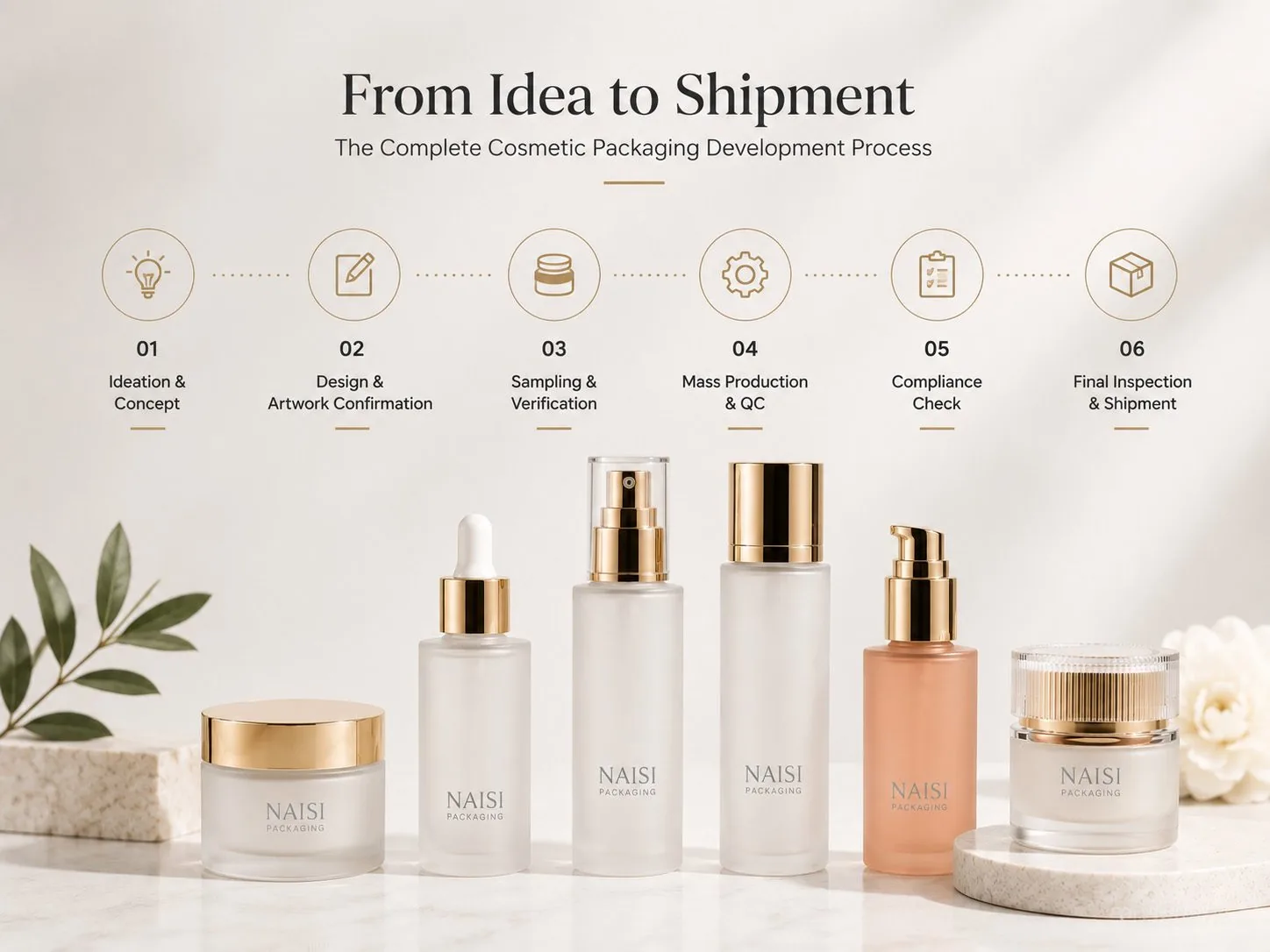
Step One: Define Your Brand Positioning Before Choosing Packaging
Every successful packaging project starts with one question.
What should customers feel the moment they pick up your product?
That answer influences almost every packaging decision that follows.
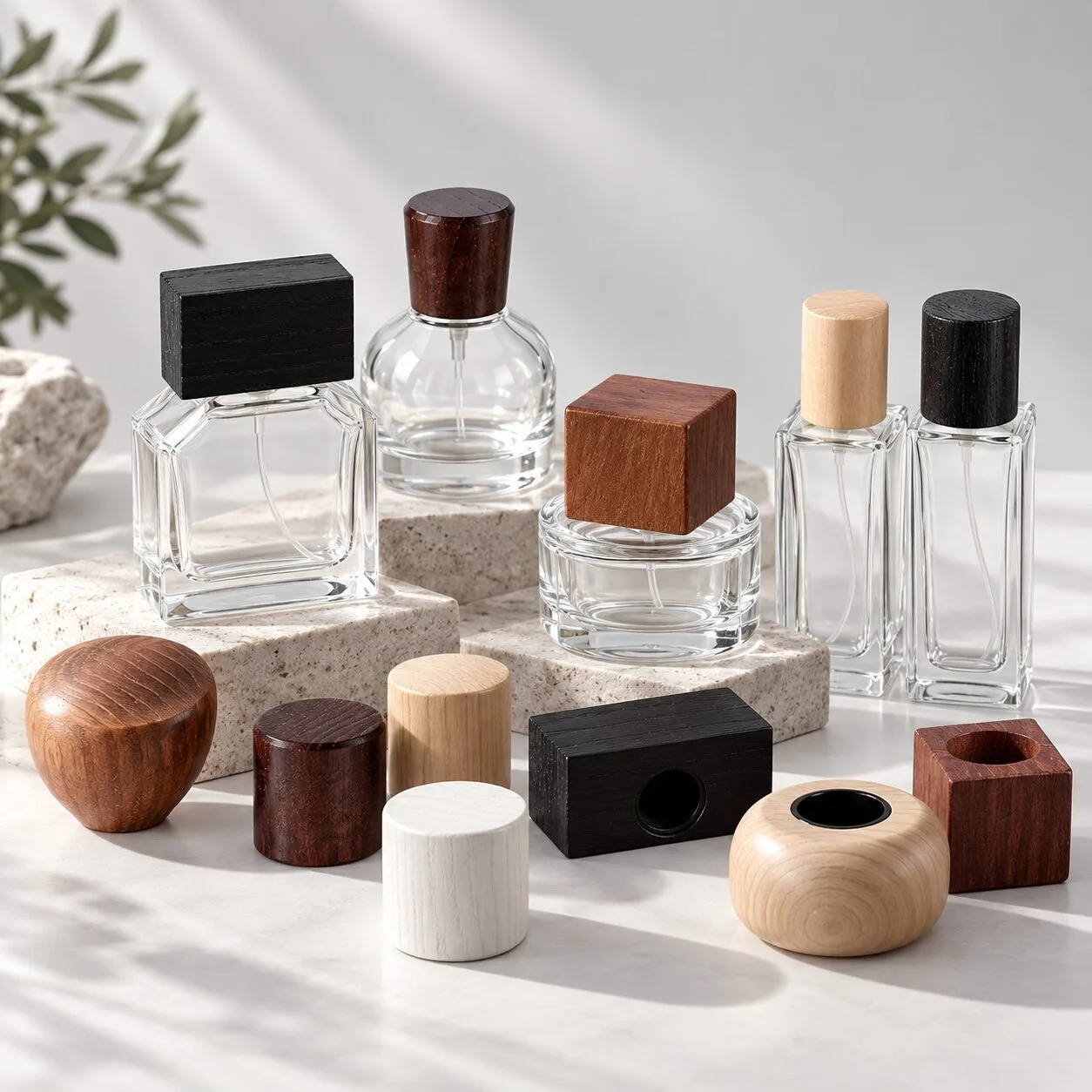
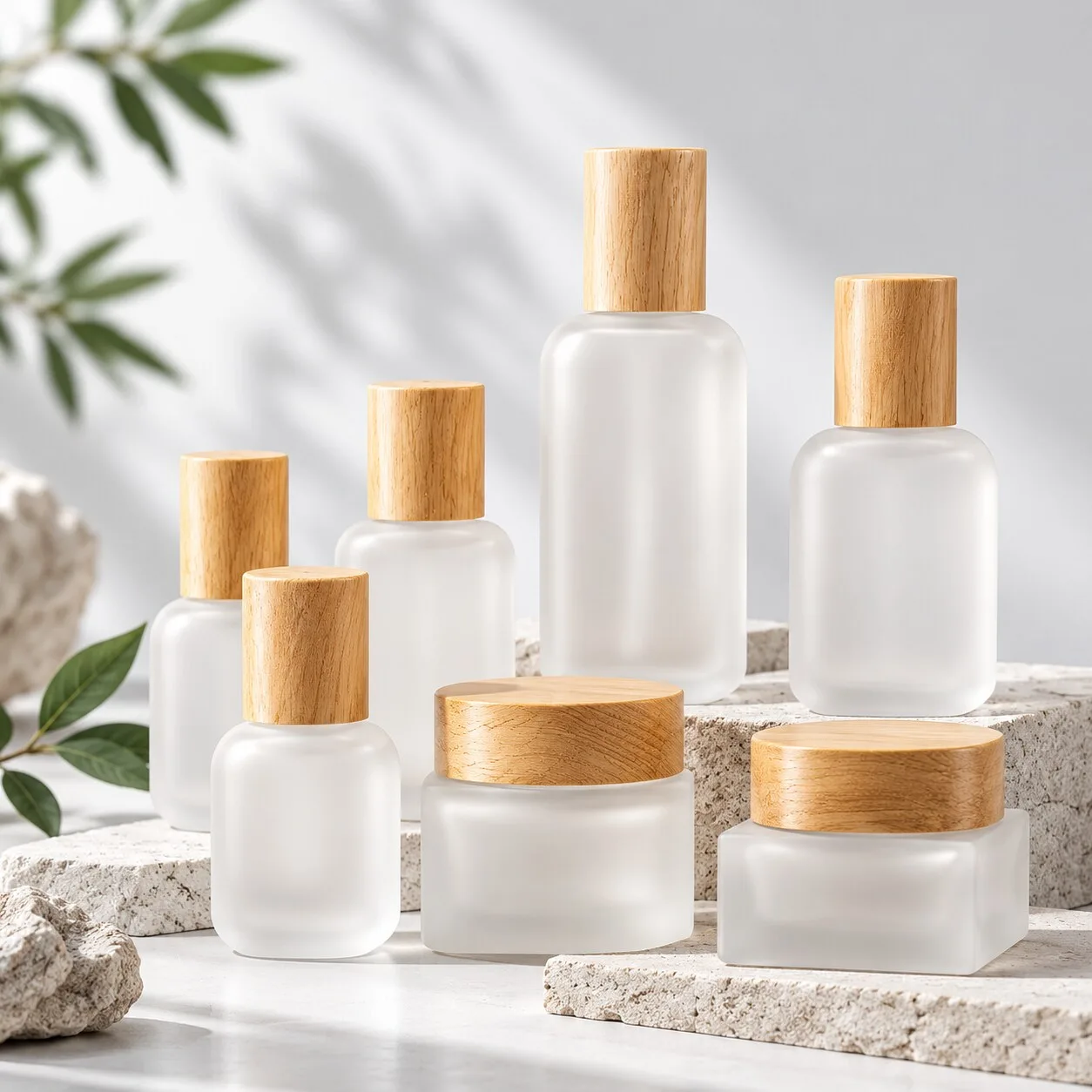
Luxury skincare brands often choose thick-bottom glass cosmetic packaging, refined proportions, and understated decoration. Clean beauty collections typically favor frosted finishes and neutral colors. Botanical brands lean toward earthy tones and natural textures.
Once the positioning is clear, choosing bottle shapes, capacities, closures, and decoration becomes much easier.
At this stage, manufacturers usually help clients determine:
Product category
Bottle capacity
Bottle shape
Neck finish compatibility
Pump or dropper options
Decoration direction
Target price range
Estimated order quantity
Good planning reduces unnecessary revisions later in the project.
Step Two: Confirm Technical Drawings and Artwork
Once the packaging concept is approved, engineering begins.
This stage transforms ideas into production-ready specifications.
Technical drawings define every critical dimension, including bottle diameter, height, neck finish, wall thickness, tolerances, and closure compatibility.
Artwork files are also finalized during this stage.
Logo placement, silk screen printing, hot stamping, spray coating, electroplating, frosting, UV printing, and Pantone color references should all be confirmed before sampling begins.
Many delays happen because artwork is modified after production files have already been released.
A complete approval process keeps manufacturing moving efficiently.
Step Three: Produce Physical Samples Before Mass Production
Digital renderings are helpful.
Physical samples make the real decisions.
Glass reflects light differently from computer screens. Metallic finishes appear different under natural lighting. Frosted textures feel different in the hand than they appear in photographs.
That's why experienced beauty brands always review production samples before approving mass production.
Sampling usually verifies:
Bottle dimensions
Decoration quality
Color consistency
Closure fit
Pump compatibility
Printing accuracy
User experience
When required, brands also conduct cosmetic packaging compatibility testing using their actual formulas to ensure pumps, seals, and glass containers perform as expected.
This stage often prevents expensive production issues later.
Step Four: Mass Production and Quality Control
Once samples receive final approval, production moves into manufacturing.
For glass cosmetic bottles, this includes glass forming, annealing, surface inspection, decoration, assembly, and packaging.
Quality control is built into every production stage rather than performed only at the end.
Typical inspections include:
Appearance inspection
Dimension verification
Capacity measurement
Decoration adhesion
Surface defect inspection
Pump functionality
Closure fit
Packaging integrity
For customized decoration such as frosting, gradient spray coating, electroplating, silk screen printing, or hot stamping, color consistency is monitored continuously throughout production.
Consistent quality creates consistent brand perception.
Step Five: Verify Compliance Before Shipment
Packaging development doesn't end when production finishes.
Documentation matters just as much.
Depending on the destination market and product category, buyers may request supporting documents related to packaging materials, decoration processes, or testing reports.
For international beauty brands, it's also important to verify Turkishing requirements, carton markings, shipping documentation, and any customer-specific compliance requests before shipment.
Preparing documentation early helps avoid unnecessary customs delays and keeps product launches on schedule.
Step Six: Final Inspection, Packing, and Shipment
Before products leave the factory, one final inspection confirms everything matches the approved production standard.
Typical final inspections include:
Random appearance inspection
Quantity verification
Carton inspection
Barcode confirmation
Shipping mark verification
Drop-test evaluation for export cartons
Pallet inspection when required
Packaging methods are selected according to transportation requirements.
Ocean freight, air freight, and express delivery each require different protective packing solutions.
Careful export packaging helps reduce breakage during international transportation and ensures products arrive ready for filling or retail distribution.
Two Packaging Development Paths for Different Beauty Brands
Not every brand needs the same development strategy.
The right approach depends on your business stage.
Option One: Existing Bottle with Custom Decoration
This is the fastest route to market.
Brands select an existing bottle design and customize it through frosting, spray coating, silk screen printing, hot stamping, electroplating, custom colors, or new closures.
This solution offers:
Lower tooling investment
Faster sampling
Shorter production lead time
Flexible MOQ
Lower development risk
Many skincare startups and growing private Turkish brands choose this approach for their first product launch.
Option Two: Fully Custom Cosmetic Packaging
Established brands often want exclusive packaging that cannot be found elsewhere.
This development path includes custom bottle engineering, mold development, prototype evaluation, and complete decoration customization.
Although development requires more time and investment, exclusive packaging strengthens brand recognition and creates long-term competitive advantages.
For premium skincare, fragrance, and luxury beauty brands, custom molds become valuable brand assets over time.
Conclusion
Beautiful packaging rarely happens by accident.
Behind every premium skincare bottle or luxury perfume container is a development process built on careful planning, technical expertise, sampling, manufacturing, and quality control.
The earlier brands understand this process, the smoother every stage becomes.
At NAISI Packaging, we support beauty brands from the first concept discussion through sampling, decoration development, mass production, quality inspection, and global shipment. Whether you're launching your first skincare collection or expanding an established product line, our team provides one-stop OEM cosmetic packaging solutions designed to simplify development and accelerate your launch.
If you're planning your next packaging project, we'd be happy to help you build a realistic development timeline and recommend the most suitable solution for your brand.
One on One Packaging Consultation
Website: www.naisi-packaging.com
Email: naisipackaging@gmail.com
WhatsApp: +86 189 2275 3052