 English
 日本語
 Deutsch
 한국어
 العربية
 Русский
 Türkçe
 Português
 Français
 Español
 Italiano
 Nederlands
 Polski
 Bahasa Indonesia
 Tiếng Việt
 ไทย
 Bahasa Melayu
 हिन्दी
 Română
 Svenska
 Čeština
 Ελληνικά
 Українська
 עברית
 فارسی
 Dansk
 Norsk bokmål
 Suomi
 Magyar
 বাংলা

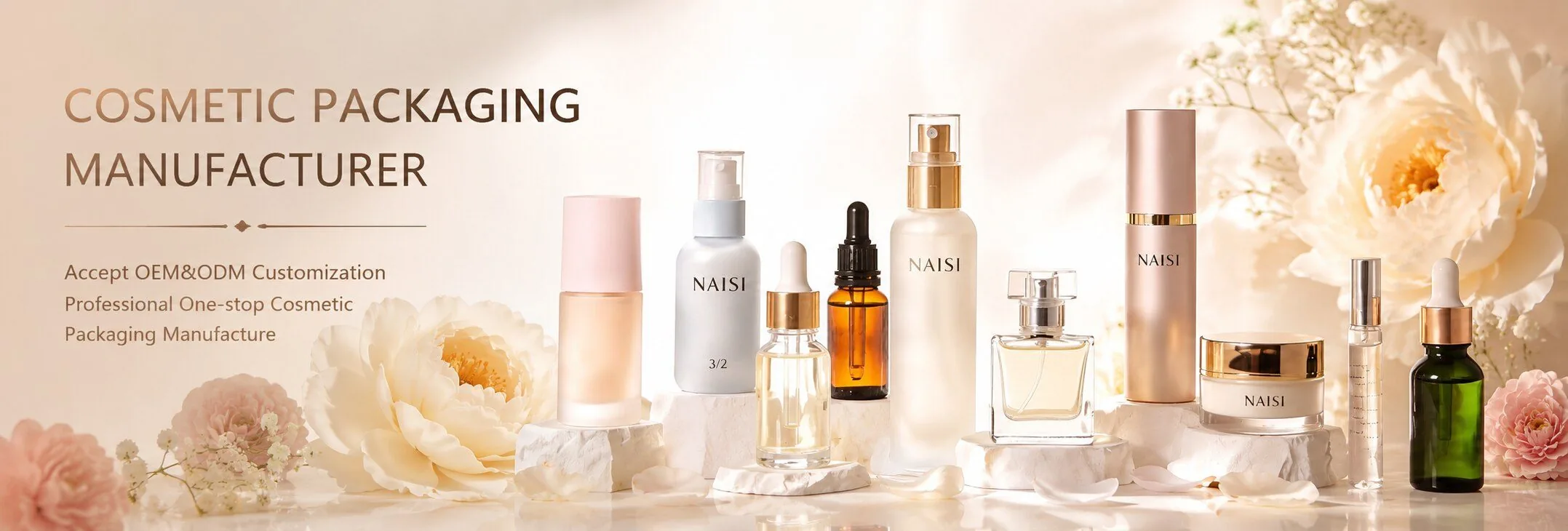
Foundation Glass Bottle Design: Balancing Bottle Shape, Pump Appearance and Product Presentation
Two foundation bottles hold the same 30 mL formula. One disappears among dozens of similar packs; the other is recognizable from its silhouette and the way its pump meets the glass. But a striking bottle can still fail the brand if customers cannot identify their shade or the pump struggles with the actual foundation.
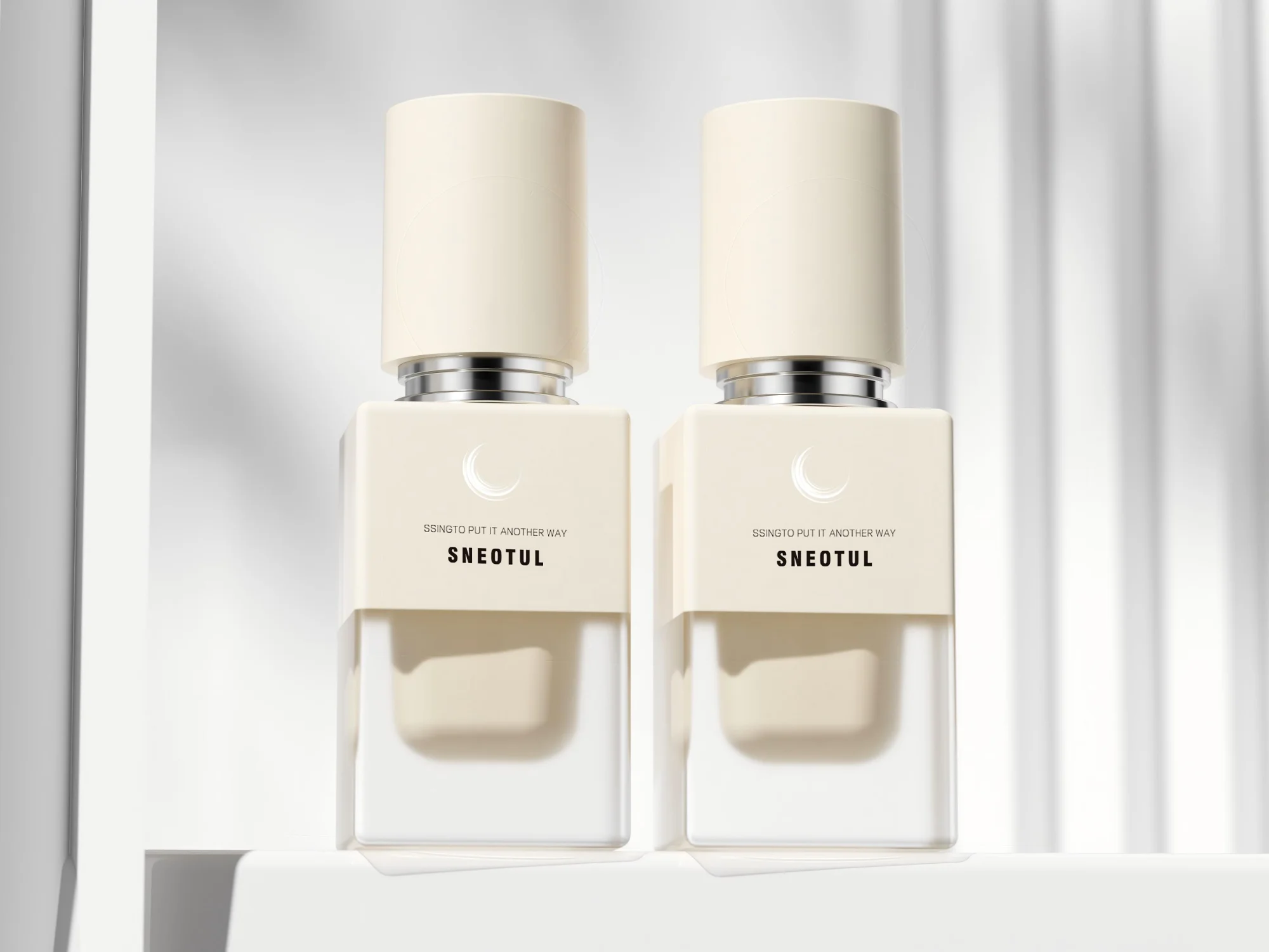
For makeup brands, foundation glass bottle design is a balancing exercise. The body establishes visual character, the pump and cap complete the silhouette, and the glass finish determines how much of the formula customers can see. These decisions belong in one design review.
Build Recognition Through Bottle Proportions
Choose a Silhouette That Fits the Brand and the Hand
A tall, narrow bottle suggests precision and a modern, streamlined look. It can work well for a professional makeup range, but its grip, center of gravity and shelf stability should be assessed with the actual pump and cap attached.
A shorter, wider bottle creates a different impression: grounded, compact and substantial. It may offer a generous front panel for branding, although the shorter body can change the space available for the pump's dip tube and the product inside.
A subtly waisted or faceted bottle can become a recognizable brand feature without requiring loud decoration. Yet every curve has a consequence. The waist changes how fingers hold the bottle; facets change reflections and the printable area. With a custom shape, glass distribution, mold geometry and the filling line's handling requirements should be reviewed before tooling.
Do not select proportions from a front rendering alone. Compare front, three-quarter and side views, then handle a weighted or physical sample. The bottle should feel balanced during pumping.
Use the Base as Part of the Design
A clean flat standing base reinforces a restrained aesthetic. A thick transparent base can add optical depth, especially when paired with a clear formula-viewing area. An angled internal base or sculpted glass detail may produce a distinctive reflection without changing the bottle's external standing surface.
Any unusual base feature must still support stable standing, filling and transport.
Thicker glass also affects weight, cost and the visible shade. Foundation viewed through a thick base may look different from the same formula behind a thinner wall. Judge those effects with filled samples, not an empty clear bottle.
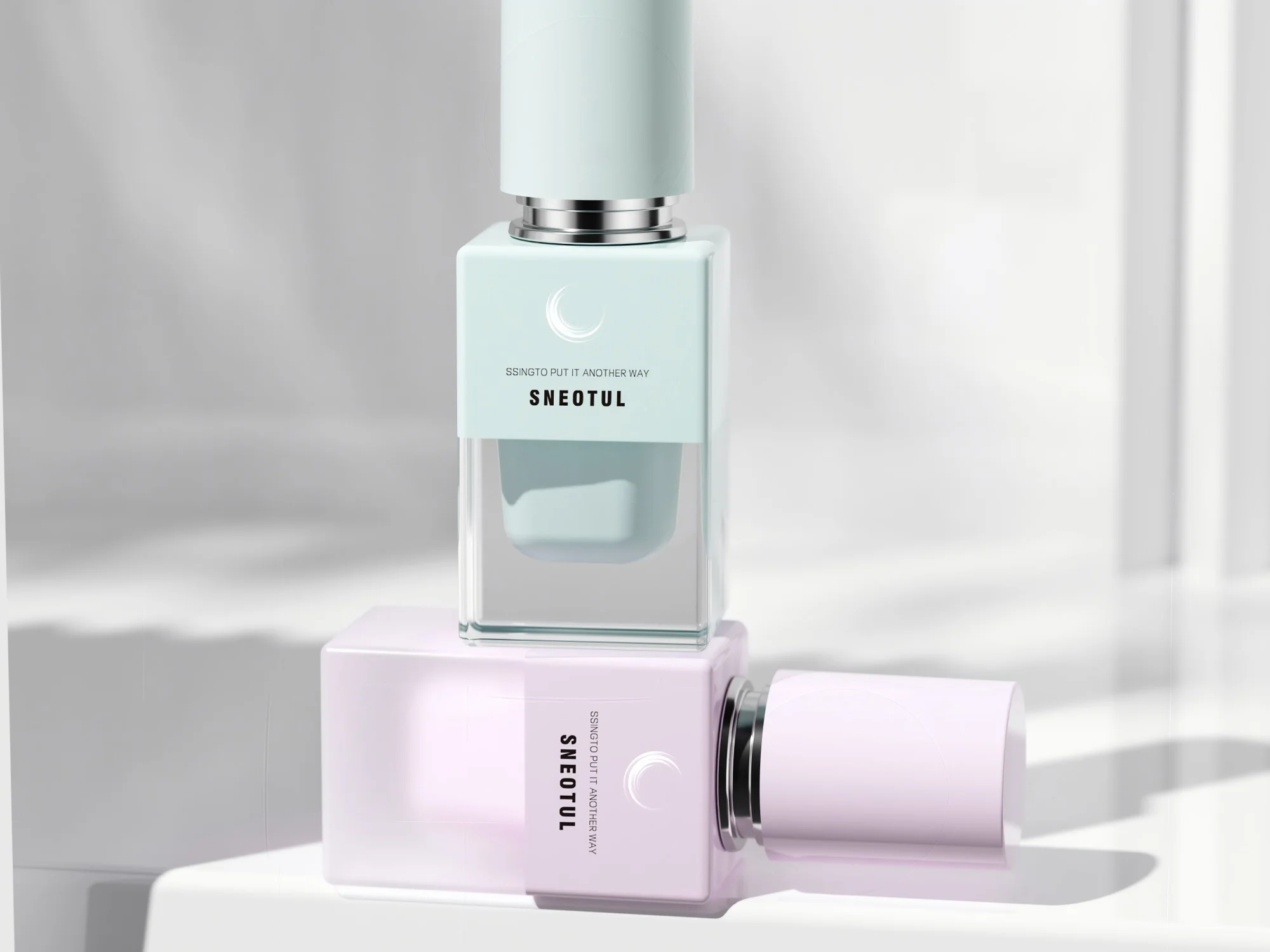
Decide What the Customer Should See Through the Glass
Foundation packaging has a particular task: it may need to communicate shade as well as brand identity. The color seen inside the container, however, is not an exact prediction of how foundation looks when applied to skin.
Clear glass gives an immediate view of the product and its fill level. A soft frosted finish reduces visual sharpness and can create a refined appearance, but may make neighboring shades harder to distinguish. Lightly tinted glass adds brand character while potentially shifting the perceived undertone. Even high-clarity glass has edges, wall thickness and reflections that influence what the eye sees.
Start with a question: Is the visible area meant to show approximate shade, distinguish SKUs or simply suggest the formula's color? Define that purpose before choosing a finish.
Design a Deliberate Shade Window
A brand that wants an opaque or colored bottle can retain a clear vertical strip or a small viewing panel, provided the selected coating process and geometry support it. The window might sit beside the product name, extend along one side or appear as a restrained band near the lower body.
Its position needs the same care as the logo. Keep the window away from seams, strong shoulder transitions and decoration boundaries that the supplier cannot reproduce consistently. Check its size with the lightest, deepest and closely related mid-tone shades; a tiny opening may look beautiful on one bottle and offer almost no usable distinction across a 30-shade range.
If the pack is sprayed, specify whether the window is an uncoated glass area, how its edges should appear and what print may sit nearby. Masking and coating transitions need physical sample approval. Do not assume every bottle can receive a perfectly sharp window in any position.
Keep the shade name or number visible: the viewing window cannot identify every close match.
Consider Formula Protection Separately
An opaque appearance can help reduce light reaching the contents, but the required protection depends on the formula. Clear glass is not automatically unsuitable, and a tinted or frosted finish is not a substitute for stability testing. The brand's formulation team should establish any light-sensitivity requirements before the decorative finish is finalized.
For shade-sensitive presentation, inspect filled bottles containing the actual foundation under controlled lighting. Compare the container view with the brand's approved shade reference and an applied swatch. Those are distinct evaluations, and all three need not look identical.
Make the Pump and Cap Part of the Silhouette
A pump occupies relatively little surface area, yet it can determine whether the bottle feels clinical, playful or luxurious.
A low-profile actuator keeps attention on the glass. A curved actuator suits rounded bottles; a metallic-looking collar can sharpen a geometric silhouette.
Look at the entire vertical line: bottle shoulder, neck, collar, actuator and cap. If the collar is visually wider than a narrow bottle, the upper section may appear heavy. That is not automatically a defect, but it should be intentional. Compare the complete assembled height and visual balance rather than choosing each component from isolated catalogue photographs.
For caps, a full overcap can hide the actuator and produce a clean silhouette. A shorter decorative cap may expose part of the neck or collar as a design feature. Magnetic closure concepts can create a distinctive opening experience, but require a specifically engineered compatible structure; a standard pump cap cannot simply be declared magnetic. Confirm feasibility, weight, cost and assembly.
Foundation-Specific Dispensing Checks
There is no need to redesign pump fundamentals for every makeup launch. What matters is whether the proposed pump suits this foundation: its viscosity, pigment system, desired output and the intended consumer use.
A thick or highly pigmented formula may dispense differently from a light serum. Test priming, consistency of delivery, nozzle cleanliness, residual product and performance near the end of the pack with the real formula. Check that the pump's contact materials are suitable and that its dip tube works with the selected internal base geometry.
A visually elegant nozzle that repeatedly leaves foundation on the collar is not a successful design detail. Likewise, an attractive cap must remove and replace smoothly without accidentally operating the pump.
For a broader technical comparison, see our Dropper vs Pump Serum Bottle guide.
Avoid Four Development Mistakes Before Production
Approving an unusual shape before the technical drawing. A waisted or faceted glass bottle may require new tooling. Confirm glass-forming feasibility, main dimensions, neck finish, stable standing base and target fill before committing to the mold. A 3D rendering cannot verify wall distribution or filling-line fit.
Choosing transparency from one empty sample. Assess the real foundation in different decorated options. Use representative shades and consistent lighting; compare clear, frosted and tinted presentations against the intended shade-identification goal.
Letting coating obscure the shade window. Define the window boundary and its relationship to artwork, corners and seams. Review the mask and finish on an actual bottle, then retain the approved sample for production comparison. Our glass bottle print area design guide covers layout around curved surfaces and shoulders.
Matching the pump by appearance alone. Confirm the neck and closure interface, sealing, formula compatibility, dispensing action and cap clearance. Evaluate the filled, closed package under relevant storage, handling and transport conditions. A matching neck alone does not prove the whole pack will work.
A Practical Sample Approval Sequence
Begin with existing bottle options when possible. Compare two or three silhouettes with their complete pump-and-cap sets, including a realistic filled weight. Narrow the direction, then request finish and window samples using the intended formula and representative shades.
Before approving a custom mold, confirm the dimensional drawing and closure arrangement. With production-representative samples, check the visual presentation, dispensing, seal and decoration together. Record which sample version was approved; do not treat separate approvals for the glass, cap and artwork as approval of the assembled pack.
|
Decision |
Brand provides |
Supplier or filling partner confirms |
|
Bottle identity |
Shape references, target capacity, preferred weight and feel |
Suitable existing styles or custom-tooling requirements |
|
Shade presentation |
Shade range, window concept, desired finish |
Decorated sample, feasible window boundaries and appearance |
|
Pump and cap |
Visual direction, desired use experience |
Fit, material compatibility, dispensing and closure construction |
|
Production release |
Approved artwork and visual references |
Sampling, dimensional, assembly and agreed performance checks |
Give the Design a Reason to Be Remembered
Strong foundation glass bottle design is not simply a new silhouette. It has a clear visual hierarchy: recognizable glass proportions, a pump and cap that belong to the same design language, and a deliberate way of showing—or not showing—the foundation shade.
The strongest concepts make these choices early. A brand with many shades may prioritize a controlled viewing window and an unmistakable shade label. A premium, design-led line may favor sculpted glass and a carefully integrated metallic collar. Choose the direction that serves the product and customer.
Frequently Asked Questions
Does Clear Glass Show the Foundation's True Shade?
It shows the formula through a particular container, not exactly how it will appear on skin. Glass thickness, lighting and the formula's applied behavior can change the impression. Use filled samples, approved shade references and applied swatches together.
Can a Frosted Foundation Bottle Include a Clear Shade Window?
Potentially. It depends on the frosting or coating process, the bottle's geometry and the supplier's ability to control the transition. Confirm the proposed window on a physical sample.
Can I Choose a Decorative Cap Before the Pump Is Finalized?
You can establish a visual direction, but final cap dimensions and opening behavior need to be checked against the selected pump and bottle neck. Magnetic or custom caps need their own compatibility assessment.
Develop Custom Foundation Glass Bottles With NAISI Packaging
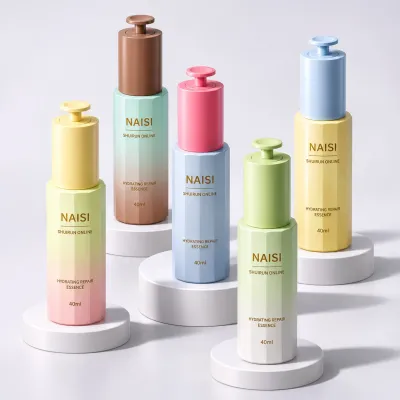
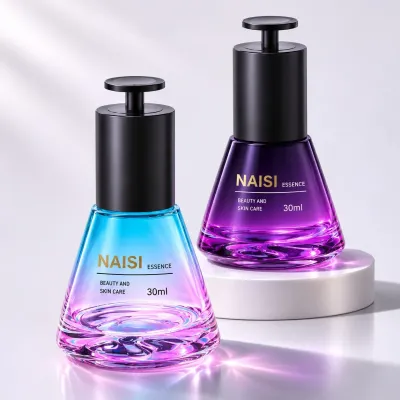
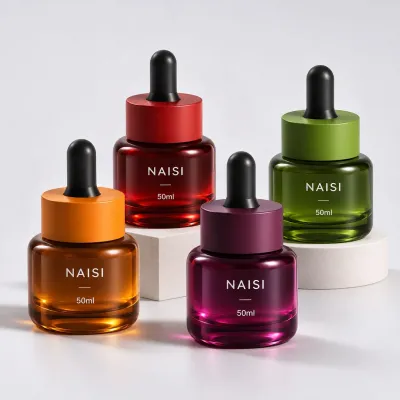
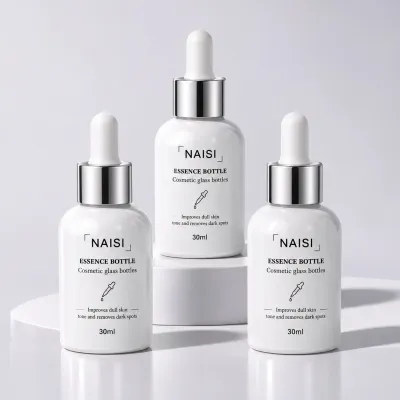
At NAISI Packaging, we offer glass foundation bottles in different shapes, with compatible pump and cap options and customization such as frosting, color coating, screen printing and hot stamping. For example, our square glass foundation bottle with a gold layered cap illustrates how a closure can contribute to the complete design.
Planning a new foundation packaging line? Share your bottle reference, target fill, preferred pump-and-cap style, shade-visibility requirements, decoration ideas and estimated quantity. We can discuss suitable glass bottle choices and customization possibilities for your makeup project.
WhatsApp: +86 189 2275 3052
Email: naisipackaging@gmail.com
Website: www.naisi-packaging.com